Castor canadensis
American Beaver
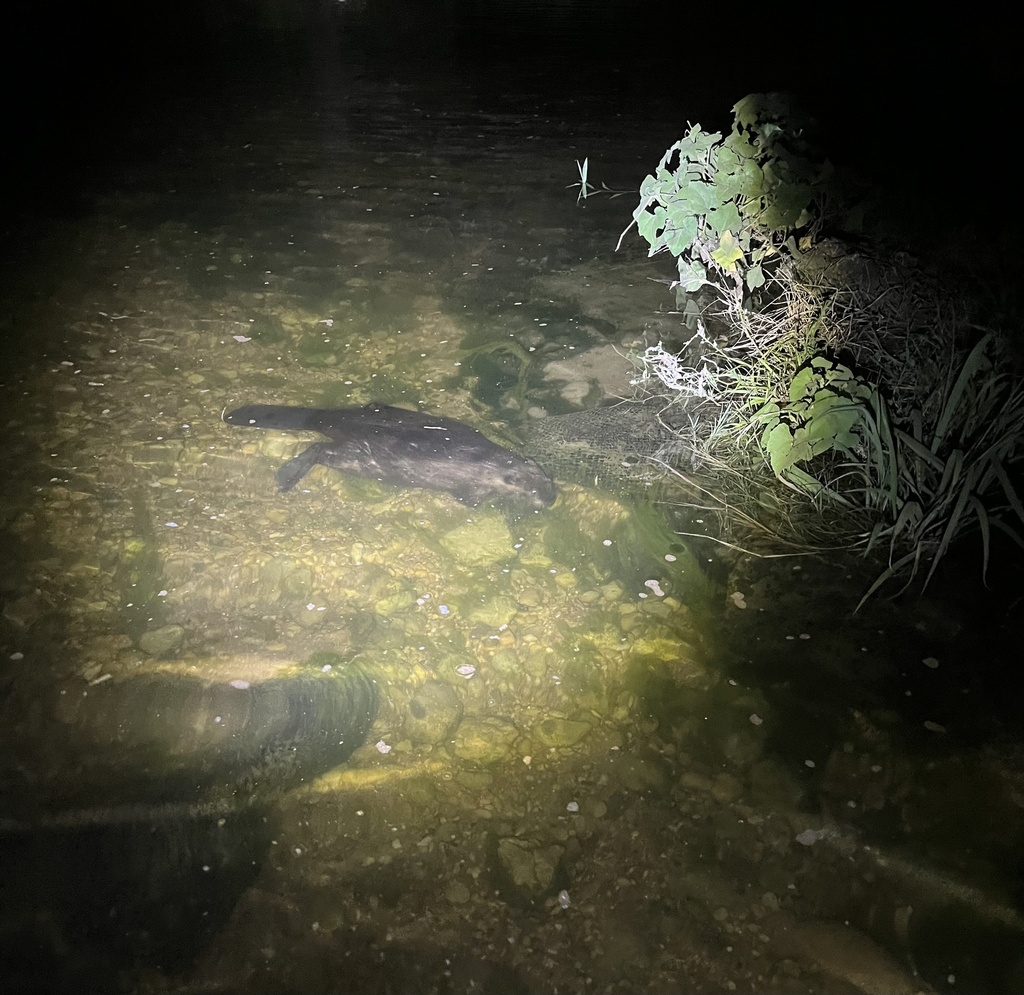
no rights reserved · CC0
Family: Castoridae · Class: Mammalia · Order: Rodentia
Castor canadensis (American Beaver) is a California animal in the Castoridae family.
The American beaver is North America's largest rodent, with adults measuring 74 to 90 centimeters (29 to 35 inches) in body length and weighing 16 to 32 kilograms (35 to 71 pounds). The species is characterized by a stocky build, dense waterproof fur ranging from yellowish-brown to dark brown, and a distinctive flat, scaly tail measuring 20 to 25 centimeters (8 to 10 inches) long. Large, orange-colored incisors grow continuously throughout life and are used for cutting wood. Webbed hind feet provide propulsion while swimming, and transparent eyelids allow underwater vision. Historically, American beavers occupied suitable habitat throughout most of North America, including California's mountain regions and Central Valley. By the early 1900s, extensive trapping for the fur trade had eliminated beavers from much of their California range. Natural recolonization and reintroduction efforts have restored populations to portions of their former range, including the Sierra Nevada, Cascade Range, and scattered locations in northeastern California. Current populations exist in Lassen, Plumas, Sierra, Alpine, Mono, and Inyo counties, with occasional sightings reported in other mountain counties. Beavers require permanent water bodies with adequate woody vegetation for food and dam-building materials. Preferred habitats include streams, rivers, ponds, and wetlands surrounded by aspen, willow, cottonwood, and other deciduous trees. In California, they typically occupy elevations from 1,200 to 2,400 meters (4,000 to 8,000 feet), though they have been documented at higher elevations. The species modifies its environment extensively, creating dams that form ponds and wetlands supporting diverse plant and animal communities. Beavers are primarily nocturnal and live in family groups called colonies, typically consisting of an adult pair and their offspring from the current and previous year. Breeding occurs from January through March, with females giving birth to one to six kits after a gestation period of approximately 107 days. Young remain with the family for two years before dispersing to establish their own territories. The species is herbivorous, feeding on inner bark, twigs, and leaves of woody plants during winter, and aquatic vegetation, grasses, and forbs during summer. Beavers can remain submerged for up to 15 minutes and swim at speeds reaching 8 kilometers per hour (5 miles per hour). The American beaver is not federally listed and is considered a species of least concern globally. In California, the species is classified as a furbearer and is subject to regulated trapping seasons in some counties. Population recovery has been successful in many areas, though habitat loss, water diversions, and human development continue to limit distribution. Climate change may affect water availability in some watersheds, potentially impacting beaver habitat. The species plays a crucial ecological role as an ecosystem engineer, creating wetland habitats that benefit numerous other species including waterfowl, amphibians, and fish.
Classification
Class: Mammalia · Order: Rodentia · Family: Castoridae
Frequently asked questions
How is Castor canadensis classified?
Castor canadensis belongs to class Mammalia, order Rodentia, family Castoridae.
What family does Castor canadensis belong to?
Castor canadensis is in the Castoridae family.
What is Castor canadensis?
The American beaver is North America's largest rodent, with adults measuring 74 to 90 centimeters (29 to 35 inches) in body length and weighing 16 to 32 kilograms (35 to 71 pounds).
Is Castor canadensis found in California?
Yes. Castor canadensis is recorded in California in The California Species Project's catalogue.
More California species
This species has no close relatives in our California data — here are other species to explore.
Data from The California Species Project — 14,000+ California species with verified data from CNPS, CDFW, USFWS, and more.