Catabena lineolata
Five-lined Sallow
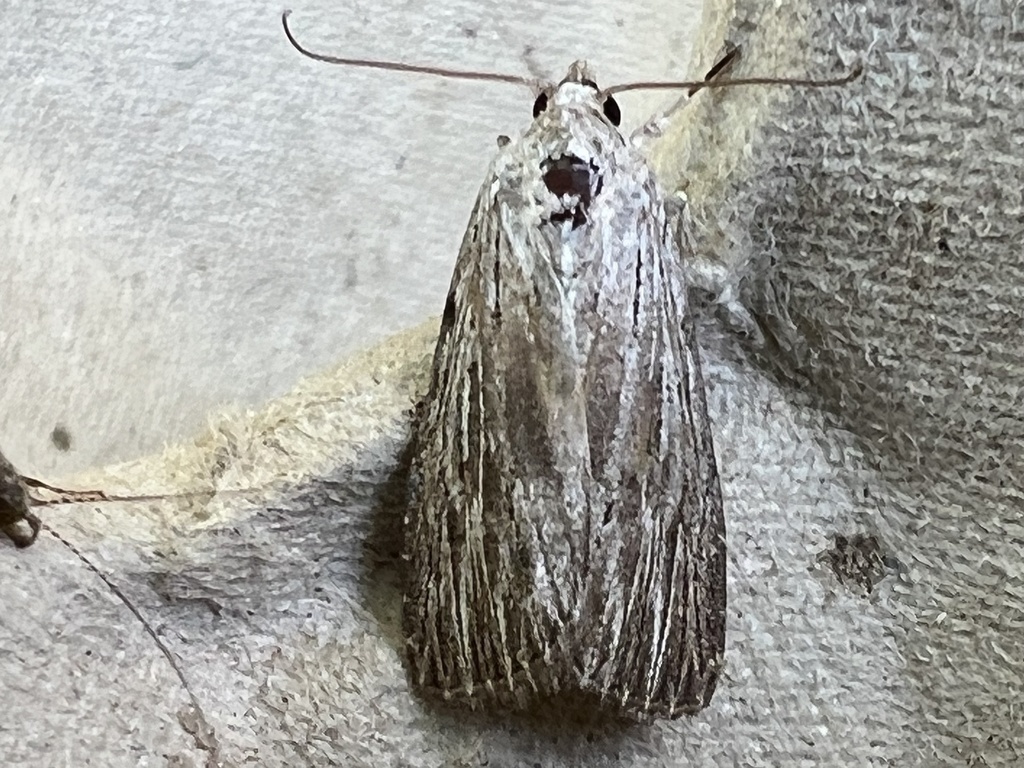
(c) Alan Macnaughton, some rights reserved (CC BY) · licence
Family: Noctuidae · Class: Insecta · Order: Lepidoptera
Catabena lineolata (Five-lined Sallow) is a California animal in the Noctuidae family.
The Fine-lined Sallow (Catabena lineolata) is a species of owlet moth in the family Noctuidae, subfamily Cuculliinae. This nocturnal moth is characterized by its distinctive wing patterns, though specific morphological details remain poorly documented in the scientific literature. Catabena lineolata is distributed across North America, with records spanning a broad continental range. The species occurs from Newfoundland west to British Columbia, and extends south through much of the United States. In California, the Fine-lined Sallow is present but specific distributional data within the state has not been comprehensively documented. The species appears to have a transcontinental distribution typical of many widespread North American moths. Habitat preferences for this species have not been well characterized in the available literature. Like many members of the subfamily Cuculliinae, Fine-lined Sallows likely inhabit a variety of environments where their host plants occur. Many sallow moths are associated with deciduous trees and shrubs, particularly willows (Salix species) and poplars (Populus species), though specific host plant relationships for C. lineolata require further documentation. The life history and ecological requirements of the Fine-lined Sallow remain incompletely understood. Flight period timing has not been well documented, though most North American sallow moths are active during spring and fall months. Like other members of the genus Catabena, larvae likely feed on woody plants, pupating in soil or leaf litter. Adult moths are presumably attracted to artificial lights and sugar baits, behaviors typical of noctuids. Specific information regarding clutch size, developmental timing, and overwintering stage has not been published for this species. The Fine-lined Sallow does not appear on any federal or state conservation lists and presumably maintains stable populations across its range. As with many moths, population trends are poorly monitored, making assessment of conservation status difficult. The species' broad North American distribution suggests it is not immediately threatened, though local populations may face pressures from habitat modification and light pollution. Climate change impacts on northern populations remain unassessed. Taxonomic placement of C. lineolata within the subfamily Cuculliinae appears stable, with the species originally described by Walker in 1865. The genus Catabena includes several North American species that share similar wing patterns and ecological preferences. DNA barcoding and molecular phylogenetic studies could help clarify relationships within this group and confirm species boundaries. Scientific documentation for this species remains limited. The information presented here is based on available sources including taxonomic databases and regional moth surveys. If you have additional verified information about this species' biology, distribution, or ecology, please contact us to help improve this species account.
Classification
Class: Insecta · Order: Lepidoptera · Family: Noctuidae
Frequently asked questions
How is Catabena lineolata classified?
Catabena lineolata belongs to class Insecta, order Lepidoptera, family Noctuidae.
What family does Catabena lineolata belong to?
Catabena lineolata is in the Noctuidae family.
What is Catabena lineolata?
The Fine-lined Sallow (Catabena lineolata) is a species of owlet moth in the family Noctuidae, subfamily Cuculliinae.
Is Catabena lineolata found in California?
Yes. Catabena lineolata is recorded in California in The California Species Project's catalogue.
Related species
Other California species in the same genus, family, or bioregion.
Data from The California Species Project — 14,000+ California species with verified data from CNPS, CDFW, USFWS, and more.