Catastia actualis
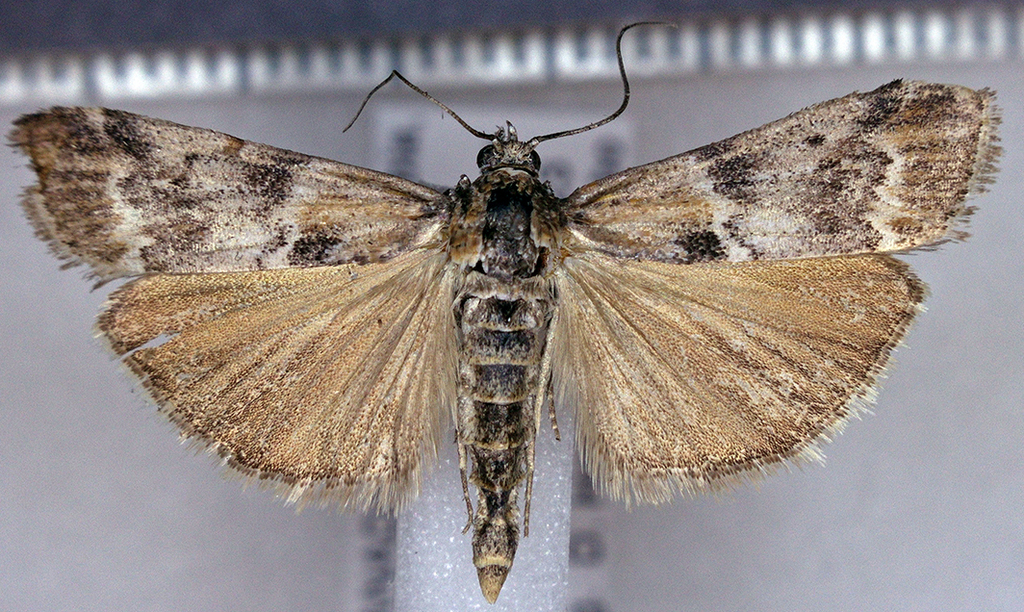
(c) Dave, some rights reserved (CC BY) · licence
Family: Pyralidae · Class: Insecta · Order: Lepidoptera
Catastia actualis is a California animal in the Pyralidae family.
Catastia actualis is a moth species in the family Pyralidae, commonly known as the snout moths or grass moths. This pyralid moth belongs to the order Lepidoptera and represents one of the many microlepidopteran species found in North America. Like other members of the Pyralidae family, adults typically display elongated labial palps that project forward from the head, giving the family its common name of snout moths. The wingspan of Catastia actualis measures approximately 15 to 20 mm (0.6 to 0.8 inches), placing it among the smaller pyralid moths. The forewings are typically brownish or grayish-brown with subtle patterning that may include darker transverse lines or spots. The hindwings are generally paler than the forewings, often appearing whitish or light gray. Wing patterns in pyralids serve as camouflage when the moth is at rest with wings folded over the body. The documented range of Catastia actualis includes portions of western North America, with records from California. However, the precise distribution boundaries and population status remain poorly documented in available literature. Like many microlepidopteran species, detailed range maps and occurrence data are limited compared to larger, more conspicuous moths and butterflies. Habitat requirements for this species appear to be associated with areas where its larval host plants occur. Pyralid moths typically occupy diverse habitats ranging from grasslands and shrublands to forest edges and disturbed areas. The specific microhabitat preferences of Catastia actualis, including elevation range and vegetation associations, require further documentation through targeted surveys. The life cycle follows the typical lepidopteran pattern of complete metamorphosis. Adults are likely active during warmer months, with flight periods varying by location and elevation. Females deposit eggs on or near larval host plants. The larval stage feeds on plant material, though the specific host plants for Catastia actualis are not well documented in current literature. Larvae may feed on stems, leaves, or other plant parts depending on the species' ecology. Pupation likely occurs in soil or plant debris. The conservation status of Catastia actualis has not been formally assessed by state or federal agencies. No listing status exists under the Endangered Species Act or California Endangered Species Act as of December 2025. Population trends and conservation threats remain undocumented, reflecting the general lack of comprehensive data on many microlepidopteran species. Like other moths, potential threats may include habitat loss, pesticide use, light pollution affecting nocturnal behavior, and climate change impacts on host plants and suitable habitat conditions. Further research is needed to document the species' distribution, host plant relationships, population trends, and ecological requirements to support potential conservation planning efforts.
Classification
Class: Insecta · Order: Lepidoptera · Family: Pyralidae
Frequently asked questions
How is Catastia actualis classified?
Catastia actualis belongs to class Insecta, order Lepidoptera, family Pyralidae.
What family does Catastia actualis belong to?
Catastia actualis is in the Pyralidae family.
What is Catastia actualis?
Catastia actualis is a moth species in the family Pyralidae, commonly known as the snout moths or grass moths.
Is Catastia actualis found in California?
Yes. Catastia actualis is recorded in California in The California Species Project's catalogue.
Related species
Other California species in the same genus, family, or bioregion.
Data from The California Species Project — 14,000+ California species with verified data from CNPS, CDFW, USFWS, and more.