Catocala californica
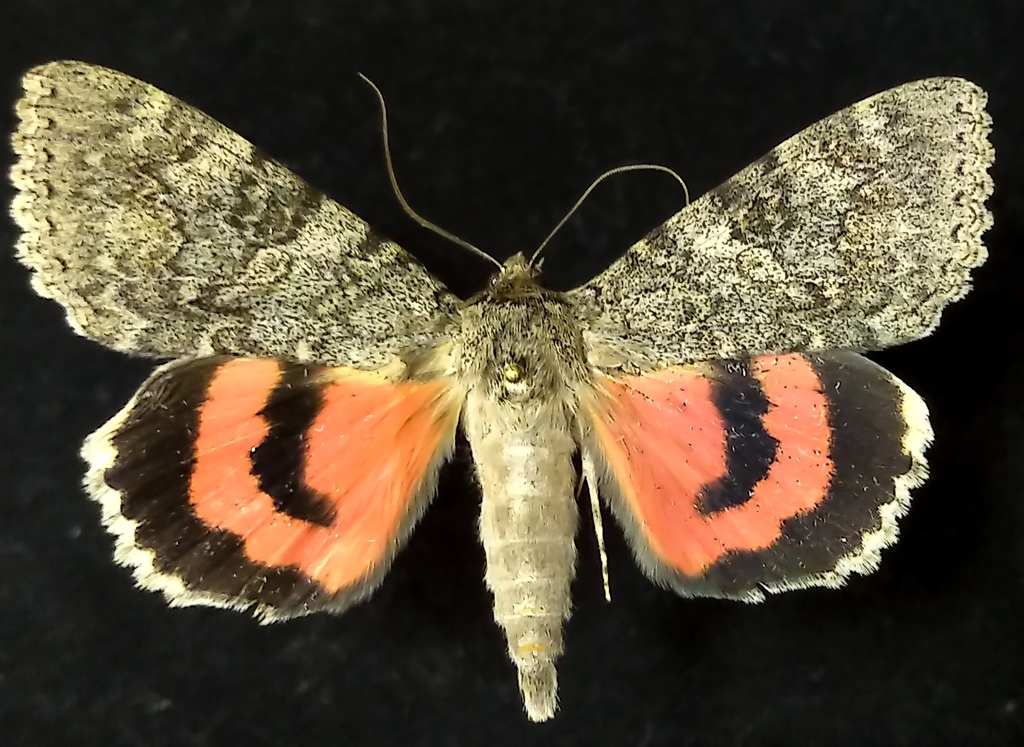
(c) Doug Macaulay, some rights reserved (CC BY) · licence
Family: Erebidae · Class: Insecta · Order: Lepidoptera
Catocala californica is a California animal in the Erebidae family.
Catocala californica is a nocturnal moth belonging to the underwing moth genus within the family Erebidae. Adults exhibit the characteristic underwing moth pattern with cryptically colored forewings that provide camouflage when at rest. The forewings are mottled gray-brown with intricate bark-like patterns of lines and patches. The hindwings display contrasting bands of color typical of Catocala species, though specific coloration details for this species require further documentation. Adults typically measure 40-60 mm in wingspan, consistent with other medium-sized Catocala species. The species occurs across western North America, ranging from British Columbia and Alberta, where it is very rare, south through Washington and Oregon to California. The moth has also been documented in Idaho, Montana, and Nevada. Within California, the species likely occurs in areas where suitable host plants are present, particularly in riparian zones and areas with mixed deciduous woodlands. The distribution appears to be closely tied to the availability of host plant species rather than specific elevation ranges or geographic boundaries. Catocala californica inhabits areas supporting its host plants, which include black walnut (Juglans nigra), poplars (Populus species), and willows (Salix species). These host associations suggest the species occupies riparian corridors, deciduous woodlands, and mixed forest edges where these trees occur. The moth likely requires areas with sufficient tree canopy cover for adult roosting sites during daylight hours, as underwing moths typically rest on tree bark where their cryptic forewings provide concealment from predators. Like other Catocala species, this moth is univoltine, producing one generation per year. Adults are active during late summer and early fall, typically flying from July through September. Females lay eggs on the bark of host trees, where they overwinter. Larvae emerge in spring and feed on the foliage of host plants, developing through several instars before pupating in late spring or early summer. The caterpillars are likely cryptically colored to match the bark or foliage of their host plants. Adults are nocturnal and are attracted to artificial lights, making them occasionally encountered at moth traps and porch lights within their range. The conservation status of Catocala californica has not been formally assessed by state or federal agencies, and the species lacks specific legal protection. Population trends and abundance levels are not well documented, reflecting the general lack of comprehensive surveys for nocturnal Lepidoptera. The species' dependence on riparian and deciduous woodland habitats suggests potential vulnerability to habitat loss from development, agricultural conversion, and water management practices that affect riparian zones. Climate change may also impact the species through alterations to host plant distributions and phenology. Conservation of riparian corridors and native deciduous tree communities would benefit this species along with numerous other moths dependent on these increasingly fragmented habitats.
Classification
Class: Insecta · Order: Lepidoptera · Family: Erebidae
Frequently asked questions
How is Catocala californica classified?
Catocala californica belongs to class Insecta, order Lepidoptera, family Erebidae.
What family does Catocala californica belong to?
Catocala californica is in the Erebidae family.
What is Catocala californica?
Catocala californica is a nocturnal moth belonging to the underwing moth genus within the family Erebidae.
Is Catocala californica found in California?
Yes. Catocala californica is recorded in California in The California Species Project's catalogue.
Related species
Other California species in the same genus, family, or bioregion.
Data from The California Species Project — 14,000+ California species with verified data from CNPS, CDFW, USFWS, and more.