Catocala faustina
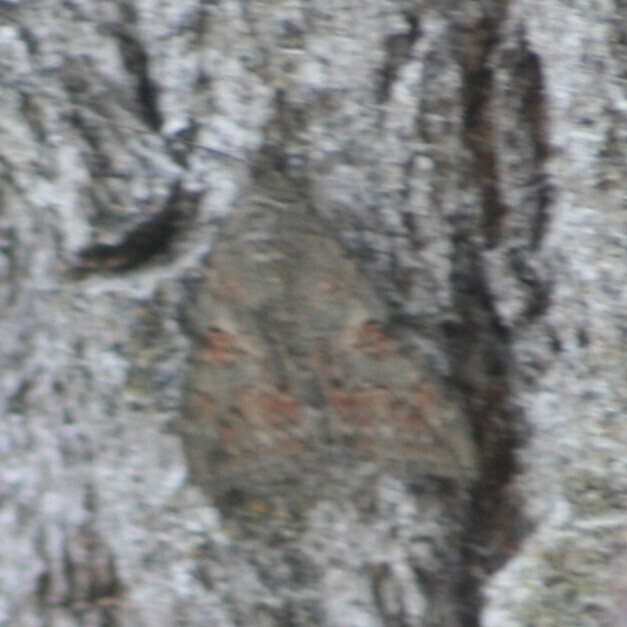
(c) John Clonce, some rights reserved (CC BY) · licence
Family: Erebidae · Class: Insecta · Order: Lepidoptera
Catocala faustina is a California animal in the Erebidae family.
Catocala faustina is a moth species in the family Erebidae, subfamily Erebinae, commonly known as an underwing moth. Adults display the typical underwing moth morphology, with forewings that provide cryptic coloration when at rest and contrasting hindwings revealed during flight. The forewings are typically mottled gray and brown with intricate bark-like patterns that provide excellent camouflage against tree trunks. The hindwings are likely brightly colored with distinctive banding patterns characteristic of Catocala species, though specific coloration details for this species require verification. Adults have a robust body structure typical of noctuids, with a wingspan estimated between 60-80 mm based on related Catocala species. The range and distribution of Catocala faustina in California remains poorly documented in available literature. Many Catocala species have restricted distributions tied to their specific host plant requirements, and this species may be similarly limited in range. Without comprehensive survey data, the current extent of occurrence and population status in California cannot be accurately determined. Habitat requirements for Catocala faustina are likely closely tied to the presence of suitable host plants, following the pattern of other underwing moths. Most Catocala species are associated with deciduous trees and shrubs, with larvae feeding on leaves during their development. The species probably inhabits areas where appropriate host vegetation occurs, which may include riparian corridors, oak woodlands, or mixed deciduous forests. Adults likely seek areas with adequate nectar sources for feeding and appropriate substrates for daytime roosting. Behavioral ecology of Catocala faustina follows typical underwing moth patterns. Adults are nocturnal, with peak activity during nighttime hours when they engage in feeding, mating, and oviposition behaviors. During daylight hours, adults rest on tree bark where their cryptic forewings provide camouflage from predators. When disturbed, they flash their brightly colored hindwings in a startle display before settling again. Larvae are caterpillars that feed externally on host plant foliage, typically developing through five instars before pupation. The species likely has one generation per year in California, with adult emergence timed to coincide with optimal conditions for reproduction and larval development. The conservation status of Catocala faustina is not well established. The species lacks formal federal or state protection status, and comprehensive population monitoring data are not available. Like many lepidopteran species, potential threats may include habitat loss, pesticide use, climate change effects on host plants, and light pollution affecting adult behavior. The limited available information about this species highlights the need for additional research to determine its distribution, abundance, population trends, and conservation needs in California. Targeted surveys would be necessary to assess whether the species requires conservation attention or management actions.
Classification
Class: Insecta · Order: Lepidoptera · Family: Erebidae
Frequently asked questions
How is Catocala faustina classified?
Catocala faustina belongs to class Insecta, order Lepidoptera, family Erebidae.
What family does Catocala faustina belong to?
Catocala faustina is in the Erebidae family.
What is Catocala faustina?
Catocala faustina is a moth species in the family Erebidae, subfamily Erebinae, commonly known as an underwing moth.
Is Catocala faustina found in California?
Yes. Catocala faustina is recorded in California in The California Species Project's catalogue.
Related species
Other California species in the same genus, family, or bioregion.
Data from The California Species Project — 14,000+ California species with verified data from CNPS, CDFW, USFWS, and more.