Catocala hermia
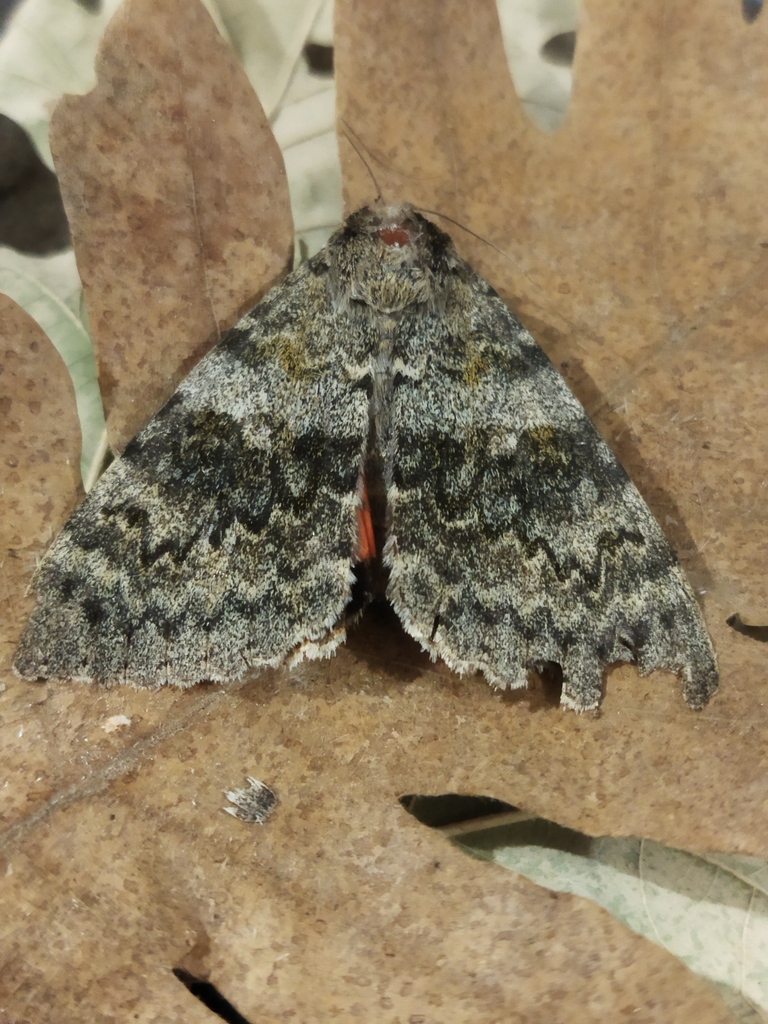
(c) SteveM4560, some rights reserved (CC BY) · licence
Family: Erebidae · Class: Insecta · Order: Lepidoptera
Catocala hermia is a California animal in the Erebidae family.
Catocala hermia is a moth species in the family Erebidae, subfamily Erebinae, commonly known as an underwing moth. Adults have a forewing length of approximately 25-30 mm, with forewings displaying cryptic brown and gray mottled patterns that provide effective camouflage against tree bark. The hindwings feature the characteristic underwing coloration pattern of orange or red bands bordered by black, which is exposed when the moth is startled or in flight. The forewings show subtle darker crosslines and reniform spots typical of the Catocala genus. This species occurs in western North America, with records from California, Oregon, and other western states. In California, Catocala hermia has been documented from various counties including those in the Sierra Nevada foothills and Central Valley regions, though comprehensive distribution mapping remains incomplete. iNaturalist community observations indicate presence in counties such as Placer, El Dorado, and Tuolumne, though the species appears to have a relatively restricted range compared to some other Catocala species. Catocala hermia inhabits areas with oak woodlands and mixed deciduous forests. The species shows a strong association with oak trees, which serve as the primary larval host plants. Adults are typically found in areas with mature oak stands, including coast live oak (Quercus agrifolia), interior live oak (Quercus wislizeni), and blue oak (Quercus douglasii). The moths prefer habitats with dense canopy cover that provides both larval food sources and adult resting sites, typically at elevations ranging from foothill zones up to approximately 1,500 meters. Adults are nocturnal and are attracted to artificial lights and sugar baits. The species exhibits a single generation per year, with adults flying primarily from late summer through early fall, typically August through October. Females lay eggs on oak bark, and larvae develop through five instars before pupating in soil litter. Caterpillars feed on oak leaves and are well-camouflaged against bark when resting during daylight hours. The species overwinters as eggs, with larvae emerging in spring to coincide with oak leaf emergence. No formal conservation status has been assigned to Catocala hermia at federal or state levels. Population trends are not well documented, though like many moth species, the species may face threats from habitat loss, urbanization, and changes in oak woodland management. Climate change could potentially affect the synchronization between larval emergence and host plant phenology. The species' dependence on oak ecosystems makes it vulnerable to factors affecting oak woodland health, including sudden oak death, drought stress, and habitat fragmentation. Limited survey data makes it difficult to assess current population status or trends across the species' range.
Classification
Class: Insecta · Order: Lepidoptera · Family: Erebidae
Frequently asked questions
How is Catocala hermia classified?
Catocala hermia belongs to class Insecta, order Lepidoptera, family Erebidae.
What family does Catocala hermia belong to?
Catocala hermia is in the Erebidae family.
What is Catocala hermia?
Catocala hermia is a moth species in the family Erebidae, subfamily Erebinae, commonly known as an underwing moth.
Is Catocala hermia found in California?
Yes. Catocala hermia is recorded in California in The California Species Project's catalogue.
Related species
Other California species in the same genus, family, or bioregion.
Data from The California Species Project — 14,000+ California species with verified data from CNPS, CDFW, USFWS, and more.