Catocala ilia
Ilia Underwing
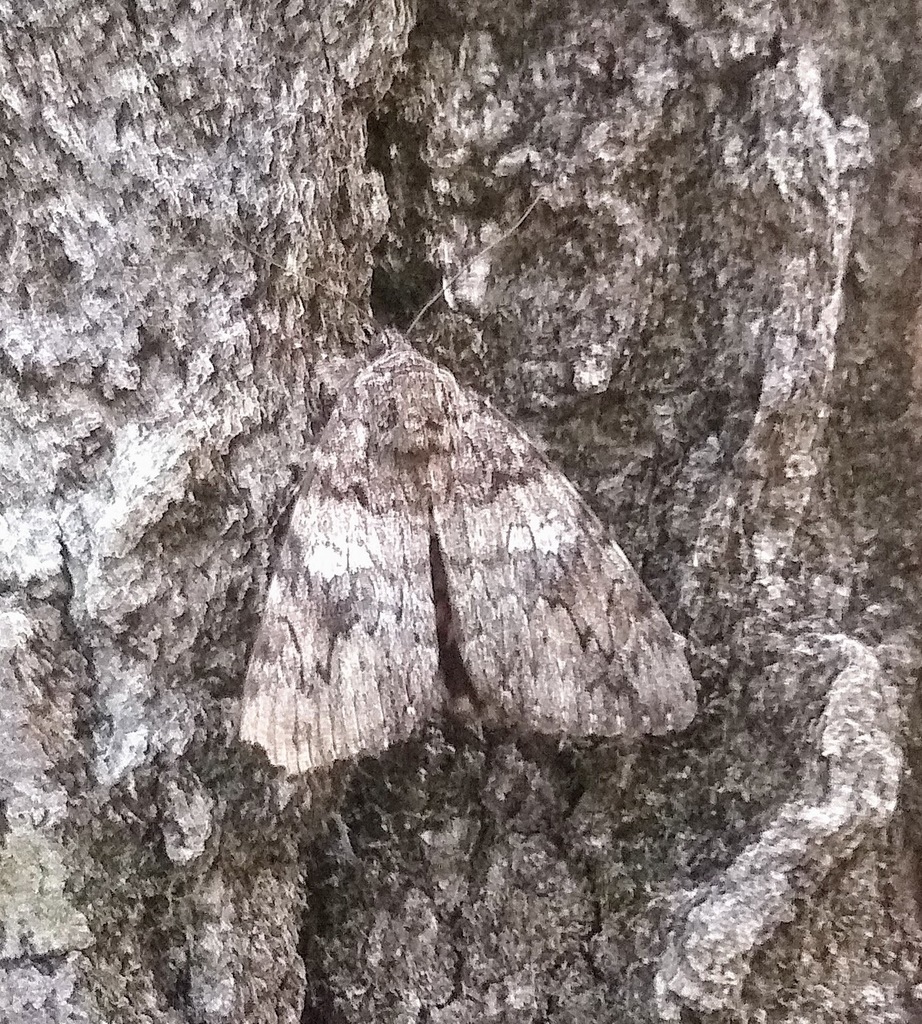
(c) moxostoma, some rights reserved (CC BY) · licence
Family: Erebidae · Class: Insecta · Order: Lepidoptera
Catocala ilia (Ilia Underwing) is a California animal in the Erebidae family.
The Ilia Underwing is a large nocturnal moth in the family Erebidae, with forewings typically measuring 35 to 45 mm (1.4 to 1.8 inches) in length. The forewings display a mottled pattern of gray, brown, and white markings that provide effective camouflage against tree bark during daylight hours. When the wings are spread, the hindwings reveal bright orange-red coloration with distinctive black bands, a characteristic feature of underwing moths that serves as a startle display against predators. The thorax and abdomen are robust and densely covered with scales matching the forewings' cryptic coloration. The species occurs across a broad range extending from Newfoundland and Quebec south to Florida, and west across the continent. This extensive distribution makes the Ilia Underwing one of the more widespread members of the Catocala genus in North America. In California, populations are found in oak woodlands throughout suitable habitat, particularly in areas with established oak canopies. Ilia Underwing moths inhabit deciduous and mixed forests dominated by oak species, showing a strong association with oak woodlands and savannas. The species occurs from sea level to moderate elevations, typically below 1,500 meters (4,900 feet). Adults prefer areas with mature oak stands that provide both larval host plants and adequate shelter for roosting during daylight hours. The moths are often found in oak-pine associations and oak grassland ecotones. Larvae feed exclusively on various oak species, including black oak (Quercus velutina), burr oak (Q. macrocarpa), red oak (Q. rubra), and white oak (Q. alba). Caterpillars are well-camouflaged bark mimics, remaining motionless on oak trunks during the day. The species is univoltine in most of its range, with adults emerging in late summer and early fall, typically from August through October. Adults are nocturnal and attracted to artificial lights and fermenting fruit baits. Mating occurs in early fall, with females laying eggs on oak bark in small clusters. Eggs overwinter and hatch in spring when oak leaves emerge. Adults exhibit strong fidelity to oak habitats and are most active during warm, humid evenings. The species demonstrates typical underwing moth behavior, resting head-downward on tree trunks with wings folded to display cryptic forewings. When disturbed, the moths flash their bright hindwings before flying a short distance and immediately resuming their camouflaged posture. The Ilia Underwing is not federally or state listed and appears to maintain stable populations across most of its range. However, like many oak-dependent species, populations may be affected by habitat loss through urban development and oak woodland conversion. Forest management practices that maintain mature oak stands benefit this species. Climate change may affect the synchronization between egg hatching and oak leaf emergence, potentially impacting larval survival rates in some regions.
Classification
Class: Insecta · Order: Lepidoptera · Family: Erebidae
Frequently asked questions
How is Catocala ilia classified?
Catocala ilia belongs to class Insecta, order Lepidoptera, family Erebidae.
What family does Catocala ilia belong to?
Catocala ilia is in the Erebidae family.
What is Catocala ilia?
The Ilia Underwing is a large nocturnal moth in the family Erebidae, with forewings typically measuring 35 to 45 mm (1.4 to 1.8 inches) in length.
Is Catocala ilia found in California?
Yes. Catocala ilia is recorded in California in The California Species Project's catalogue.
Related species
Other California species in the same genus, family, or bioregion.
Data from The California Species Project — 14,000+ California species with verified data from CNPS, CDFW, USFWS, and more.