Catocala junctura
Joined Underwing Moth
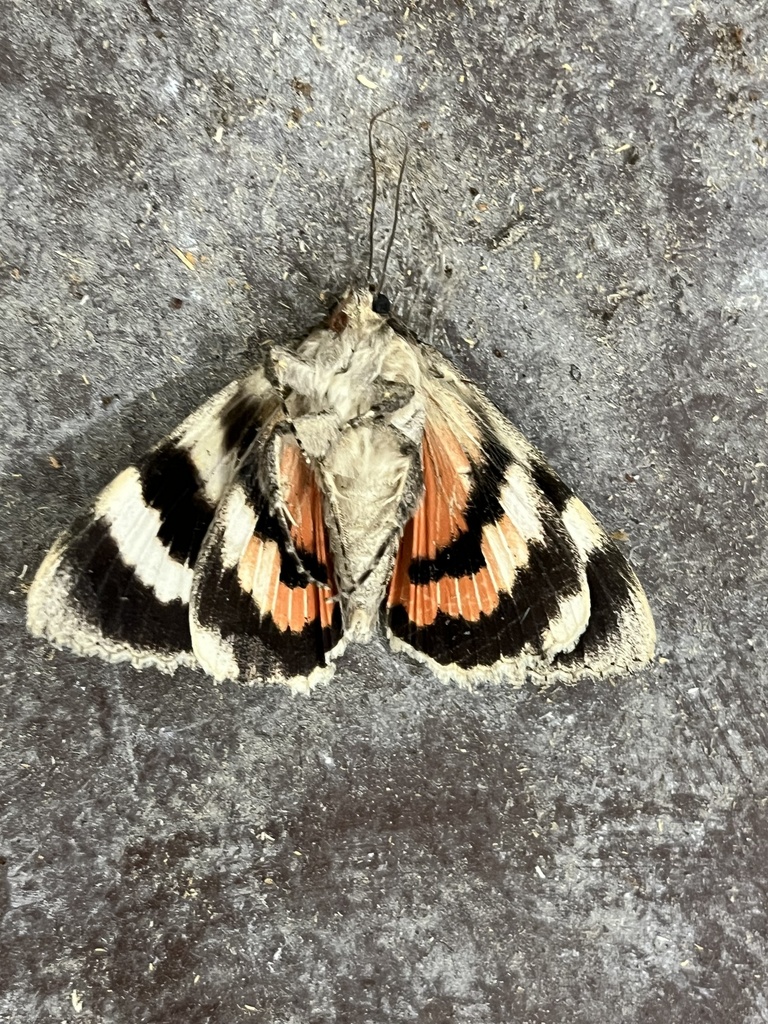
(c) avalontile, some rights reserved (CC BY) · licence
Family: Erebidae · Class: Insecta · Order: Lepidoptera
Catocala junctura (Joined Underwing Moth) is a California animal in the Erebidae family.
The Joined Underwing Moth (Catocala junctura) is a large nocturnal moth in the family Erebidae, subfamily Erebinae. Adults have a wingspan ranging from 65 to 85 millimeters (2.6 to 3.3 inches). The forewings are mottled gray-brown with intricate patterns of wavy lines and streaks that provide excellent camouflage against tree bark. The hindwings display the characteristic underwing pattern of bright orange or red with black bands, which is revealed only during flight or when the moth is disturbed. The forewings exhibit subtle variations in coloration, from pale gray to darker brown, often with whitish or yellowish markings along the wing veins. Historically, Catocala junctura was documented across much of eastern and central North America, from southern Canada south to the Gulf Coast states. In California, this species represents the western extent of its range, with scattered records from various counties. The species appears to have a patchy distribution pattern, likely reflecting specific habitat requirements and host plant availability. Current California distribution data remains limited, suggesting either genuine rarity or undersampling of nocturnal moth populations. The Joined Underwing Moth inhabits deciduous and mixed woodlands where its host plants occur. Adults are typically found in forest edges, riparian corridors, and areas with mature trees. The species shows a preference for habitats with diverse plant communities that support both larval development and adult nectar sources. Elevation preferences in California are not well documented, but eastern populations occur from sea level to moderate elevations in mountainous regions. Adult moths are active from late spring through early fall, with peak flight periods varying by latitude and local climate conditions. Males are attracted to artificial lights and pheromone sources, while females are primarily active during mating and egg-laying. Larvae feed on various deciduous trees, with documented host plants including willows (Salix species), poplars (Populus species), and potentially other members of the Salicaceae family. Caterpillars are cryptically colored and well-camouflaged, feeding primarily at night and resting during daylight hours pressed against bark or among leaf litter. The species likely overwinters as eggs, with larvae developing through spring and early summer before pupating in soil or leaf litter. The conservation status of Catocala junctura in California remains poorly understood due to limited survey data and the cryptic nature of the species. As a nocturnal moth with specific host plant requirements, the species may be vulnerable to habitat fragmentation, urbanization, and changes in forest composition. Light pollution poses an additional threat to nocturnal Lepidoptera by disrupting natural behavior patterns and increasing predation risk. Climate change may affect the species through altered precipitation patterns and temperature regimes that impact host plant phenology and larval development timing. Comprehensive surveys using appropriate sampling methods, including blacklight trapping and pheromone lures, are needed to better assess the species' current status and distribution in California. Conservation efforts should focus on maintaining diverse riparian and woodland habitats that support native Salicaceae populations.
Classification
Class: Insecta · Order: Lepidoptera · Family: Erebidae
Frequently asked questions
How is Catocala junctura classified?
Catocala junctura belongs to class Insecta, order Lepidoptera, family Erebidae.
What family does Catocala junctura belong to?
Catocala junctura is in the Erebidae family.
What is Catocala junctura?
The Joined Underwing Moth (Catocala junctura) is a large nocturnal moth in the family Erebidae, subfamily Erebinae.
Is Catocala junctura found in California?
Yes. Catocala junctura is recorded in California in The California Species Project's catalogue.
Related species
Other California species in the same genus, family, or bioregion.
Data from The California Species Project — 14,000+ California species with verified data from CNPS, CDFW, USFWS, and more.