Catocala ophelia
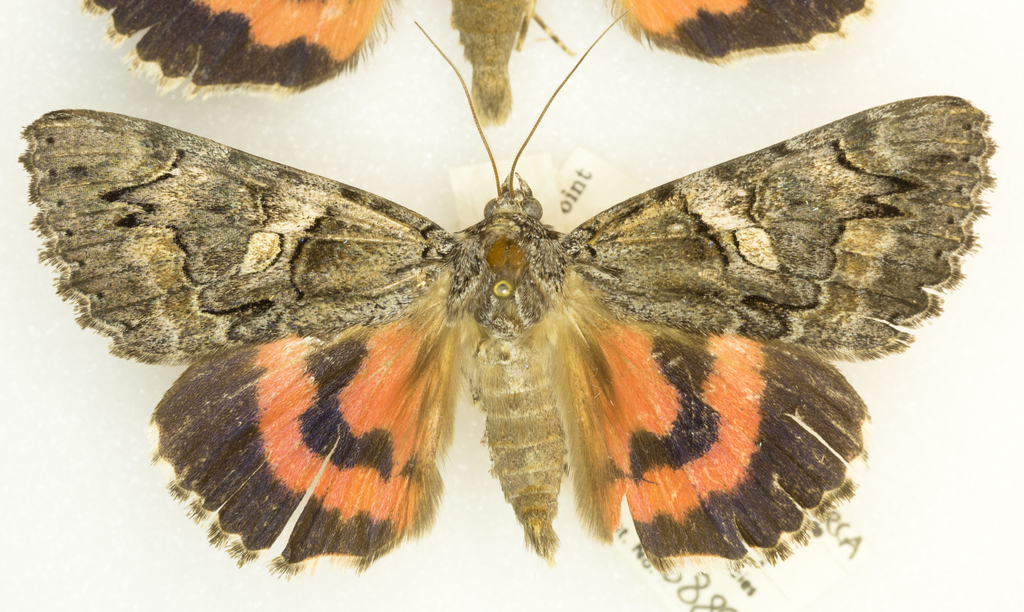
no rights reserved · CC0
Family: Erebidae · Class: Insecta · Order: Lepidoptera
Catocala ophelia is a California animal in the Erebidae family.
The Ophelia underwing (Catocala ophelia) is a moth in the family Erebidae, subfamily Erebinae. This nocturnal species belongs to the genus Catocala, commonly known as underwing moths, which are characterized by cryptic forewings and brightly colored hindwings that are typically concealed at rest. Like other Catocala species, C. ophelia likely has forewings with bark-like patterns that provide camouflage during daytime roosting, though specific morphological details for this species have not been extensively documented. Catocala ophelia has a restricted distribution in western North America. According to the PNW Moths database, the species occurs in California across the state and extends into southwestern Oregon, with Arizona also within its range. In the Pacific Northwest region, it is limited to southwestern Oregon. The species appears to have a relatively narrow geographic range compared to many other Catocala species. The species inhabits dry forest ecosystems throughout its range. In California and the broader southwestern region, C. ophelia is associated with arid and semi-arid woodland habitats. The specific elevation preferences and microhabitat requirements for this species have not been well documented in the scientific literature. Like other underwing moths, it likely requires suitable host trees for larval development and nectar sources for adult feeding. As with other Catocala species, C. ophelia likely follows a similar life cycle pattern of a single generation per year. Adult moths are presumably active during summer months, when they engage in nocturnal feeding and mating behaviors. Catocala larvae are typically external feeders on deciduous trees and shrubs, though the specific host plants for C. ophelia have not been definitively documented. Adult moths are attracted to artificial lights and are likely drawn to tree sap, rotting fruit, and other fermenting organic matter for feeding. The cryptic coloration of the forewings provides camouflage against tree bark during daytime resting. There is no current federal or state listing status for Catocala ophelia, and specific population data or conservation assessments are not available in the literature. The species' relatively restricted range in dry forest habitats may make it vulnerable to habitat loss from development, fire management practices, or climate change impacts on arid woodland ecosystems. However, without detailed population studies or trend data, the conservation status remains unclear. Scientific documentation for this species remains limited. The information presented here is based on available sources including the PNW Moths database and iNaturalist observations. If you have additional verified information about this species' biology, distribution, or ecology, please contact us to help improve this species account.
Classification
Class: Insecta · Order: Lepidoptera · Family: Erebidae
Frequently asked questions
How is Catocala ophelia classified?
Catocala ophelia belongs to class Insecta, order Lepidoptera, family Erebidae.
What family does Catocala ophelia belong to?
Catocala ophelia is in the Erebidae family.
What is Catocala ophelia?
The Ophelia underwing (Catocala ophelia) is a moth in the family Erebidae, subfamily Erebinae.
Is Catocala ophelia found in California?
Yes. Catocala ophelia is recorded in California in The California Species Project's catalogue.
Related species
Other California species in the same genus, family, or bioregion.
Data from The California Species Project — 14,000+ California species with verified data from CNPS, CDFW, USFWS, and more.