Catocala sp.
Underwing Moth (generic)
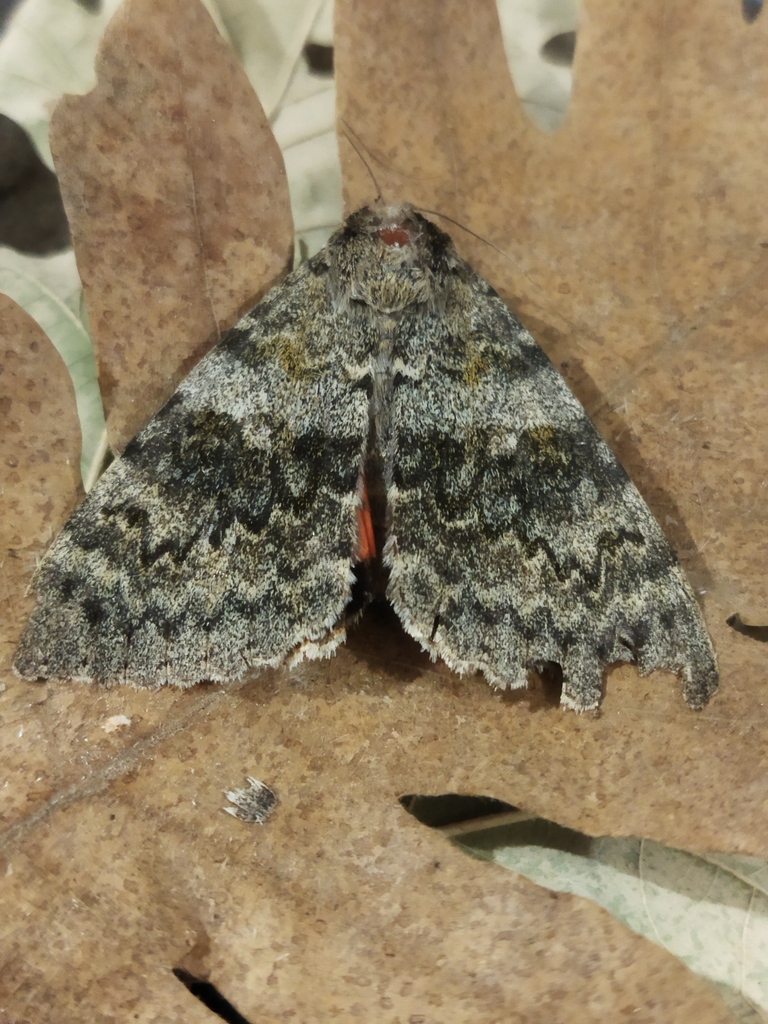
(c) SteveM4560, some rights reserved (CC BY) · licence
Family: Erebidae · Class: Insecta · Order: Lepidoptera
Catocala sp. (Underwing Moth (generic)) is a California animal in the Erebidae family.
Catocala underwing moths are a diverse genus of large nocturnal moths in the family Erebidae, subfamily Erebinae. These moths are characterized by cryptically colored forewings that provide camouflage when resting on tree bark, combined with brightly colored hindwings featuring distinctive banded patterns. Adult wingspans typically range from 6.0 to 9.0 cm (2.4 to 3.5 inches), varying among the numerous species within the genus. The forewings display mottled patterns of gray, brown, and white that closely match the bark of their host trees, while the hindwings reveal striking bands of orange, red, yellow, pink, or black and white when exposed during flight or threat displays. Catocala moths occur throughout North America, with multiple species documented in California. The genus includes approximately 200 species across North America, with distribution patterns varying by species from transcontinental ranges to more restricted regional occurrences. Some species like Catocala relicta extend from Newfoundland to Pennsylvania and west across Canada, while others occupy more limited geographic ranges (Butterflies and Moths of North America). California hosts several Catocala species, though comprehensive state-specific inventories remain incomplete. These moths inhabit deciduous and mixed forests where their caterpillar host plants occur. Habitat preferences vary among species but generally include woodlands, riparian areas, and urban environments with mature trees. Different Catocala species specialize on specific host plant families, with many utilizing hardwood trees including oaks, poplars, willows, hickories, walnuts, and ashes. Catocala piatrix, for example, develops on ash, butternut, hickory, pecan, persimmon, and walnut trees, while C. relicta specializes on poplars, quaking aspen, and willows (Butterflies and Moths of North America). Adult Catocala moths are nocturnal and exhibit cryptic behavior during daylight hours, resting motionless against tree bark where their forewings provide exceptional camouflage. When disturbed, they flash their colorful hindwings in a startle display before quickly concealing them again. Flight periods vary among species but generally occur from July through October, with some extending into November. Larvae are also cryptically colored and feed on the foliage of their specific host plants, typically completing development by early summer before pupating in soil or leaf litter. Most Catocala species maintain stable populations across their ranges, with many receiving NatureServe global rankings of G4 or G5, indicating apparent security to demonstrable security. However, some species face localized threats from habitat loss and fragmentation, particularly those with restricted ranges or specific habitat requirements. Forest management practices, urbanization, and climate change may affect certain populations, especially those dependent on specific host plant communities. Conservation status varies among individual species, with most not requiring special protection measures but benefiting from maintenance of diverse forest ecosystems and native plant communities.
Classification
Class: Insecta · Order: Lepidoptera · Family: Erebidae
Frequently asked questions
How is Catocala sp. classified?
Catocala sp. belongs to class Insecta, order Lepidoptera, family Erebidae.
What family does Catocala sp. belong to?
Catocala sp. is in the Erebidae family.
What is Catocala sp.?
Catocala underwing moths are a diverse genus of large nocturnal moths in the family Erebidae, subfamily Erebinae.
Is Catocala sp. found in California?
Yes. Catocala sp. is recorded in California in The California Species Project's catalogue.
Related species
Other California species in the same genus, family, or bioregion.
Data from The California Species Project — 14,000+ California species with verified data from CNPS, CDFW, USFWS, and more.