Catocala verrilliana
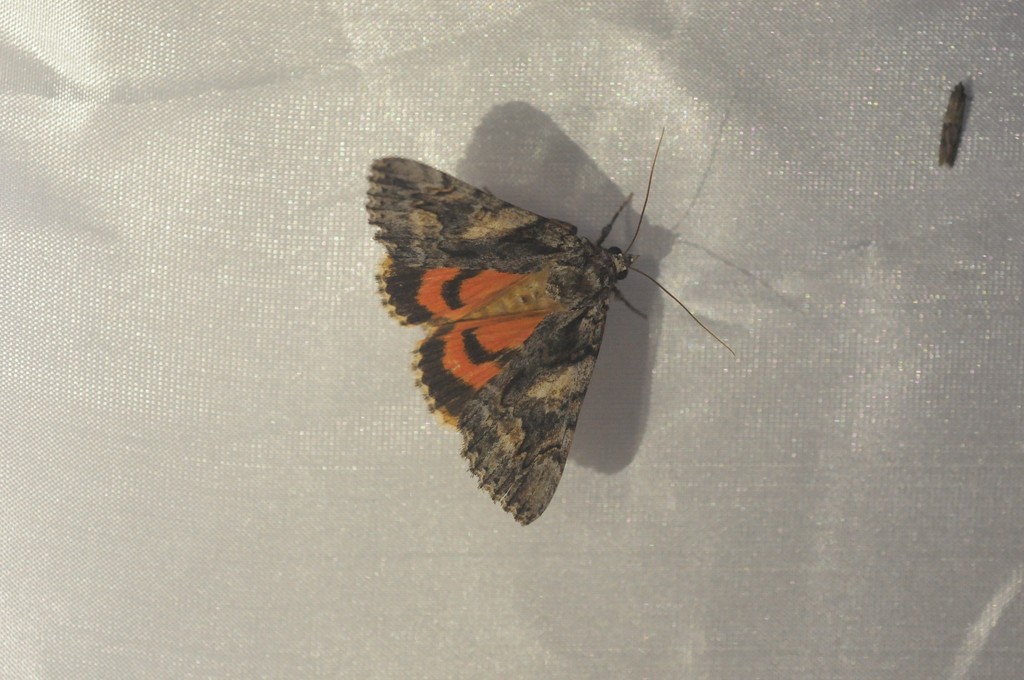
(c) Hawk T., some rights reserved (CC BY) · licence
Family: Erebidae · Class: Insecta · Order: Lepidoptera
Catocala verrilliana is a California animal in the Erebidae family.
Catocala verrilliana is a moth species in the family Erebidae, subfamily Erebinae, commonly known as underwing moths. This nocturnal lepidopteran exhibits the characteristic body plan of its genus, with forewings that provide cryptic coloration during daytime rest and hindwings that display contrasting patterns when revealed during flight or threat displays. Adults typically measure 40 to 55 millimeters (1.6 to 2.2 inches) in wingspan, with forewings displaying mottled gray, brown, and white patterns that closely resemble tree bark. The hindwings feature bold bands of color, though specific coloration patterns for this species require verification from specialized taxonomic sources. The distribution of Catocala verrilliana appears to be primarily associated with eastern North American deciduous forests, though detailed range information for this species is limited in readily accessible databases. Members of the Catocala genus are typically associated with specific host plant relationships, and many species show strong fidelity to particular tree genera for larval development. The species likely occurs in areas where suitable host plants are present, though specific host plant associations for C. verrilliana require verification from lepidopteran taxonomic literature. Habitat requirements for this species likely include mature deciduous or mixed deciduous-coniferous forests where host trees are present. Catocala species generally prefer areas with intact forest canopy that provides appropriate microclimate conditions for larval development and adult roosting sites. The moths require bark surfaces that match their cryptic wing patterns for daytime concealment, typically selecting trees with furrowed or textured bark. Adult Catocala verrilliana are nocturnal and attracted to artificial lights, following the typical behavior pattern of their genus. Males likely use pheromone detection to locate females during the mating season. Eggs are presumably laid on or near host plant bark, where they overwinter before hatching in spring. Larvae develop through several instars, feeding on host plant foliage during summer months. The caterpillars likely exhibit cryptic coloration and behavior, remaining motionless along branches during daylight hours. Pupation occurs in soil or leaf litter, with adults emerging in late summer or early fall. The conservation status of Catocala verrilliana is not well-documented in major conservation databases as of December 2025. Like many forest-dependent moth species, potential threats may include habitat fragmentation, forest management practices that reduce host plant availability, and light pollution that disrupts natural behavior patterns. Climate change could affect the synchronization between moth life cycles and host plant phenology. Without specific population data or conservation assessments, the species' current status remains uncertain, highlighting the need for comprehensive surveys of North American moth diversity to assess conservation needs for lesser-known Lepidoptera species.
Classification
Class: Insecta · Order: Lepidoptera · Family: Erebidae
Frequently asked questions
How is Catocala verrilliana classified?
Catocala verrilliana belongs to class Insecta, order Lepidoptera, family Erebidae.
What family does Catocala verrilliana belong to?
Catocala verrilliana is in the Erebidae family.
What is Catocala verrilliana?
Catocala verrilliana is a moth species in the family Erebidae, subfamily Erebinae, commonly known as underwing moths.
Is Catocala verrilliana found in California?
Yes. Catocala verrilliana is recorded in California in The California Species Project's catalogue.
Related species
Other California species in the same genus, family, or bioregion.
Data from The California Species Project — 14,000+ California species with verified data from CNPS, CDFW, USFWS, and more.