Catostomus fumeiventris
Owens Sucker
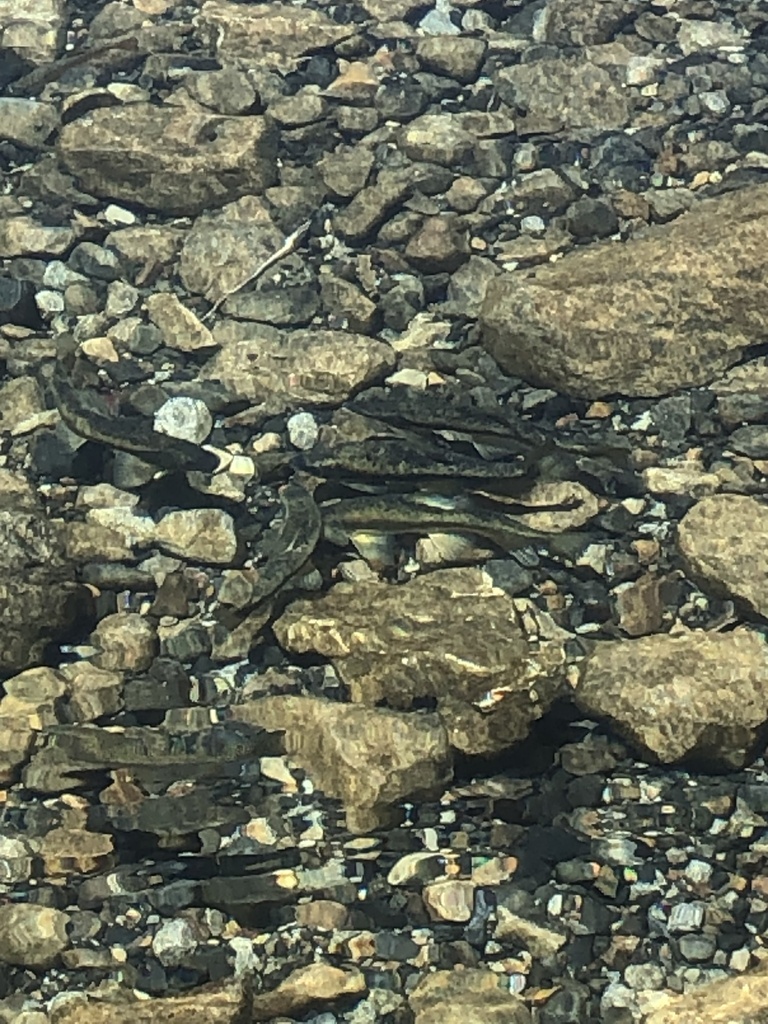
(c) Justin Paulin, some rights reserved (CC BY) · licence
Family: Catostomidae · Class: Actinopterygii · Order: Cypriniformes
Conservation status: G3 S3
Catostomus fumeiventris (Owens Sucker) is a California animal in the Catostomidae family.
The Owens sucker is a freshwater fish endemic to the Owens River basin in east-central California. Adults typically reach 150 to 200 mm (6 to 8 inches) in total length, with a cylindrical body shape characteristic of the sucker family Catostomidae. The species displays a dark olive to brown coloration on the dorsal surface, fading to lighter tones on the sides and belly. The mouth is positioned ventrally with thick, papillose lips adapted for bottom feeding. Distinguishing features include a relatively small head, moderately forked tail, and the absence of scales on the head region. Historically, the Owens sucker occurred throughout the Owens River drainage system in Mono and Inyo counties, California. The species' range extended from the headwaters near Mammoth Lakes south through Long Valley, the Owens River gorge, and into the lower Owens Valley. Current distribution is significantly reduced from historical levels, with populations now fragmented into isolated segments of the drainage system. According to the U.S. Fish and Wildlife Service recovery plan, the species persists in portions of the Owens River, Long Valley, and select tributaries, though many historical habitats have been eliminated or degraded (USFWS 1998). Owens suckers inhabit cool, clear streams and springs with rocky or gravel substrates. The species prefers areas with moderate current and abundant aquatic vegetation or algal growth. Water temperatures in occupied habitats typically range from 4 to 20 degrees Celsius, with the species showing preference for well-oxygenated waters. Elevation ranges from approximately 1,200 to 2,100 meters (4,000 to 7,000 feet) throughout the Owens Valley system. The species requires stable flow regimes and is sensitive to water diversions that alter natural hydrological patterns. As benthic feeders, Owens suckers consume algae, detritus, and small invertebrates scraped from substrate surfaces using their specialized mouth structure. Spawning occurs in spring and early summer when water temperatures rise, with adults moving to shallow riffle areas with gravel substrates. Females deposit adhesive eggs in redds excavated by both sexes. The species exhibits typical sucker reproductive behavior, with males developing breeding tubercles during spawning season. Juvenile fish occupy shallow, vegetated areas before moving to deeper pools as they mature. The Owens sucker is designated as a California Species of Special Concern and receives a global conservation rank of G3 (vulnerable). Primary threats include habitat modification from water diversions, livestock grazing impacts, and competition with introduced fish species. Brown trout and other non-native species now dominate many former Owens sucker habitats, though some coexistence has been documented in certain areas (USFWS 1998). Water management practices for agricultural and municipal use have significantly altered natural flow patterns throughout the Owens Valley, contributing to population declines. Climate change poses additional challenges through altered precipitation patterns and increased water demand. Conservation efforts focus on habitat restoration, water flow management, and monitoring of remaining populations to prevent further declines.
Classification
Class: Actinopterygii · Order: Cypriniformes · Family: Catostomidae
Conservation status
G3 S3
Frequently asked questions
How is Catostomus fumeiventris classified?
Catostomus fumeiventris belongs to class Actinopterygii, order Cypriniformes, family Catostomidae.
What family does Catostomus fumeiventris belong to?
Catostomus fumeiventris is in the Catostomidae family.
Is Catostomus fumeiventris protected or of conservation concern?
Catostomus fumeiventris carries the following status: G3 S3.
What is Catostomus fumeiventris?
The Owens sucker is a freshwater fish endemic to the Owens River basin in east-central California.
Is Catostomus fumeiventris found in California?
Yes. Catostomus fumeiventris is recorded in California in The California Species Project's catalogue.
Related species
Other California species in the same genus, family, or bioregion.
Data from The California Species Project — 14,000+ California species with verified data from CNPS, CDFW, USFWS, and more.