Catostomus latipinnis
Flannelmouth sucker
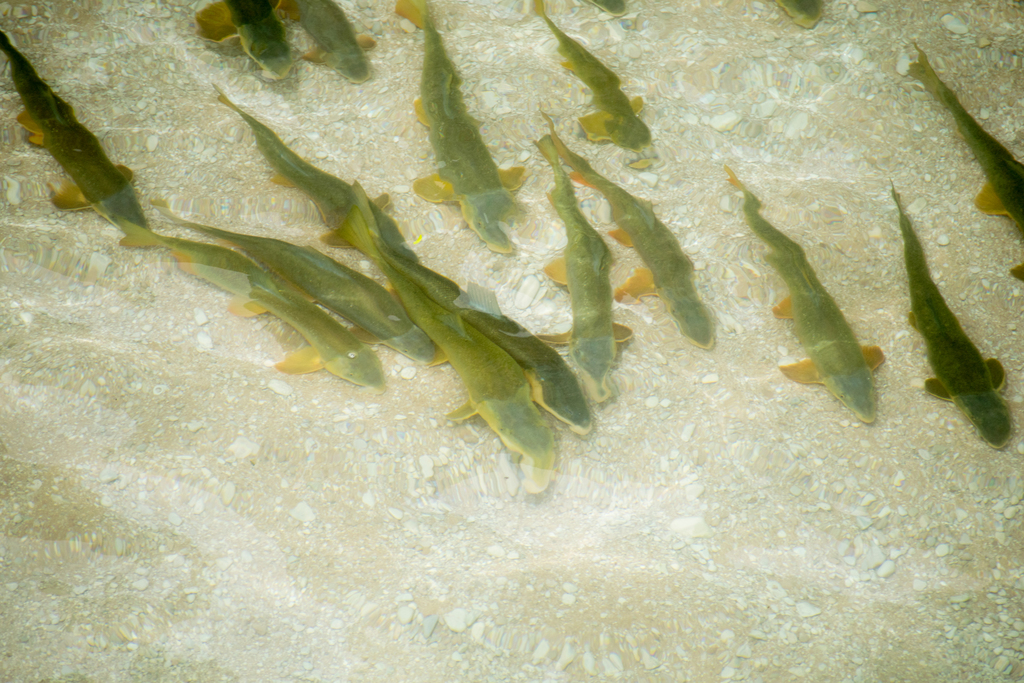
(c) Boris Grozev, some rights reserved (CC BY) · licence
Family: Catostomidae · Class: Actinopterygii · Order: Cypriniformes
Conservation status: G3G4 S1
Catostomus latipinnis (Flannelmouth sucker) is a California animal in the Catostomidae family.
The flannelmouth sucker is a large freshwater fish native to the Colorado River basin. Adults typically reach 300 to 500 mm (12 to 20 inches) in total length, with maximum sizes approaching 610 mm (24 inches). The species is characterized by its distinctive enlarged lower lip that extends well beyond the upper lip, creating a prominent flannel-like appearance that gives the fish its common name. The body is elongated and somewhat compressed laterally, with a subterminal mouth positioned on the underside of the head. Coloration varies from olive-brown to gray dorsally, fading to cream or white ventrally. Adults develop tubercles on the head and anal fin during breeding season. Historically, flannelmouth suckers were distributed throughout the Colorado River system from Wyoming and Colorado south through Utah, Arizona, Nevada, and California into Mexico. In California, the species occurred in the Colorado River and its tributaries, including areas that are now inundated by reservoirs. Current California populations are severely restricted compared to historical range, with the species assigned a state rank of S1, indicating it is critically imperiled in California. Flannelmouth suckers inhabit flowing waters of large rivers and streams within the Colorado River basin. The species prefers areas with rocky or gravel substrates and moderate to swift current velocities. Adults are typically found in deeper pools and runs, while juveniles utilize shallower areas with slower currents. Water temperatures in occupied habitats range from 10 to 25 degrees Celsius (50 to 77 degrees Fahrenheit). The species demonstrates some tolerance for turbid conditions but requires well-oxygenated water. This species is primarily herbivorous, using its specialized lower lip to scrape algae, detritus, and small invertebrates from rocky surfaces. Spawning occurs from March through June when water temperatures reach 12 to 18 degrees Celsius (54 to 64 degrees Fahrenheit). Adults migrate upstream to spawning areas over gravel or cobble substrates. Females broadcast eggs that are fertilized externally, with no parental care provided. Sexual maturity is reached at 3 to 4 years of age, and individuals may live up to 15 years. The flannelmouth sucker faces significant conservation challenges throughout its range. The species' global rank of G3G4 indicates it is vulnerable to globally vulnerable to apparently secure, while its California ranking of S1 reflects critical imperilment within the state. Primary threats include habitat modification from dam construction, water diversions, and altered flow regimes. Non-native fish species compete for resources and may prey upon juveniles. Water quality degradation from agricultural runoff and urban development further impacts populations. Climate change poses additional challenges through altered precipitation patterns and increased water temperatures in an already water-stressed region.
Classification
Class: Actinopterygii · Order: Cypriniformes · Family: Catostomidae
Conservation status
G3G4 S1
Frequently asked questions
How is Catostomus latipinnis classified?
Catostomus latipinnis belongs to class Actinopterygii, order Cypriniformes, family Catostomidae.
What family does Catostomus latipinnis belong to?
Catostomus latipinnis is in the Catostomidae family.
Is Catostomus latipinnis protected or of conservation concern?
Catostomus latipinnis carries the following status: G3G4 S1.
What is Catostomus latipinnis?
The flannelmouth sucker is a large freshwater fish native to the Colorado River basin.
Is Catostomus latipinnis found in California?
Yes. Catostomus latipinnis is recorded in California in The California Species Project's catalogue.
Related species
Other California species in the same genus, family, or bioregion.
Data from The California Species Project — 14,000+ California species with verified data from CNPS, CDFW, USFWS, and more.