Catostomus rimiculus ssp. 1
Jenny Creek sucker
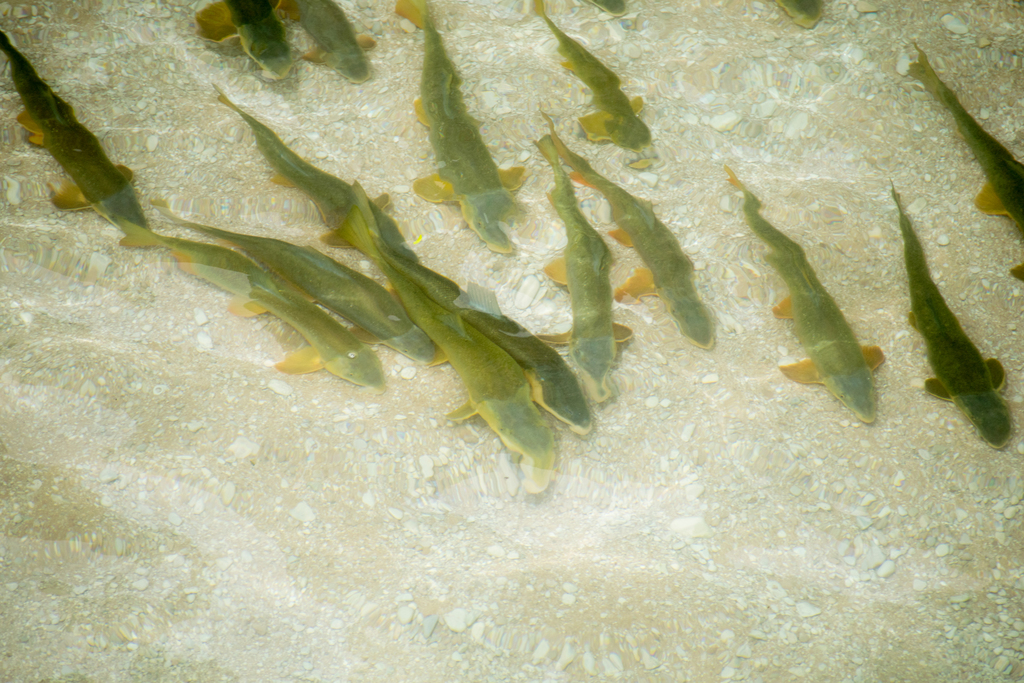
(c) Boris Grozev, some rights reserved (CC BY) · licence
Family: Catostomidae · Class: Actinopterygii · Order: Cypriniformes
Conservation status: G5T2Q S1
Catostomus rimiculus ssp. 1 (Jenny Creek sucker) is a California animal in the Catostomidae family.
The Jenny Creek sucker is a freshwater fish species in the family Catostomidae, representing a distinct subspecies (Catostomus rimiculus ssp. 1) of the Klamath largescale sucker complex. This subspecies is characterized by typical sucker morphology, with an elongated cylindrical body, subterminal mouth positioned on the underside of the head for bottom feeding, and thick, papillose lips adapted for scraping algae and organic matter from substrates. Adults typically reach lengths of 200 to 400 mm (8 to 16 inches), with olive-brown to dark gray coloration on the dorsal surface grading to lighter yellow-brown or cream on the ventral side. The species exhibits the characteristic large scales that distinguish largescale suckers from other Catostomus species in the region. The Jenny Creek sucker is endemic to the Jenny Creek drainage system in the Klamath River basin, with populations occurring in both Oregon and extreme northern California. The subspecies has an extremely limited range, confined to Jenny Creek and its tributaries in Jackson County, Oregon, and Siskiyou County, California. This represents one of the most geographically restricted distributions among Pacific Northwest sucker species. This subspecies inhabits cool, clear streams and small rivers within the mixed conifer forests of the Cascade Range. Preferred habitats include pools and runs with rocky or gravelly substrates at elevations ranging from approximately 600 to 1,200 meters (2,000 to 4,000 feet). Water temperatures in occupied habitats typically remain below 20°C (68°F) during summer months. The species requires well-oxygenated water and is sensitive to sedimentation and habitat degradation. Jenny Creek suckers are benthic feeders, using their specialized mouths to scrape periphyton, algae, and small invertebrates from rocks and woody debris. Spawning occurs in spring, typically from April to June, when adults move to shallow riffles with gravel substrates. Females broadcast eggs over clean gravel beds where males fertilize them externally. The species exhibits no parental care, and juveniles develop in shallow areas with slower current velocities. The Jenny Creek sucker carries a global rank of G5T2Q, indicating the subspecies is imperiled globally with 6 to 20 occurrences, while maintaining an S1 rank in California, denoting critically imperiled status within the state. The 'Q' qualifier reflects taxonomic uncertainty regarding the subspecies designation. Primary threats include habitat degradation from livestock grazing, agricultural runoff, water diversions, and sedimentation from logging activities. Climate change poses additional risks through increased water temperatures and altered flow regimes. The limited range makes this subspecies particularly vulnerable to localized disturbances, and any significant habitat loss could result in population extirpation. Conservation efforts focus on habitat protection, water quality maintenance, and livestock exclusion from riparian areas within the Jenny Creek watershed.
Classification
Class: Actinopterygii · Order: Cypriniformes · Family: Catostomidae
Conservation status
G5T2Q S1
Frequently asked questions
How is Catostomus rimiculus ssp. 1 classified?
Catostomus rimiculus ssp. 1 belongs to class Actinopterygii, order Cypriniformes, family Catostomidae.
What family does Catostomus rimiculus ssp. 1 belong to?
Catostomus rimiculus ssp. 1 is in the Catostomidae family.
Is Catostomus rimiculus ssp. 1 protected or of conservation concern?
Catostomus rimiculus ssp. 1 carries the following status: G5T2Q S1.
What is Catostomus rimiculus ssp. 1?
The Jenny Creek sucker is a freshwater fish species in the family Catostomidae, representing a distinct subspecies (Catostomus rimiculus ssp.
Is Catostomus rimiculus ssp. 1 found in California?
Yes. Catostomus rimiculus ssp. 1 is recorded in California in The California Species Project's catalogue.
Related species
Other California species in the same genus, family, or bioregion.
Data from The California Species Project — 14,000+ California species with verified data from CNPS, CDFW, USFWS, and more.