Catostomus snyderi
Klamath largescale sucker
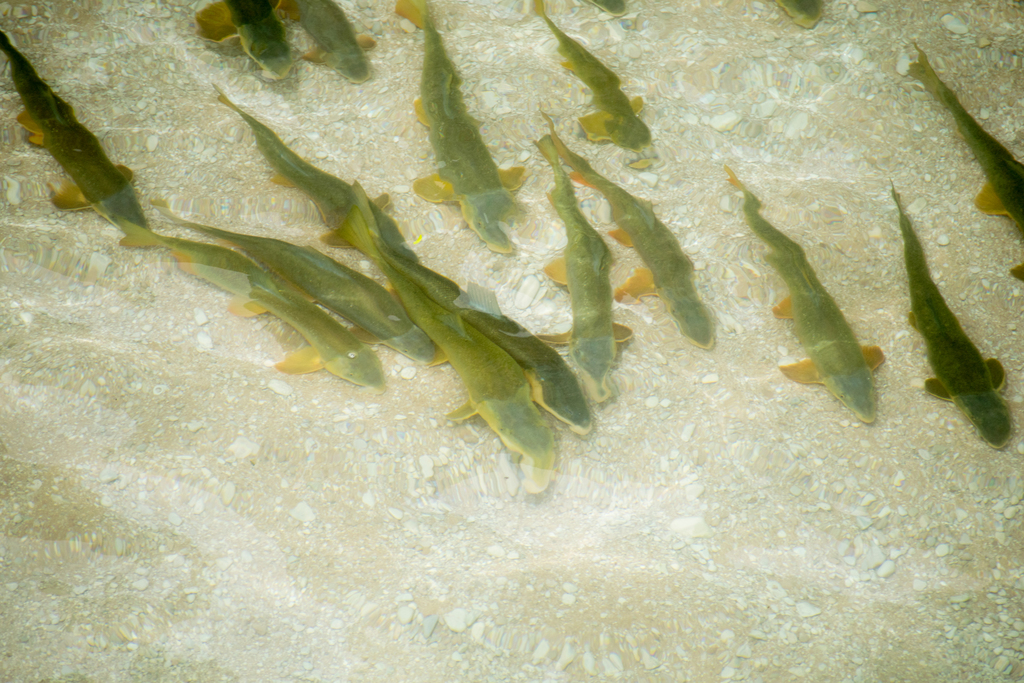
(c) Boris Grozev, some rights reserved (CC BY) · licence
Family: Catostomidae · Class: Actinopterygii · Order: Cypriniformes
Conservation status: G3 S3
Catostomus snyderi (Klamath largescale sucker) is a California animal in the Catostomidae family.
The Klamath largescale sucker (Catostomus snyderi) is a medium-sized freshwater fish endemic to the Klamath River basin in northern California and southern Oregon. Adults typically reach 200 to 300 mm (8 to 12 inches) in total length, with a maximum recorded length of approximately 400 mm (16 inches). The species exhibits the characteristic sucker body form with a somewhat compressed, elongated profile and a distinctly subterminal mouth adapted for bottom feeding. The dorsal surface is typically olive-brown to dark brown, grading to lighter bronze or yellowish tones on the sides and a pale ventral surface. The species is distinguished from other Klamath basin suckers by its relatively large scales, with 65 to 75 scales along the lateral line, and its moderately forked caudal fin. Historically, Klamath largescale suckers were distributed throughout the mainstem Klamath River and its major tributaries from the estuary upstream to Upper Klamath Lake in Oregon. In California, the species occurs in the lower Klamath River and its tributaries including the Salmon, Scott, and Shasta rivers in Siskiyou County, and the Trinity River system in Trinity and Humboldt counties. Current distribution appears fragmented compared to historical range, with populations isolated by dams and habitat modifications. The species inhabits cool, clear streams and rivers with rocky or gravelly substrates, typically in pools, runs, and deep eddies. Klamath largescale suckers prefer water temperatures below 20°C (68°F) and are generally found at elevations from sea level to approximately 1,200 meters (4,000 feet). Adults require deep pools for overwintering and access to tributary streams or shallow areas with appropriate substrate for spawning. Juvenile fish utilize nearshore areas and backwaters with slower currents and abundant cover. Klamath largescale suckers are benthivorous, feeding primarily on algae, detritus, aquatic invertebrates, and small organic matter scraped from substrate surfaces using their specialized mouth structure. Spawning occurs from April through June when water temperatures reach 10 to 15°C (50 to 59°F). Adults migrate to tributary streams or shallow areas of the mainstem river to spawn over gravel beds. Females broadcast adhesive eggs that settle into substrate crevices, with males fertilizing eggs externally. Sexual maturity is typically reached at 3 to 4 years of age, and the species exhibits moderate longevity with individuals living up to 10 years. The Klamath largescale sucker holds a G3 S3 conservation ranking, indicating the species is vulnerable to extirpation globally and within California. Primary threats include habitat fragmentation from dams, water diversions that alter natural flow regimes, degraded water quality from agricultural runoff and mining activities, and competition with introduced fish species. The Klamath River dam removal project, completed in 2024, may improve connectivity and habitat access for remaining populations, though recovery will require continued monitoring and habitat restoration efforts.
Classification
Class: Actinopterygii · Order: Cypriniformes · Family: Catostomidae
Conservation status
G3 S3
Frequently asked questions
How is Catostomus snyderi classified?
Catostomus snyderi belongs to class Actinopterygii, order Cypriniformes, family Catostomidae.
What family does Catostomus snyderi belong to?
Catostomus snyderi is in the Catostomidae family.
Is Catostomus snyderi protected or of conservation concern?
Catostomus snyderi carries the following status: G3 S3.
What is Catostomus snyderi?
The Klamath largescale sucker (Catostomus snyderi) is a medium-sized freshwater fish endemic to the Klamath River basin in northern California and southern Oregon.
Is Catostomus snyderi found in California?
Yes. Catostomus snyderi is recorded in California in The California Species Project's catalogue.
Related species
Other California species in the same genus, family, or bioregion.
Data from The California Species Project — 14,000+ California species with verified data from CNPS, CDFW, USFWS, and more.