Catostomus warnerensis
Warner Sucker
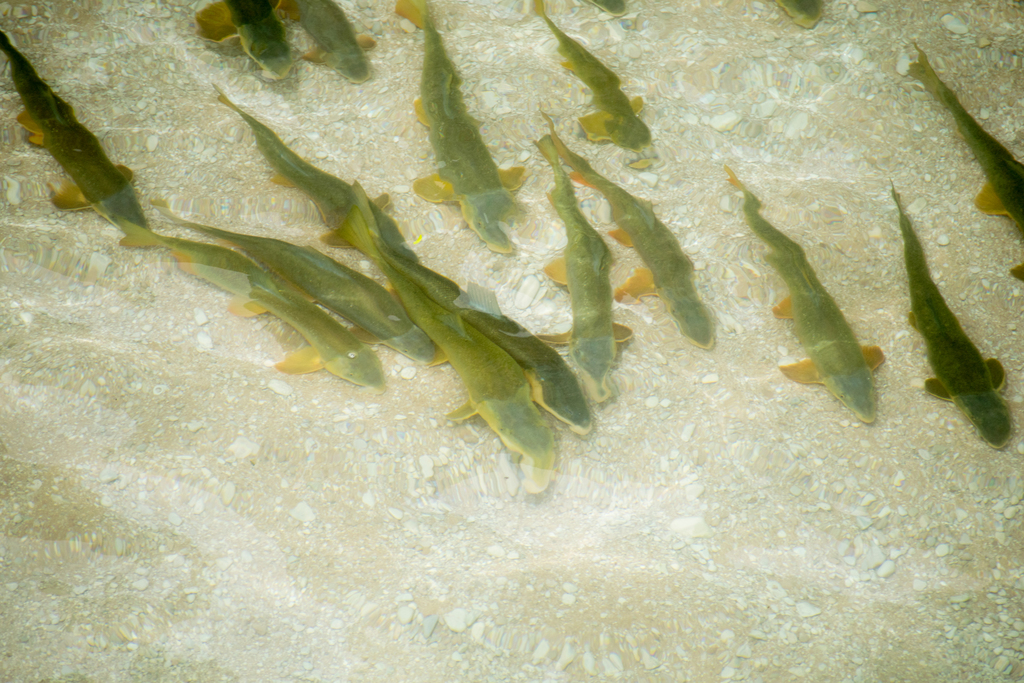
(c) Boris Grozev, some rights reserved (CC BY) · licence
Family: Catostomidae · Class: Actinopterygii · Order: Cypriniformes
Conservation status: Threatened
Catostomus warnerensis (Warner Sucker) is a California animal in the Catostomidae family.
The Warner sucker is a small freshwater fish endemic to the Warner Basin of southeastern Oregon. Adults typically measure 100 to 200 millimeters (4 to 8 inches) in total length, with a cylindrical body typical of the sucker family Catostomidae. The species exhibits the characteristic subterminal mouth positioned on the underside of the head, adapted for bottom feeding. Body coloration consists of olive-brown to dark gray dorsally, fading to lighter tones on the sides and belly. Historically, Warner suckers were distributed throughout the lakes and streams of the Warner Basin in Lake County, Oregon. The species was first collected by Cope in 1883 from the "third Warner lake," presumably Hart Lake (USFWS 1998). Current distribution is restricted to a few remaining water bodies within this closed basin system, representing a significant reduction from their historical range. Warner suckers inhabit the shallow, vegetated areas of lakes and the slow-moving sections of tributary streams within the Warner Basin. The species occurs in waters that experience significant seasonal and annual fluctuations in water levels and temperatures. These fish are adapted to the alkaline conditions typical of Great Basin desert lakes, where water chemistry can vary considerably based on precipitation patterns and evaporation rates. As benthic feeders, Warner suckers consume algae, detritus, and small invertebrates found on lake and stream bottoms. Their subterminal mouth allows them to efficiently forage along substrates. Reproductive behavior involves spawning in tributary streams or shallow lake areas during spring months when water temperatures rise. Like other suckers, they are broadcast spawners, releasing eggs and sperm into the water column where fertilization occurs externally. The Warner sucker was listed as threatened under the Endangered Species Act on September 27, 1985 (50 FR 39117), making it one of the earliest fish species to receive federal protection. Critical habitat was designated concurrently with the listing. The primary threats include habitat modification, water diversions for agricultural use, drought conditions, and competition with introduced fish species. The Warner Basin's closed drainage system makes the species particularly vulnerable to water management practices and climatic variations. Introduced species pose significant challenges to Warner sucker populations. Non-native fishes including black crappie, white crappie, brown bullhead, and largemouth bass compete for resources and may prey on juvenile suckers (USFWS 1998). Water diversions for irrigation reduce available habitat and alter the natural hydrologic regime essential for successful reproduction and recruitment. Recovery efforts focus on habitat restoration, water management coordination with local agricultural interests, and monitoring of population trends. The species remains restricted to a limited number of water bodies within its historical range, making population viability a continuing concern. Long-term conservation success depends on maintaining adequate water levels and quality while managing competing water demands in this arid region.
Classification
Class: Actinopterygii · Order: Cypriniformes · Family: Catostomidae
Conservation status
Threatened
Frequently asked questions
How is Catostomus warnerensis classified?
Catostomus warnerensis belongs to class Actinopterygii, order Cypriniformes, family Catostomidae.
What family does Catostomus warnerensis belong to?
Catostomus warnerensis is in the Catostomidae family.
Is Catostomus warnerensis protected or of conservation concern?
Catostomus warnerensis carries the following status: Threatened.
What is Catostomus warnerensis?
The Warner sucker is a small freshwater fish endemic to the Warner Basin of southeastern Oregon.
Is Catostomus warnerensis found in California?
Yes. Catostomus warnerensis is recorded in California in The California Species Project's catalogue.
Related species
Other California species in the same genus, family, or bioregion.
Data from The California Species Project — 14,000+ California species with verified data from CNPS, CDFW, USFWS, and more.