Cebidichthys violaceus
Monkey-faced Prickleback
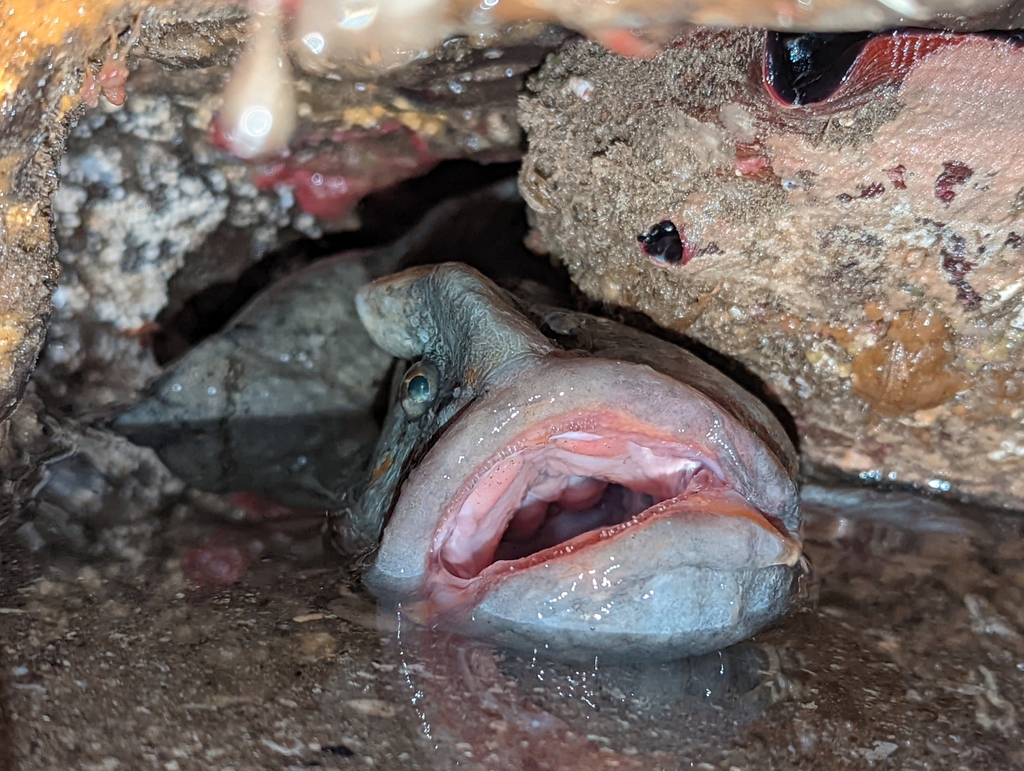
(c) Matt Muir, some rights reserved (CC BY) · licence
Family: Stichaeidae · Class: Actinopterygii · Order: Perciformes
Cebidichthys violaceus (Monkey-faced Prickleback) is a California animal in the Stichaeidae family.
The Monkey-faced Prickleback is a distinctive elongated marine fish reaching lengths of 29 inches and weights up to 7.5 pounds. The species displays a compressed, eel-like body with a blunt, rounded snout that gives rise to its common name. Coloration varies from greenish-brown to purplish-violet, with irregular darker bands across the body. The dorsal fin extends nearly the full length of the back, while the anal fin is considerably shorter. Despite its common name "monkeyface eel," this species is not a true eel but belongs to the prickleback family Stichaeidae. Monkey-faced Prickleback occurs along the Pacific coast from Oregon to Baja California, with established populations throughout California's nearshore waters. The species is commonly found from the intertidal zone to depths of 20 fathoms (120 feet) in nearshore waters, particularly around rocky substrates, kelp beds, and offshore rocks and islands. This species inhabits rocky intertidal and shallow subtidal environments, showing a strong preference for crevices, caves, and areas with complex rocky structure. Monkey-faced Prickleback typically occupies the upper intertidal zone during low tide periods and moves into shallow subtidal rocky areas during high tide. The species demonstrates strong site fidelity, often returning to the same crevice or shelter repeatedly. Adults are commonly associated with kelp beds and rocky reefs, utilizing the complex three-dimensional habitat structure these environments provide. Monkey-faced Prickleback exhibits primarily herbivorous feeding behavior, consuming various marine algae and small invertebrates. The species is known to be territorial, aggressively defending preferred shelter sites from conspecifics and other fish species. Reproduction occurs through external fertilization, with males guarding nests constructed in rocky crevices. The species displays strong homing behavior and can survive extended periods out of water during low tide by remaining moist in rocky pools and crevices. Currently, Monkey-faced Prickleback has no federal or state conservation listing status, indicating stable population levels throughout its range. The species supports both recreational angling and spearfishing activities, with California maintaining specific regulations governing its harvest. According to California Department of Fish and Wildlife records, the species is classified within nearshore fisheries management, subject to general ocean fishing regulations including gear restrictions and seasonal considerations. The current California angling record stands at 7 pounds, 8 ounces, caught in 2019 from Pescadero in San Mateo County. The species' association with rocky nearshore habitats makes it potentially vulnerable to coastal development, pollution, and climate change impacts on kelp forest ecosystems, though no immediate conservation concerns have been identified as of December 2025.
Classification
Class: Actinopterygii · Order: Perciformes · Family: Stichaeidae
Frequently asked questions
How is Cebidichthys violaceus classified?
Cebidichthys violaceus belongs to class Actinopterygii, order Perciformes, family Stichaeidae.
What family does Cebidichthys violaceus belong to?
Cebidichthys violaceus is in the Stichaeidae family.
What is Cebidichthys violaceus?
The Monkey-faced Prickleback is a distinctive elongated marine fish reaching lengths of 29 inches and weights up to 7.5 pounds.
Is Cebidichthys violaceus found in California?
Yes. Cebidichthys violaceus is recorded in California in The California Species Project's catalogue.
Related species
Other California species in the same genus, family, or bioregion.
Data from The California Species Project — 14,000+ California species with verified data from CNPS, CDFW, USFWS, and more.