Cenophengus debilis
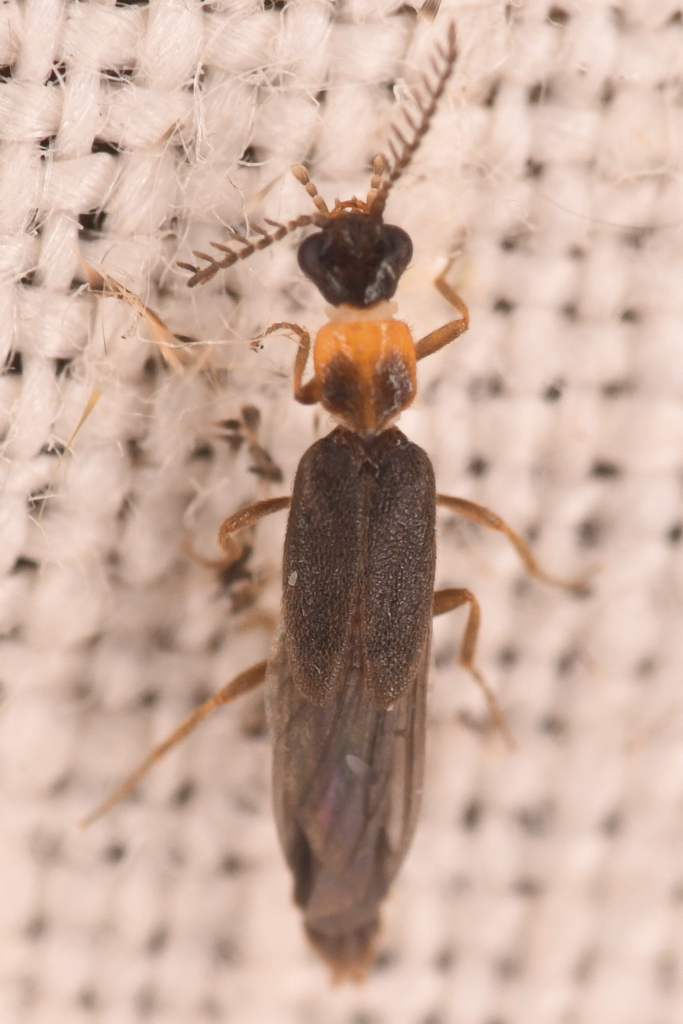
(c) Trevor Van Loon, some rights reserved (CC BY) · licence
Family: Phengodidae · Class: Insecta · Order: Coleoptera
Cenophengus debilis is a California animal in the Phengodidae family.
Cenophengus debilis is a beetle species in the family Phengodidae, commonly known as glowworm beetles or railroad worms. This family is characterized by extreme sexual dimorphism, with wingless, larviform females and winged males that are typically attracted to artificial lights. The specific morphological characteristics of C. debilis have not been well documented in available scientific literature. The distribution and range of Cenophengus debilis remain poorly documented in current taxonomic databases. The species appears in the U.S. Fish and Wildlife Service taxonomic tree system, indicating it has been catalogued by federal agencies, though specific geographic distribution data are not readily available in standard biodiversity databases. The genus Cenophengus is primarily associated with western North America, but the precise range limits for C. debilis require further documentation. Habitat preferences for Cenophengus debilis have not been specifically characterized in available literature. Members of the Phengodidae family typically inhabit areas with decaying organic matter, as larvae are predaceous and feed on other soil-dwelling invertebrates. Adults are often found in woodlands and areas with moderate moisture levels, particularly during evening hours when males are active in mate-seeking behavior. The ecology and behavior of C. debilis follow the typical phengodid pattern of extreme sexual dimorphism and bioluminescence. Females are wingless and retain a larval appearance throughout their lives, remaining in soil or leaf litter where they emit light to attract males. Males are fully winged and typically have large, feathery antennae adapted for detecting female pheromones. The bioluminescent displays serve as species-specific mating signals, with different patterns distinguishing closely related species. Larval stages are predaceous, feeding on various soil invertebrates including other beetle larvae, millipedes, and soft-bodied arthropods. The conservation status of Cenophengus debilis has not been formally assessed by state or federal agencies. The species does not appear on current endangered species lists or conservation priority rankings. However, like many soil-dwelling invertebrates, phengodid beetles may be vulnerable to habitat modification, pesticide use, and changes in forest floor composition. The secretive nature of these beetles and their complex life cycles make population monitoring challenging. Scientific documentation for this species remains extremely limited despite searches of major entomological databases and biodiversity resources. The taxonomic validity and detailed biological characteristics of C. debilis require verification through additional systematic research. Current knowledge is insufficient to assess population trends, specific threats, or conservation needs. We welcome contributions of verified scientific data, photographs, or field observations to enhance this species account.
Classification
Class: Insecta · Order: Coleoptera · Family: Phengodidae
Frequently asked questions
How is Cenophengus debilis classified?
Cenophengus debilis belongs to class Insecta, order Coleoptera, family Phengodidae.
What family does Cenophengus debilis belong to?
Cenophengus debilis is in the Phengodidae family.
What is Cenophengus debilis?
Cenophengus debilis is a beetle species in the family Phengodidae, commonly known as glowworm beetles or railroad worms.
Is Cenophengus debilis found in California?
Yes. Cenophengus debilis is recorded in California in The California Species Project's catalogue.
Related species
Other California species in the same genus, family, or bioregion.
Data from The California Species Project — 14,000+ California species with verified data from CNPS, CDFW, USFWS, and more.