Cephaloscyllium ventriosum
Swellshark
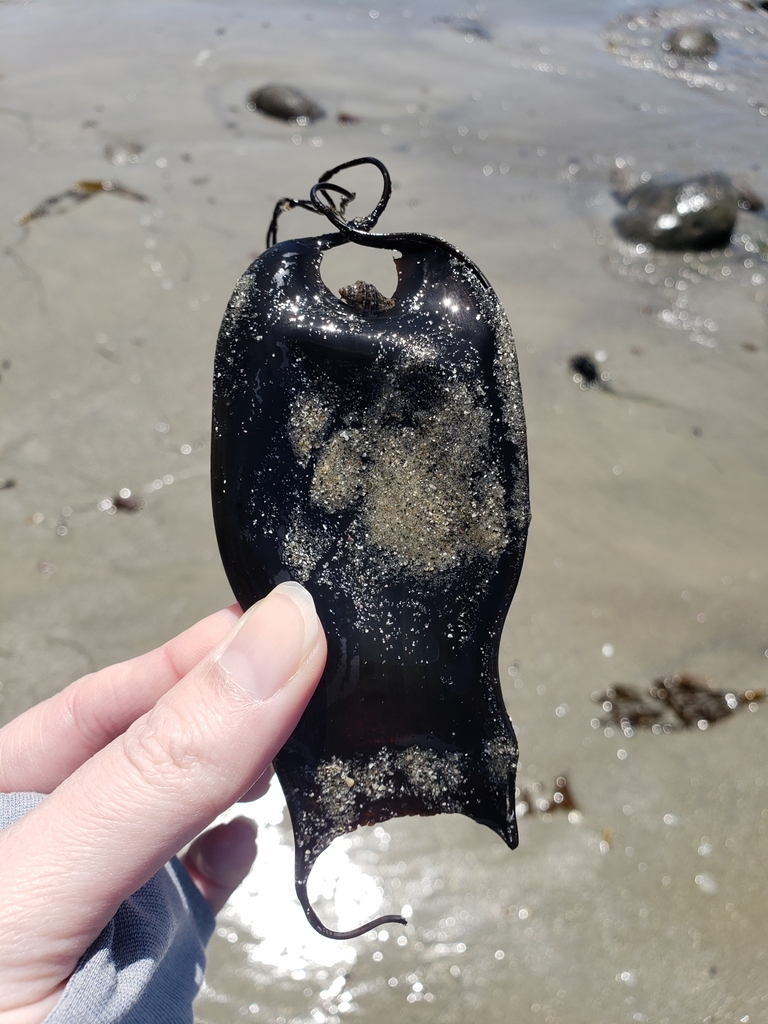
(c) kwalks146, some rights reserved (CC BY) · licence
Family: Scyliorhinidae · Class: Chondrichthyes · Order: Carcharhiniformes
Cephaloscyllium ventriosum (Swellshark) is a California animal in the Scyliorhinidae family.
The swell shark is a small catshark species belonging to the family Scyliorhinidae. Adults typically reach 1 meter (3.3 feet) in length, with females growing slightly larger than males. The body is cylindrical and robust, covered in rough dermal denticles that give the skin a sandpaper-like texture. Coloration is highly variable, ranging from yellowish-brown to dark brown or reddish-brown, with darker blotches and saddle-shaped markings across the back and sides. The head is broad and flattened, with a blunt snout and small eyes equipped with nictitating membranes. Two small dorsal fins are positioned posteriorly on the body, with the first dorsal fin origin located over the pelvic fin bases. Swell sharks occur along the Pacific coast from central California to southern Baja California, Mexico. In California waters, they are distributed from Humboldt County southward, with populations documented in areas such as Point Conception and throughout the Southern California Bight. The species inhabits continental shelf waters from the intertidal zone to depths of approximately 460 meters (1,500 feet), though they are most commonly encountered between 5 and 37 meters (16 to 121 feet) depth. This species occupies rocky reef environments, kelp forests, and areas with complex bottom structure that provide shelter and hunting opportunities. Swell sharks prefer caves, crevices, and overhangs during daylight hours, emerging at night to forage. They are frequently found in kelp beds where the dense vegetation provides both cover and abundant prey. The species can tolerate a range of water temperatures but shows preference for cooler waters typical of the California Current system. Swell sharks are nocturnal predators that feed primarily on small bony fishes, cephalopods, crustaceans, and polychaete worms. They are oviparous, with females depositing large, amber-colored egg cases in rocky crevices and among algae. Each egg case measures approximately 10 to 13 centimeters (4 to 5 inches) in length and requires 7 to 10 months for embryonic development. The species exhibits the distinctive defensive behavior of inflating its body with water or air when threatened, significantly increasing its girth and making it difficult for predators to extract from crevices - hence the common name "swell shark." This inflation is accomplished by rapidly pumping water into the stomach. Currently, swell sharks have no federal or state conservation listing status in California. The species appears to maintain stable populations throughout its range, though like many nearshore marine species, it faces pressure from habitat degradation, pollution, and fishing activities. While not directly targeted by commercial fisheries, swell sharks are occasionally caught as bycatch in bottom trawls and gillnets. The species' preference for nearshore rocky habitats makes it potentially vulnerable to coastal development and marine pollution. Climate change effects on water temperature and prey availability represent emerging concerns for long-term population stability.
Classification
Class: Chondrichthyes · Order: Carcharhiniformes · Family: Scyliorhinidae
Frequently asked questions
How is Cephaloscyllium ventriosum classified?
Cephaloscyllium ventriosum belongs to class Chondrichthyes, order Carcharhiniformes, family Scyliorhinidae.
What family does Cephaloscyllium ventriosum belong to?
Cephaloscyllium ventriosum is in the Scyliorhinidae family.
What is Cephaloscyllium ventriosum?
The swell shark is a small catshark species belonging to the family Scyliorhinidae.
Is Cephaloscyllium ventriosum found in California?
Yes. Cephaloscyllium ventriosum is recorded in California in The California Species Project's catalogue.
More California species
This species has no close relatives in our California data — here are other species to explore.
Data from The California Species Project — 14,000+ California species with verified data from CNPS, CDFW, USFWS, and more.