Ceranemota fasciata
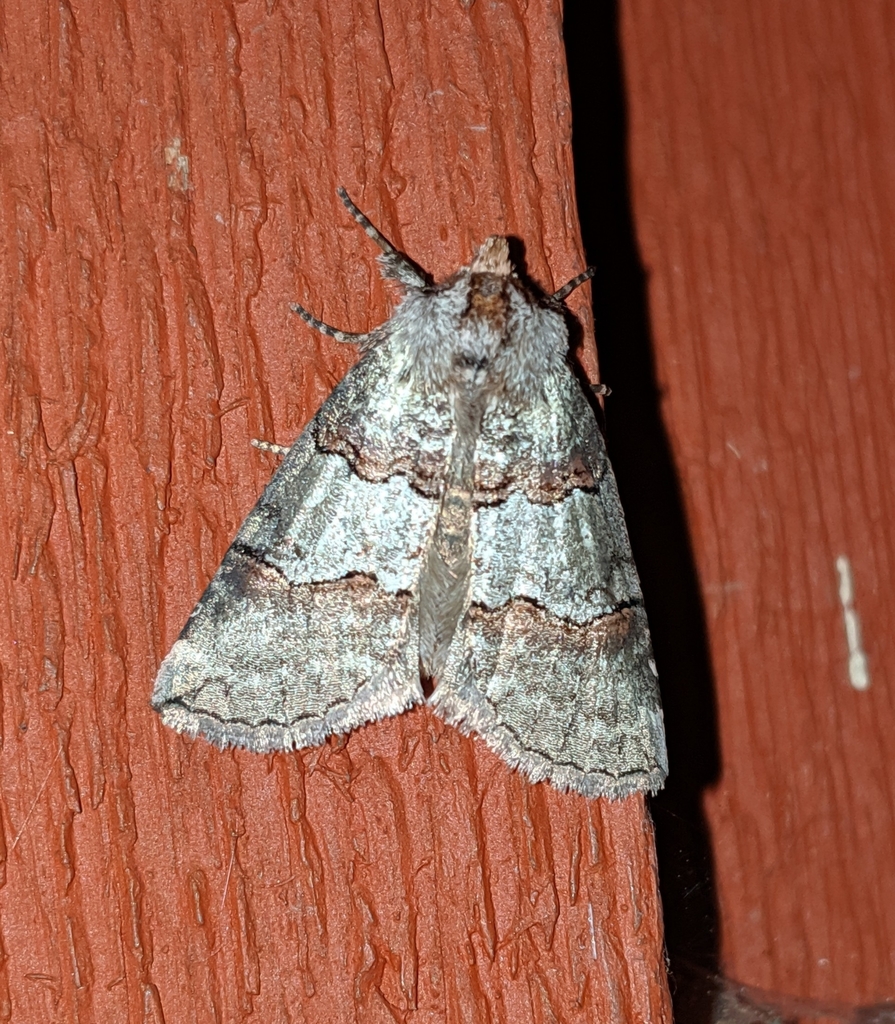
no rights reserved · CC0
Family: Drepanidae · Class: Insecta · Order: Lepidoptera
Ceranemota fasciata is a California animal in the Drepanidae family.
Ceranemota fasciata is a medium-sized moth in the family Drepanidae with forewings measuring 16-20 mm in length (PNW Moths). The species displays greenish-gray coloration with relatively simple forewing patterns compared to other members of its genus. Adults are characterized by their muted earth tones that provide effective camouflage in their forest habitats. This moth occurs along the Pacific Coast of North America, with its range extending from coastal southern Alaska south through British Columbia to northern California (iNaturalist, PNW Moths). The species appears to have a continuous distribution throughout this coastal region, though specific county-level occurrence data within California remains limited in published literature. Ceranemota fasciata inhabits coastal rainforests, mixed hardwood forests, and montane riparian areas (iNaturalist). The species shows a preference for moist, forested environments typical of the Pacific Northwest coastal region. These habitats are characterized by high humidity levels and dense canopy cover, providing suitable conditions for both adult moths and their developmental stages. The association with riparian zones suggests the species may require proximity to water sources or the specific plant communities found in these areas. Adults are active during fall months, indicating an autumn flight period (PNW Moths). Like other members of the Drepanidae family, this species likely undergoes complete metamorphosis with egg, larval, pupal, and adult stages. The larvae probably feed on deciduous trees or shrubs common to their forest habitats, though specific host plant relationships have not been well documented in available literature. Adult moths are presumably nocturnal, as is typical for most drepanid species, and may be attracted to artificial lights during their flight period. The species was first described scientifically by William Barnes and James Halliday McDunnough in 1910 (iNaturalist, Wikipedia). Currently, Ceranemota fasciata does not appear to have any formal conservation status designations at federal or state levels. The species' conservation needs and population trends remain largely undocumented in scientific literature. Given its association with coastal forest habitats, potential threats may include habitat fragmentation, logging activities, and climate change impacts on coastal forest ecosystems. However, the extent of these threats and their effects on populations have not been quantified. Scientific documentation for this species remains limited despite its relatively wide Pacific Coast distribution. The information presented here is based on available sources including taxonomic databases and regional moth identification resources. Further research is needed to better understand the species' ecology, host plant relationships, population status, and specific conservation needs. If you have additional verified information about this species' biology, distribution, or ecology, please contact us to help improve this species account.
Classification
Class: Insecta · Order: Lepidoptera · Family: Drepanidae
Frequently asked questions
How is Ceranemota fasciata classified?
Ceranemota fasciata belongs to class Insecta, order Lepidoptera, family Drepanidae.
What family does Ceranemota fasciata belong to?
Ceranemota fasciata is in the Drepanidae family.
What is Ceranemota fasciata?
Ceranemota fasciata is a medium-sized moth in the family Drepanidae with forewings measuring 16-20 mm in length (PNW Moths).
Is Ceranemota fasciata found in California?
Yes. Ceranemota fasciata is recorded in California in The California Species Project's catalogue.
Related species
Other California species in the same genus, family, or bioregion.
Data from The California Species Project — 14,000+ California species with verified data from CNPS, CDFW, USFWS, and more.