Ceranemota tearlei
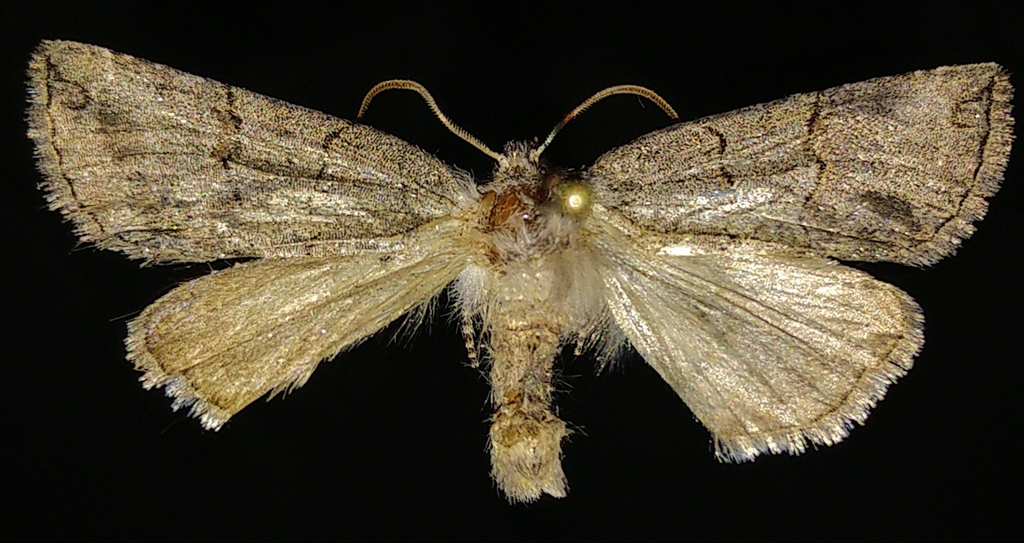
(c) Doug Macaulay, some rights reserved (CC BY) · licence
Family: Drepanidae · Class: Insecta · Order: Lepidoptera
Ceranemota tearlei is a California animal in the Drepanidae family.
Ceranemota tearlei is a moth species in the family Drepanidae, commonly known as hook-tip moths. This species represents one of the lesser-documented members of the North American Lepidoptera fauna, with limited taxonomic and ecological information available in the scientific literature. The physical characteristics of C. tearlei follow the general morphology typical of the Drepanidae family. Adult moths in this family typically exhibit wingspan measurements ranging from 20 to 40 millimeters (0.8 to 1.6 inches), with forewings that often display a distinctive hooked or falcate apex that gives the family its common name. The wing coloration in drepanids generally consists of earth tones including browns, grays, and muted yellows, often with subtle patterns of cross-lines and spots that provide camouflage against bark and foliage. The geographic range and distribution of Ceranemota tearlei remains poorly documented in current taxonomic databases. The species appears to be endemic to North America, consistent with other members of the genus Ceranemota, but specific locality records and range boundaries require further field survey work to establish definitively. Habitat preferences for C. tearlei are not well-established in the literature, though members of the Drepanidae family typically inhabit forested environments where their larval host plants occur. Drepanid moths generally prefer deciduous and mixed woodland habitats, with adults active during nighttime hours when they are attracted to artificial light sources. The elevation range and specific vegetation associations for this species remain undetermined. The life cycle and ecological behavior of C. tearlei follows the typical lepidopteran pattern of complete metamorphosis. Adult flight periods for most drepanid species in temperate regions occur during spring and summer months, with timing varying by geographic location and local climate conditions. Larvae of hook-tip moths typically feed on the foliage of deciduous trees and shrubs, though the specific host plant relationships for C. tearlei have not been documented. Most drepanid caterpillars are external feeders on leaves and may rest along leaf edges or stems during daylight hours. The conservation status of Ceranemota tearlei cannot be assessed due to insufficient data regarding population size, distribution, and trends. The species does not appear on federal or state endangered species lists, nor has it been evaluated by international conservation organizations. This data deficiency is common among many smaller moth species that lack comprehensive survey efforts and taxonomic attention. Without baseline population data or habitat requirements, it is impossible to determine whether C. tearlei faces conservation threats or maintains stable populations. Further research is needed to establish fundamental biological and ecological information for this species, including detailed morphological descriptions, host plant associations, geographic distribution, and population status assessments.
Classification
Class: Insecta · Order: Lepidoptera · Family: Drepanidae
Frequently asked questions
How is Ceranemota tearlei classified?
Ceranemota tearlei belongs to class Insecta, order Lepidoptera, family Drepanidae.
What family does Ceranemota tearlei belong to?
Ceranemota tearlei is in the Drepanidae family.
What is Ceranemota tearlei?
Ceranemota tearlei is a moth species in the family Drepanidae, commonly known as hook-tip moths.
Is Ceranemota tearlei found in California?
Yes. Ceranemota tearlei is recorded in California in The California Species Project's catalogue.
Related species
Other California species in the same genus, family, or bioregion.
Data from The California Species Project — 14,000+ California species with verified data from CNPS, CDFW, USFWS, and more.