Cerastis cornuta
Horned Cerastis
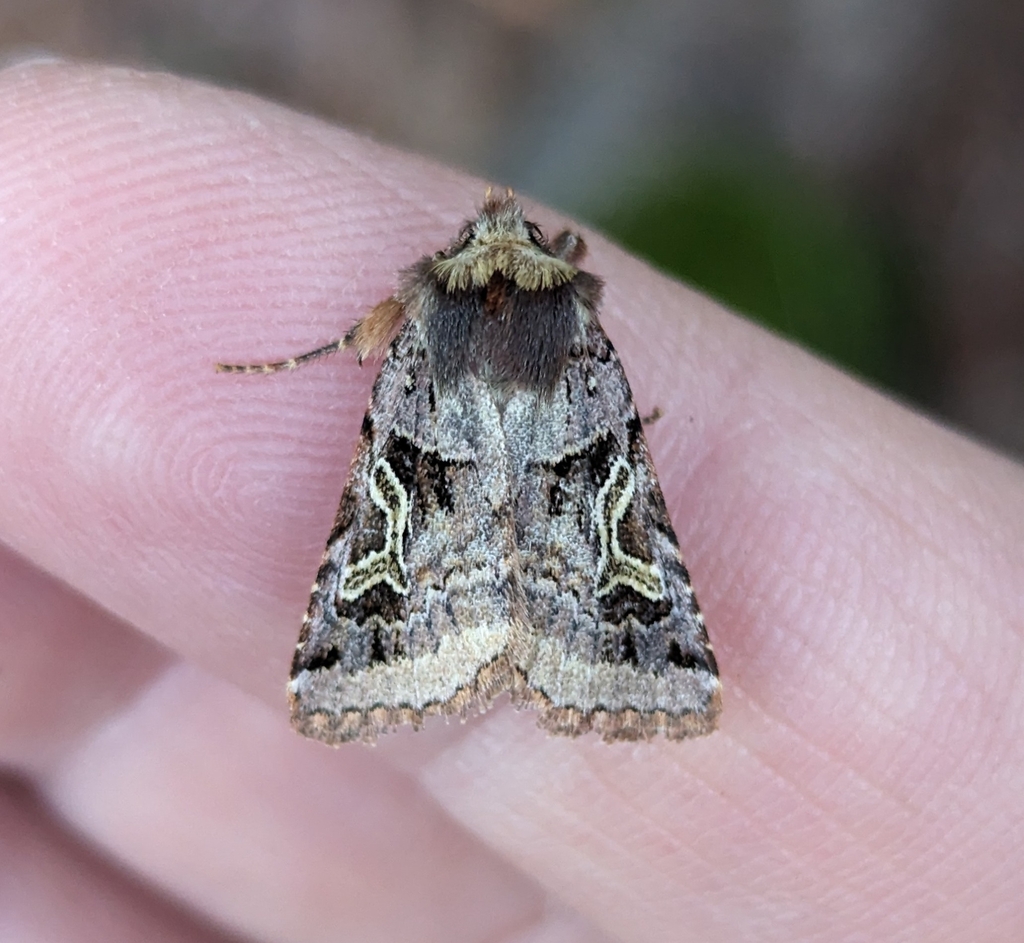
no rights reserved · CC0
Family: Noctuidae · Class: Insecta · Order: Lepidoptera
Cerastis cornuta (Horned Cerastis) is a California animal in the Noctuidae family.
The Horned Cerastis is a small noctuid moth in the family Noctuidae, subfamily Noctuinae. Adults display forewings measuring 12-14 mm in length, with coloration and external features that make field identification challenging (Lafontaine 1998). According to taxonomic studies, Cerastis cornuta and the closely related C. enigmatica are externally indistinguishable, requiring examination of genital structures for definitive species identification. The species occurs in California from Sonoma County southward to Santa Clara County, representing a relatively narrow coastal range within the state (Lafontaine 1998). This distribution pattern contrasts with the related C. enigmatica, which extends from Alaska's panhandle south to Humboldt County in northern California. The limited California range suggests potential habitat specialization or environmental constraints affecting the species' distribution. Habitat requirements for Cerastis cornuta have not been thoroughly documented in the scientific literature. Based on its taxonomic classification within Noctuinae and distribution pattern in coastal California counties, the species likely inhabits mixed coniferous and deciduous woodland areas, chaparral, and adjacent grassland environments typical of the region's Mediterranean climate zones. Flight period timing and elevation preferences remain poorly characterized. Larval host plants and feeding ecology are not well established for this species. Like many noctuids, larvae likely feed on herbaceous plants or low-growing shrubs during their development. Adult moths are presumed to be nocturnal, following typical patterns observed in related Cerastis species. Reproductive timing, overwintering strategies, and population dynamics have not been systematically studied. Conservation status information for Cerastis cornuta is limited. The species appears on Species of Greatest Conservation Need lists for multiple states including Arkansas, New Mexico, and New York, suggesting broader conservation concerns across its range (BugGuide 2016). However, no federal or California state listing status has been assigned as of December 2025. The narrow California distribution within coastal counties may make populations vulnerable to habitat loss from urban development, agricultural conversion, and climate change impacts affecting coastal ecosystems. Molecular analysis through the Barcode of Life Data Systems shows strong genetic similarity between C. cornuta specimens, with some uncertainty in differentiation from C. enigmatica populations (BugGuide 2021). This genetic data supports the morphological challenges in species identification and may indicate recent evolutionary divergence or ongoing gene flow between populations. The limited scientific documentation available for this species reflects broader knowledge gaps affecting many smaller moth species. Research priorities should include habitat characterization, host plant identification, population monitoring, and clarification of taxonomic relationships with closely related species. Understanding these ecological parameters will be essential for developing appropriate conservation strategies if population declines are documented in the future.
Classification
Class: Insecta · Order: Lepidoptera · Family: Noctuidae
Frequently asked questions
How is Cerastis cornuta classified?
Cerastis cornuta belongs to class Insecta, order Lepidoptera, family Noctuidae.
What family does Cerastis cornuta belong to?
Cerastis cornuta is in the Noctuidae family.
What is Cerastis cornuta?
The Horned Cerastis is a small noctuid moth in the family Noctuidae, subfamily Noctuinae.
Is Cerastis cornuta found in California?
Yes. Cerastis cornuta is recorded in California in The California Species Project's catalogue.
Related species
Other California species in the same genus, family, or bioregion.
Data from The California Species Project — 14,000+ California species with verified data from CNPS, CDFW, USFWS, and more.