Ceratina acantha
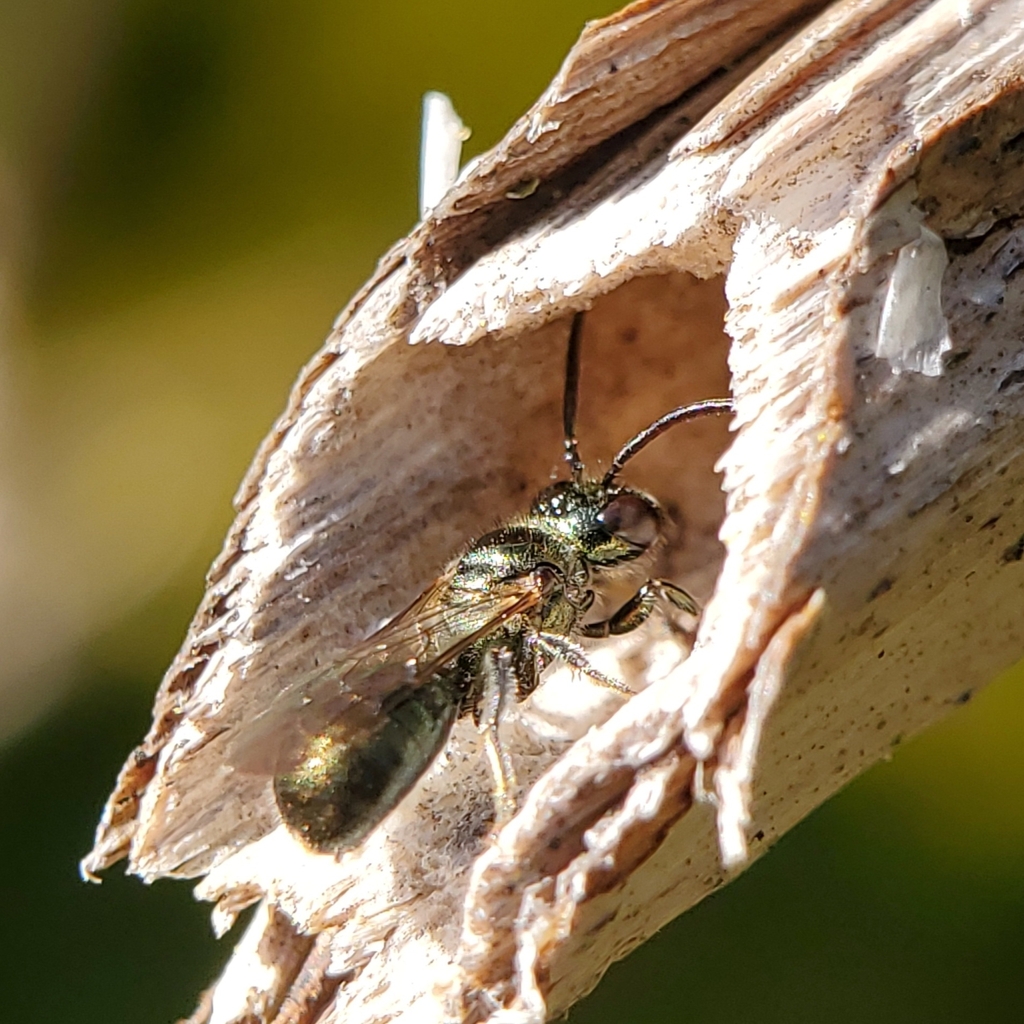
(c) Doug Wolfe, some rights reserved (CC BY) · licence
Family: Apidae · Class: Insecta · Order: Hymenoptera
Ceratina acantha is a California animal in the Apidae family.
Ceratina acantha, known as the Spined Little Carpenter Bee, is a small solitary bee in the family Apidae, subfamily Xylocopinae. This species belongs to the tribe Ceratinini, a group of carpenter bees that typically nest in hollow plant stems rather than boring into solid wood like their larger relatives. Physical characteristics specific to C. acantha have not been well documented in available literature, though members of the genus Ceratina are generally small, metallic bees measuring 4-13 mm in length with dark, often greenish or bluish metallic coloration. The historical range and current distribution of Ceratina acantha remain poorly documented. According to NatureServe Explorer, the species is ranked as GX (Presumed Extinct) globally, indicating that it has not been observed despite intensive searching and is believed to be extinct throughout its range. The species was historically known from North America, but specific geographic details of its former distribution are not available in current taxonomic databases. No recent confirmed observations or specimens have been reported in modern surveys. Habitat requirements for C. acantha have not been specifically documented, though other Ceratina species typically inhabit areas with abundant flowering plants and suitable nesting sites. Members of this genus generally prefer sunny, open habitats including meadows, gardens, forest edges, and disturbed areas where they can access both nectar sources and hollow-stemmed plants for nesting. The species likely required access to pithy or hollow stems of herbaceous plants for nest construction. Like other small carpenter bees, C. acantha was presumably a solitary species with females constructing individual nests in hollow plant stems. Ceratina bees typically excavate or enlarge existing cavities in stems, creating linear brood cells where they provision eggs with pollen and nectar. The nesting female would have created partitions between cells using chewed plant material. Seasonal activity patterns and specific host plants utilized by C. acantha are not documented, though related species are typically active from spring through fall and visit a variety of flowering plants for nectar and pollen. The conservation status of Ceratina acantha is critical, with NatureServe listing the species as Presumed Extinct (GX) as of December 2025. The species does not appear on current federal or state endangered species lists, likely due to its presumed extinction status. The causes of this species' apparent disappearance are unknown but may include habitat loss, pesticide use, climate change, or other factors affecting pollinator populations. No recovery efforts or conservation programs are currently in place for this species. Scientific documentation for Ceratina acantha remains extremely limited. The information presented here synthesizes available taxonomic and conservation status data from NatureServe and federal databases. We welcome contributions of verified scientific data, historical specimens, or field observations to enhance understanding of this species' biology and confirm its current status.
Classification
Class: Insecta · Order: Hymenoptera · Family: Apidae
Frequently asked questions
How is Ceratina acantha classified?
Ceratina acantha belongs to class Insecta, order Hymenoptera, family Apidae.
What family does Ceratina acantha belong to?
Ceratina acantha is in the Apidae family.
What is Ceratina acantha?
Ceratina acantha, known as the Spined Little Carpenter Bee, is a small solitary bee in the family Apidae, subfamily Xylocopinae.
Is Ceratina acantha found in California?
Yes. Ceratina acantha is recorded in California in The California Species Project's catalogue.
Related species
Other California species in the same genus, family, or bioregion.
Data from The California Species Project — 14,000+ California species with verified data from CNPS, CDFW, USFWS, and more.