Ceratochrysis bradleyi
Bradley's Cuckoo Wasp
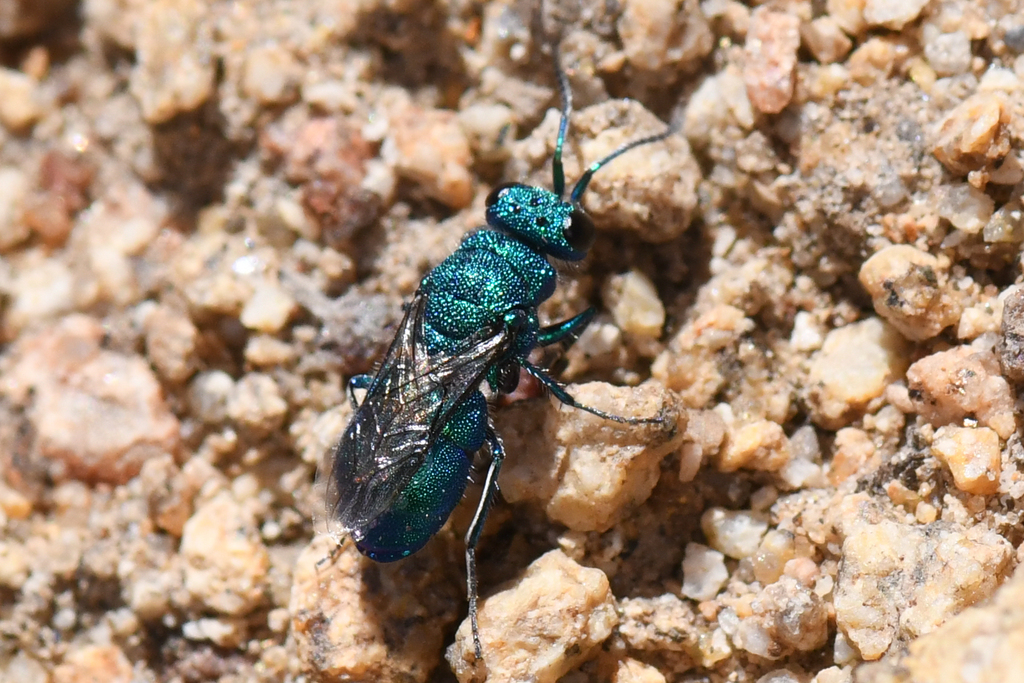
(c) Trevor Van Loon, some rights reserved (CC BY) · licence
Family: Chrysididae · Class: Insecta · Order: Hymenoptera
Conservation status: G1 S1
Ceratochrysis bradleyi (Bradley's Cuckoo Wasp) is a California animal in the Chrysididae family.
Bradley's cuckoo wasp (Ceratochrysis bradleyi) is a small parasitoid wasp belonging to the family Chrysididae, commonly known as cuckoo wasps or jewel wasps. Like other members of this family, the species likely exhibits the characteristic metallic coloration typical of chrysidid wasps, though specific morphological details have not been well documented in the available literature. This species is endemic to California, with an extremely restricted distribution. According to NatureServe, Bradley's cuckoo wasp holds a global conservation rank of G1, indicating it is critically imperiled with typically 5 or fewer occurrences or very few remaining individuals (NatureServe 2022). The species also holds a state rank of S1 in California, reflecting its critically imperiled status within the state. Specific habitat requirements for Bradley's cuckoo wasp have not been comprehensively documented. As a member of the Chrysididae family, this species likely inhabits areas where its host species occur, as cuckoo wasps are typically specialized parasitoids or cleptoparasites of other hymenopteran species, particularly solitary bees and wasps. The extremely limited distribution suggests the species may be dependent on specific microhabitat conditions or host species availability. The ecological behavior of Bradley's cuckoo wasp follows the typical life history pattern of chrysidid wasps. Adult females likely search for the nests of their host species, where they deposit eggs. The larvae then develop as either parasitoids, consuming the host larva, or as cleptoparasites, consuming the provisions stored by the host for its own offspring. Adult cuckoo wasps typically feed on nectar and are often observed visiting flowers. Specific host relationships for C. bradleyi have not been documented, though closely related chrysidid species typically parasitize solitary bees in the families Megachilidae or Halictidae. The conservation status of Bradley's cuckoo wasp reflects its extreme rarity. The G1 S1 ranking indicates this species faces a high risk of extinction due to its very limited range and presumably small population size. Primary threats likely include habitat loss and fragmentation, which can severely impact both the wasp and its host species. Climate change may pose additional risks by altering the timing of host species activity or shifting suitable habitat conditions. The specialized parasitoid lifestyle of cuckoo wasps makes them particularly vulnerable to conservation threats, as they depend not only on suitable habitat for themselves but also on stable populations of their host species. Detailed ecological studies of Bradley's cuckoo wasp are lacking, limiting our understanding of its specific conservation needs. The extremely restricted distribution and critical conservation status underscore the urgent need for targeted research to identify remaining populations, document habitat requirements, and determine specific host relationships. Given the specialized nature of chrysidid wasps and their dependence on host species, conservation efforts would benefit from habitat protection and management strategies that support diverse native bee and wasp communities.
Classification
Class: Insecta · Order: Hymenoptera · Family: Chrysididae
Conservation status
G1 S1
Frequently asked questions
How is Ceratochrysis bradleyi classified?
Ceratochrysis bradleyi belongs to class Insecta, order Hymenoptera, family Chrysididae.
What family does Ceratochrysis bradleyi belong to?
Ceratochrysis bradleyi is in the Chrysididae family.
Is Ceratochrysis bradleyi protected or of conservation concern?
Ceratochrysis bradleyi carries the following status: G1 S1.
What is Ceratochrysis bradleyi?
Bradley's cuckoo wasp (Ceratochrysis bradleyi) is a small parasitoid wasp belonging to the family Chrysididae, commonly known as cuckoo wasps or jewel wasps.
Is Ceratochrysis bradleyi found in California?
Yes. Ceratochrysis bradleyi is recorded in California in The California Species Project's catalogue.
Related species
Other California species in the same genus, family, or bioregion.
Data from The California Species Project — 14,000+ California species with verified data from CNPS, CDFW, USFWS, and more.