Ceratodoris rosacea
Hopkins' Rose Nudibranch
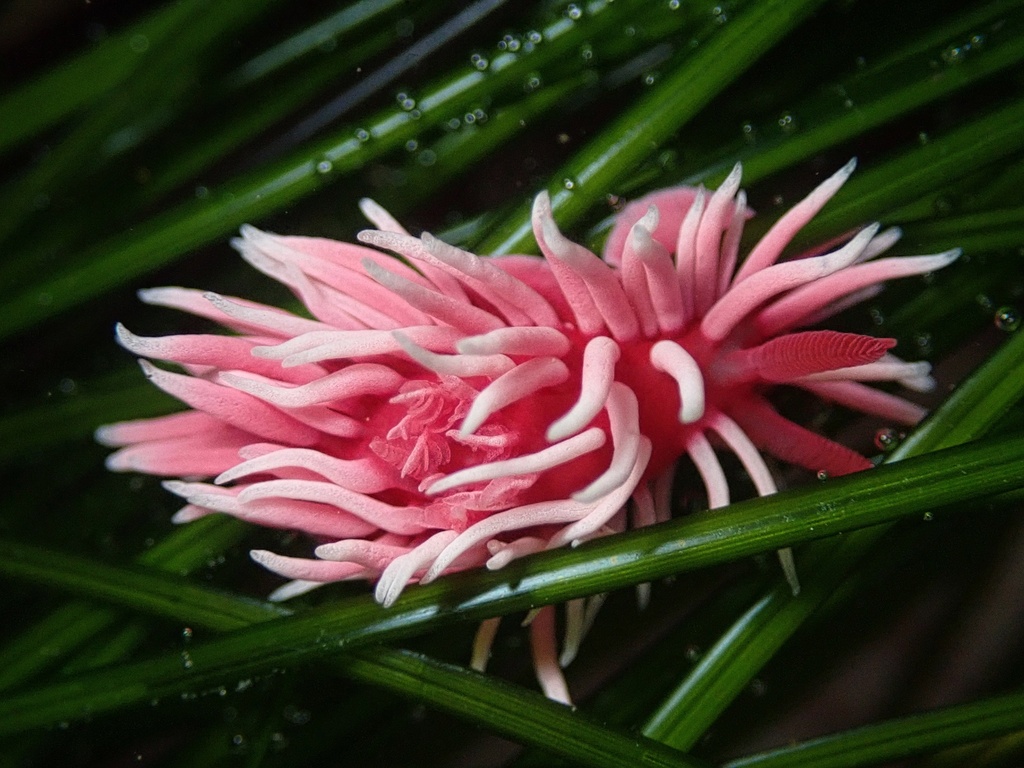
(c) Madeleine Claire, some rights reserved (CC BY) · licence
Family: Polyceridae · Class: Gastropoda · Order: Nudibranchia
Ceratodoris rosacea (Hopkins' Rose Nudibranch) is a California animal in the Polyceridae family.
Hopkins' rose nudibranch is a small marine gastropod mollusk belonging to the family Polyceridae. This sea slug exhibits the characteristic nudibranch body plan, with a soft, elongated body lacking an external shell. The species displays distinctive coloration that varies from pale pink to deep rose, often with translucent qualities that allow internal structures to be visible through the body wall. Like other nudibranchs, it possesses cerata (finger-like projections) extending from its dorsal surface, which serve both respiratory and digestive functions. Hopkins' rose nudibranch occurs along the Pacific Coast of North America, with documented populations in California waters. The species has been photographed and observed in several California Marine Protected Areas, including the Cambria State Marine Conservation Area and State Marine Park, White Rock State Marine Conservation Area in San Luis Obispo County, Cabrillo State Marine Reserve, Año Nuevo State Marine Reserve, and Greyhound Rock State Marine Conservation Area. These observations suggest a range extending along central California's coastline, though the complete distributional extent requires further documentation. The species inhabits nearshore marine environments, typically found in association with surfgrass beds, rocky reefs, and kelp forest ecosystems. Hopkins' rose nudibranch has been documented in depths ranging from intertidal zones to at least 128 feet, based on habitat descriptions from Marine Protected Areas where it occurs. The species appears to favor areas with complex three-dimensional habitat structure provided by surfgrass meadows and rocky substrates. These environments offer both suitable prey sources and protection from predation and wave action. Like other nudibranchs, Hopkins' rose nudibranch is carnivorous, feeding on sessile invertebrates such as bryozoans, hydroids, or sponges, though specific prey preferences for this species have not been well documented. Nudibranchs are hermaphroditic, possessing both male and female reproductive organs, and typically engage in reciprocal mating where both individuals can lay eggs following copulation. The species likely produces characteristic spiral egg ribbons attached to hard substrates, as is typical for members of this taxonomic group. Seasonal activity patterns and reproductive timing specific to this species remain poorly studied. Hopkins' rose nudibranch does not appear on federal or state endangered species lists as of December 2025. However, like many marine invertebrates with limited dispersal capabilities, the species may be vulnerable to habitat degradation, water quality changes, and climate-related impacts such as ocean warming and acidification. The documented presence of this species within California's network of Marine Protected Areas provides some level of habitat protection, though comprehensive population assessments and trend monitoring have not been established. The species' reliance on specific habitat types and potential prey species may make it sensitive to ecosystem changes affecting central California's nearshore marine environments. Scientific documentation for this species remains limited beyond basic occurrence records. Enhanced research on population distribution, ecological requirements, and conservation status would improve understanding of this Pacific Coast nudibranch.
Classification
Class: Gastropoda · Order: Nudibranchia · Family: Polyceridae
Frequently asked questions
How is Ceratodoris rosacea classified?
Ceratodoris rosacea belongs to class Gastropoda, order Nudibranchia, family Polyceridae.
What family does Ceratodoris rosacea belong to?
Ceratodoris rosacea is in the Polyceridae family.
What is Ceratodoris rosacea?
Hopkins' rose nudibranch is a small marine gastropod mollusk belonging to the family Polyceridae.
Is Ceratodoris rosacea found in California?
Yes. Ceratodoris rosacea is recorded in California in The California Species Project's catalogue.
Related species
Other California species in the same genus, family, or bioregion.
Data from The California Species Project — 14,000+ California species with verified data from CNPS, CDFW, USFWS, and more.