Ceratostoma foliatum
Leafy Hornmouth
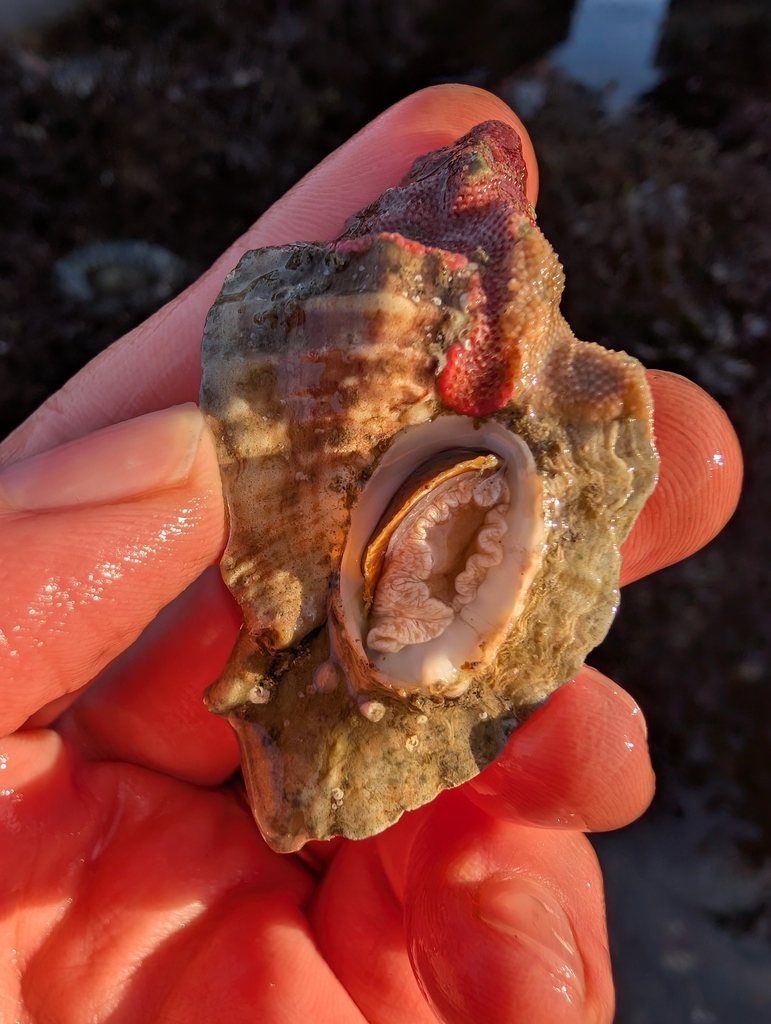
(c) Monica Ventrice, some rights reserved (CC BY) · licence
Family: Muricidae · Class: Muricidae · Order: Muricidae
Ceratostoma foliatum (Leafy Hornmouth) is a California animal in the Muricidae family.
The leafy hornmouth (Ceratostoma foliatum) is a large marine gastropod mollusk belonging to the family Muricidae. The shell reaches up to 12 centimeters (4.7 inches) in length and is characterized by three prominent rows of large, leaf-like projections or fronds that give the species its common name. These fronds can extend up to 2.5 centimeters (1 inch) from the shell surface, creating a highly distinctive appearance. The shell color ranges from white to pale brown, often with darker brown banding. A long, narrow siphonal canal extends from the anterior end, typical of predatory gastropods. Ceratostoma foliatum ranges from Alaska south to Baja California, with populations documented throughout the California coast (CDFW 2025). The species is commonly found from the intertidal zone to depths of approximately 40 meters (131 feet). In California waters, leafy hornmouth occurs in rocky intertidal areas, kelp forests, and subtidal rocky reefs from Mendocino County southward. This species inhabits rocky substrates where it can attach securely using its muscular foot. The leafy hornmouth is particularly associated with kelp forest ecosystems, where it functions as a secondary consumer (CDFW 2025). The elaborate fronds on the shell may provide camouflage among algae and kelp, while also potentially increasing surface area for gas exchange. The species prefers areas with strong currents that bring abundant prey items within reach. Leafy hornmouth are active predators that feed primarily on barnacles, mussels, and other sessile invertebrates. They use their radula, a rasping feeding organ, to drill through the shells of prey species. The long siphonal canal houses an extendable proboscis used to reach prey in crevices. Reproduction involves the release of planktonic larvae that develop in the water column before settling on suitable substrate. Adult specimens can live for several years, with shell growth continuing throughout their lifespan as evidenced by growth lines on the fronds. The leafy hornmouth serves as prey for various marine predators, including sea stars, crabs, and seabirds. Glaucous-winged gulls (Larus glaucescens) have been documented feeding on this species along the Pacific coast (Birds of the World). The species plays an important ecological role in rocky intertidal and kelp forest communities as both predator and prey. Currently, Ceratostoma foliatum has no formal conservation listing at state or federal levels. However, like many marine species dependent on kelp forest ecosystems, populations may face pressure from ocean warming, acidification, and kelp forest decline. The species' association with kelp forests makes it potentially vulnerable to ecosystem-level changes affecting these critical marine habitats. Population monitoring data specific to this species is limited, though the broad geographic range suggests relatively stable populations as of December 2025.
Classification
Class: Muricidae · Order: Muricidae · Family: Muricidae
Frequently asked questions
How is Ceratostoma foliatum classified?
Ceratostoma foliatum belongs to class Muricidae, order Muricidae, family Muricidae.
What family does Ceratostoma foliatum belong to?
Ceratostoma foliatum is in the Muricidae family.
What is Ceratostoma foliatum?
The leafy hornmouth (Ceratostoma foliatum) is a large marine gastropod mollusk belonging to the family Muricidae.
Is Ceratostoma foliatum found in California?
Yes. Ceratostoma foliatum is recorded in California in The California Species Project's catalogue.
Related species
Other California species in the same genus, family, or bioregion.
Data from The California Species Project — 14,000+ California species with verified data from CNPS, CDFW, USFWS, and more.