Cerceris sextoides
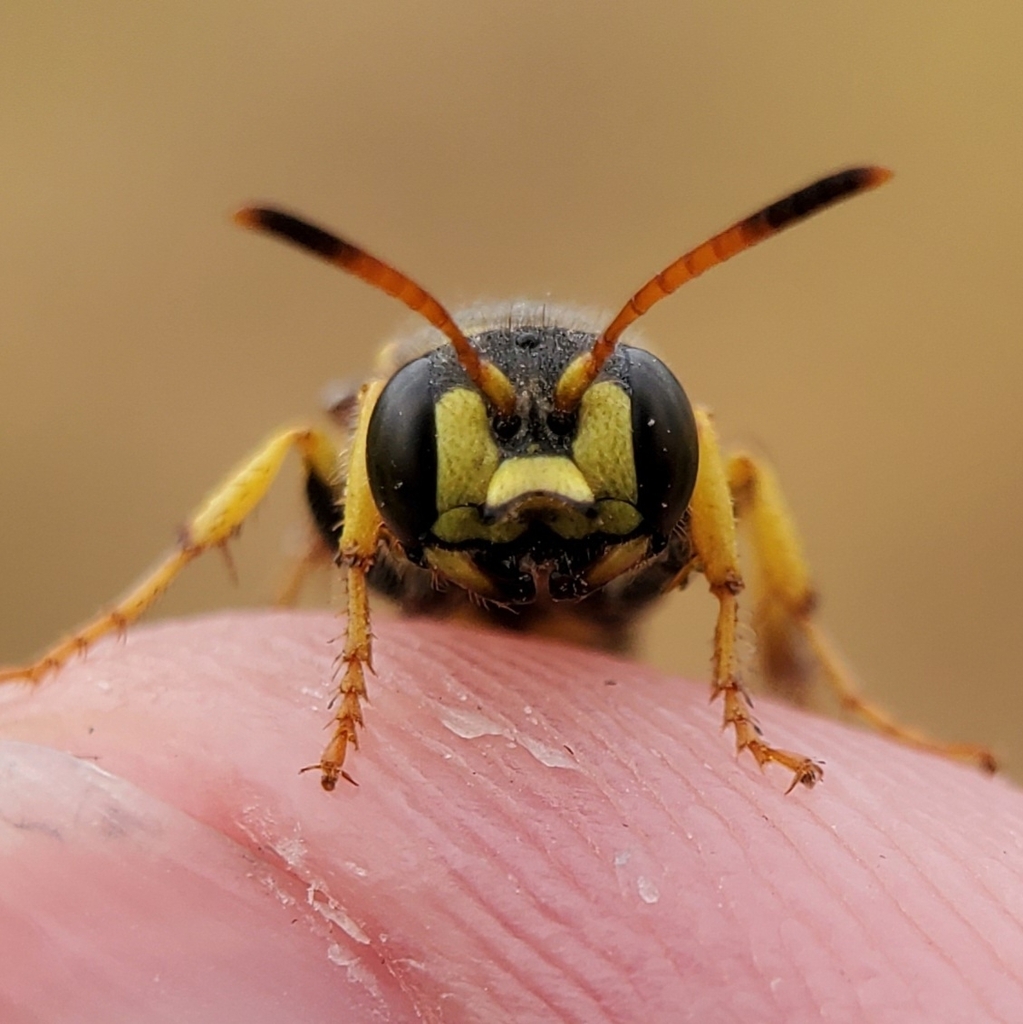
(c) Doug Wolfe, some rights reserved (CC BY) · licence
Family: Philanthidae · Class: Insecta · Order: Hymenoptera
Cerceris sextoides is a California animal in the Philanthidae family.
Cerceris sextoides is a digger wasp in the family Philanthidae, subfamily Philanthinae. This species belongs to the subgenus Cerceris within the genus Cerceris, a group of solitary wasps known for their specialized hunting behavior. Adult females are typically robust wasps with a constricted waist between the thorax and abdomen, characteristic yellow and black markings, and strong mandibles adapted for digging. Like other Cerceris species, females possess specialized structures for prey capture and nest construction, including enlarged front legs for excavation. The range and distribution of Cerceris sextoides within California and North America remain poorly documented in the scientific literature. Many Cerceris species have restricted distributions tied to specific soil types and prey availability, but specific locality records for this species are not readily available in current taxonomic databases. The species likely occurs in areas with suitable nesting substrates and adequate populations of its beetle prey. Habitat requirements for Cerceris sextoides are inferred from the ecology of related species in the genus. Cerceris wasps typically inhabit areas with exposed, well-drained soils suitable for nest excavation, including sandy banks, road cuts, compacted earth, and similar substrates. Females require access to open ground for digging their burrows, which serve as brood chambers for their offspring. The species likely favors areas with sparse vegetation that do not impede nest construction activities. The behavior and ecology of Cerceris sextoides follow the general pattern of other Cerceris species. Females are solitary wasps that construct individual ground nests by excavating burrows in suitable soil. Each female provisions her nest with paralyzed beetles, which serve as food for developing larvae. The hunting behavior is highly specialized, with females capturing specific beetle species through precise stinging that paralyzes but does not kill the prey. After stinging, the female transports the beetle to her burrow, where she deposits it along with a single egg. The larva develops as an external parasite, consuming the provisioned beetle before pupating within the nest chamber. Adults are active during warm months, with peak activity typically occurring in summer. No federal or state conservation status has been established for Cerceris sextoides. The species is not currently listed under the Endangered Species Act or included in California's special status species designations. Limited scientific documentation makes it difficult to assess population trends or conservation needs. Like many specialized ground-nesting wasps, potential threats may include habitat loss from development, soil compaction, pesticide use, and disruption of beetle prey populations. The species' conservation status cannot be adequately evaluated without additional research on its distribution, abundance, and ecological requirements. Scientific documentation for this species remains extremely limited. The information presented here synthesizes general knowledge of Cerceris biology with available taxonomic records. Detailed ecological studies, distribution surveys, and prey specialization research are needed to better understand this species' conservation status and habitat requirements.
Classification
Class: Insecta · Order: Hymenoptera · Family: Philanthidae
Frequently asked questions
How is Cerceris sextoides classified?
Cerceris sextoides belongs to class Insecta, order Hymenoptera, family Philanthidae.
What family does Cerceris sextoides belong to?
Cerceris sextoides is in the Philanthidae family.
What is Cerceris sextoides?
Cerceris sextoides is a digger wasp in the family Philanthidae, subfamily Philanthinae.
Is Cerceris sextoides found in California?
Yes. Cerceris sextoides is recorded in California in The California Species Project's catalogue.
Related species
Other California species in the same genus, family, or bioregion.
Data from The California Species Project — 14,000+ California species with verified data from CNPS, CDFW, USFWS, and more.