Cercyonis oetus
Small Wood-Nymph
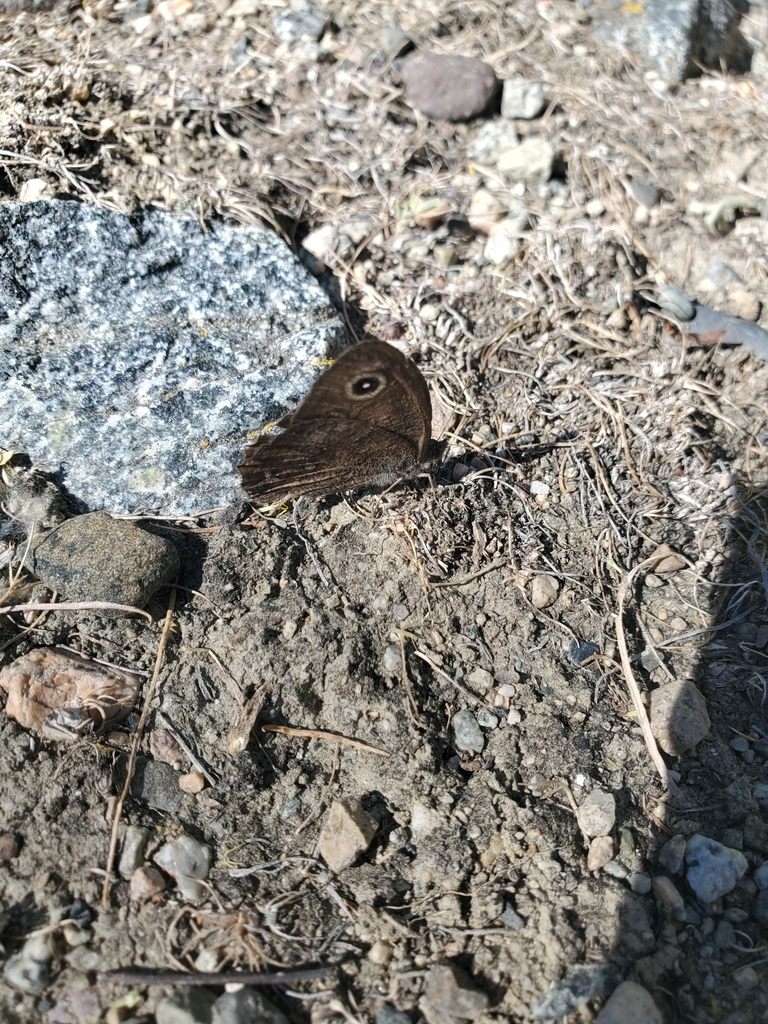
no rights reserved · CC0
Family: Nymphalidae · Class: Insecta · Order: Lepidoptera
Cercyonis oetus (Small Wood-Nymph) is a California animal in the Nymphalidae family.
The Small Wood-Nymph (Cercyonis oetus) is a medium-sized butterfly in the family Nymphalidae, subfamily Satyrinae. Adults have a wingspan ranging from 45 to 55 mm (1.8 to 2.2 inches). The dorsal wing surfaces are brown with variable darker markings and typically display small eyespots near the wing margins. Males tend to be darker brown than females, with reduced eyespot development. The ventral hindwings are mottled gray-brown with lighter striations that provide camouflage when the butterfly rests with wings closed. The forewings often show orange patches surrounding the eyespots, particularly in females. The Small Wood-Nymph has a broad distribution across western North America, ranging from British Columbia east to southern Saskatchewan and western North Dakota, extending south to eastern California, Nevada, central Arizona, and New Mexico. Within California, the species occurs primarily in mountainous regions of the eastern portion of the state, including the Sierra Nevada and adjacent ranges. The species demonstrates considerable geographic variation across its range, with several recognized subspecies. This species inhabits a variety of woodland and grassland environments, typically at elevations between 1,200 and 3,000 meters (4,000 to 10,000 feet). Small Wood-Nymphs are associated with open woodlands, forest clearings, mountain meadows, and grassy slopes where their host plants occur. They prefer areas with partial shade and are often found in transition zones between forested and open habitats. The species shows a preference for cooler, moister conditions compared to other wood-nymphs in its range. Larvae feed exclusively on grasses, though the specific host plant species remain unknown. Adults are active during the summer months, typically flying from June through August depending on elevation and local climate conditions. Males establish territories in sunny openings and patrol for females. Mating occurs in mid-summer, with females laying eggs singly on or near grass hosts. The species overwinters as partially grown larvae. Adults feed on flower nectar, tree sap, and rotting fruit, with males often observed at mud puddles and damp soil for mineral nutrients. The Small Wood-Nymph currently lacks formal conservation status designations at federal or state levels. The species appears to maintain stable populations across much of its range, though comprehensive population monitoring is limited. Habitat modification from logging, grazing, and development represents the primary potential threat to local populations. Climate change may affect the species' distribution, particularly at lower elevations where warming temperatures could render habitats unsuitable. Fire suppression activities that alter natural forest succession patterns may also impact habitat quality. The species' dependence on unknown grass species complicates conservation planning and habitat management efforts.
Classification
Class: Insecta · Order: Lepidoptera · Family: Nymphalidae
Frequently asked questions
How is Cercyonis oetus classified?
Cercyonis oetus belongs to class Insecta, order Lepidoptera, family Nymphalidae.
What family does Cercyonis oetus belong to?
Cercyonis oetus is in the Nymphalidae family.
What is Cercyonis oetus?
The Small Wood-Nymph (Cercyonis oetus) is a medium-sized butterfly in the family Nymphalidae, subfamily Satyrinae.
Is Cercyonis oetus found in California?
Yes. Cercyonis oetus is recorded in California in The California Species Project's catalogue.
Related species
Other California species in the same genus, family, or bioregion.
Data from The California Species Project — 14,000+ California species with verified data from CNPS, CDFW, USFWS, and more.