Cerithideopsis californica
California Horn Snail
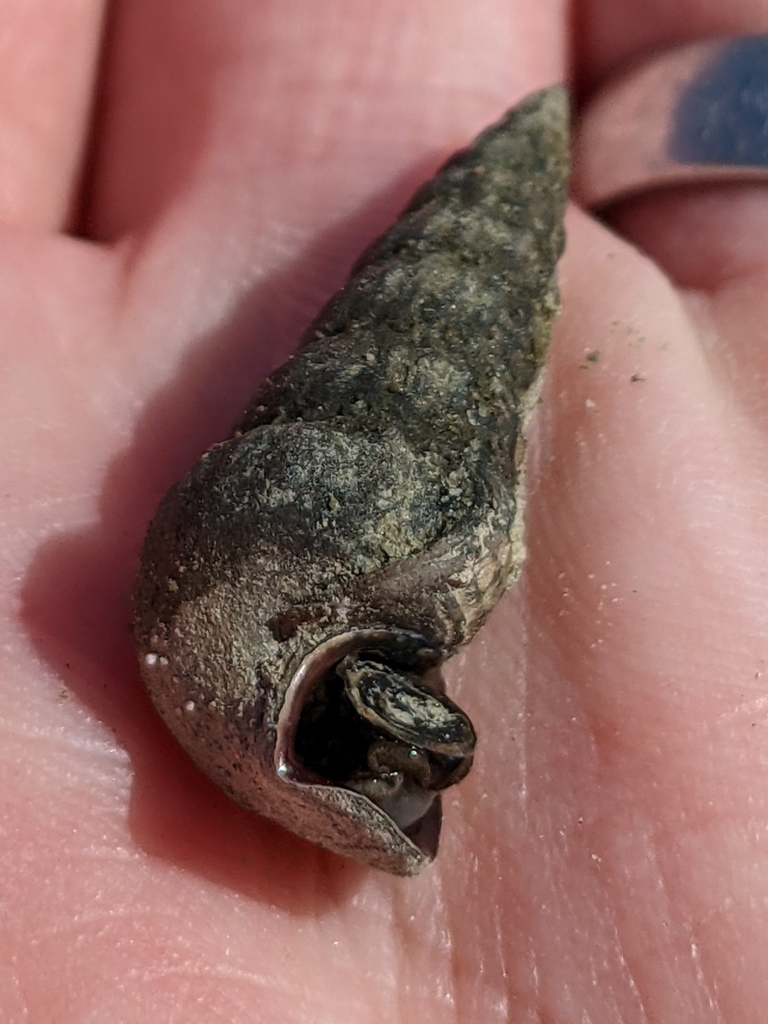
(c) Justin, some rights reserved (CC BY) · licence
Family: Potamididae · Class: Gastropoda · Order: -
Cerithideopsis californica (California Horn Snail) is a California animal in the Potamididae family.
The California horn snail is a small marine gastropod mollusk in the family Potamididae. Adults typically measure 8-15 mm in length, with a distinctive elongated, conical shell featuring pronounced spiral ridges and a pointed spire. The shell is typically brown to gray in coloration, often with darker banding patterns along the whorls. The species possesses a muscular foot for locomotion across mudflat surfaces and an operculum that seals the shell opening when the animal retracts. Cerithideopsis californica occurs along the Pacific coast from central California south to Baja California, Mexico. The species is documented in numerous estuarine systems throughout California, including San Francisco Bay, San Pablo Bay, and southern California coastal lagoons. According to the California Department of Fish and Wildlife, populations are present in the Batiquitos Lagoon Ecological Reserve in San Diego County and the Famosa Slough State Marine Conservation Area. Historical records indicate the species was once more widely distributed in coastal marshes that have since been lost to development. The California horn snail inhabits intertidal mudflats, salt marshes, and shallow brackish water environments of coastal estuaries and lagoons. The species is typically found in areas where fresh and salt water mix, creating variable salinity conditions. These snails prefer soft sediment substrates where they can burrow and feed on organic detritus. They are commonly associated with pickleweed (Salicornia), eelgrass beds, and other halophytic vegetation in tidal marsh systems. California horn snails are detritivores, feeding primarily on organic matter in sediments and algae growing on surfaces. They use their radula, a rasping feeding structure, to scrape food particles from mud and plant surfaces. The species exhibits broadcast spawning, releasing eggs and sperm into the water column during high tides. Larvae undergo a planktonic development phase before settling and metamorphosing into juvenile snails. Adults are capable of limited burrowing behavior and can withstand periodic exposure during low tides by sealing their shells with the operculum. While not federally or state-listed as of December 2025, the California horn snail faces ongoing threats from coastal development, habitat modification, and water quality degradation. Many historical populations in southern California have been eliminated due to urbanization and filling of coastal wetlands. The species benefits from marine protected areas such as the Famosa Slough State Marine Conservation Area, where take is prohibited. Climate change impacts, including sea level rise and altered precipitation patterns affecting estuarine salinity, represent emerging threats to remaining populations. Conservation efforts focus on protecting existing salt marsh and mudflat habitats while restoring degraded estuarine systems throughout the species' range.
Classification
Class: Gastropoda · Order: - · Family: Potamididae
Frequently asked questions
How is Cerithideopsis californica classified?
Cerithideopsis californica belongs to class Gastropoda, order -, family Potamididae.
What family does Cerithideopsis californica belong to?
Cerithideopsis californica is in the Potamididae family.
What is Cerithideopsis californica?
The California horn snail is a small marine gastropod mollusk in the family Potamididae.
Is Cerithideopsis californica found in California?
Yes. Cerithideopsis californica is recorded in California in The California Species Project's catalogue.
More California species
This species has no close relatives in our California data — here are other species to explore.
Data from The California Species Project — 14,000+ California species with verified data from CNPS, CDFW, USFWS, and more.