Cerobasis guestfalica
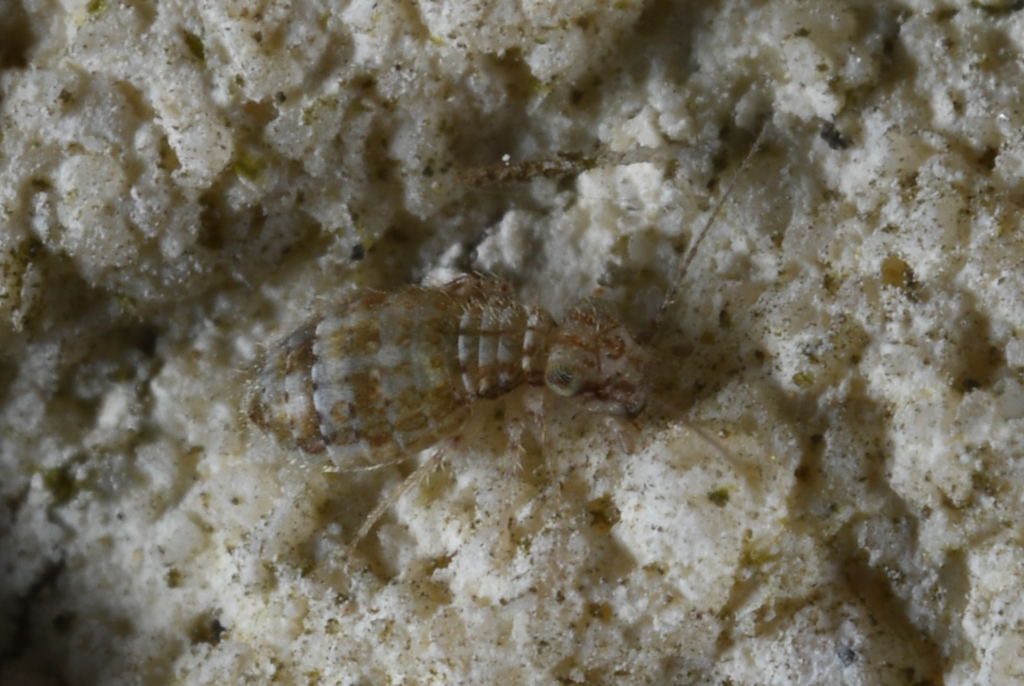
(c) Julien Renoult, some rights reserved (CC BY) · licence
Family: Trogiidae · Class: Insecta · Order: Psocodea
Cerobasis guestfalica is a California animal in the Trogiidae family.
Cerobasis guestfalica is a small insect belonging to the order Psocodea, commonly known as booklice or barklice. This species is classified within the family Trogiidae, which comprises primitive psocopterans characterized by their association with dry, organic materials. Members of this family typically measure 1-3 millimeters in length and possess reduced wings or may be entirely wingless. The body is generally pale brown to yellowish, with a soft, somewhat flattened appearance typical of trogiid psocids. The distribution and range of C. guestfalica remain poorly documented in the scientific literature. According to the U.S. Fish and Wildlife Service taxonomic database, this species is recognized within the North American fauna, though specific geographic boundaries have not been clearly established. The presence of this species in California databases suggests it may occur within the state, but detailed distribution records are lacking. Trogiid psocids typically inhabit environments with abundant organic detritus, including leaf litter, decaying wood, and bark crevices. These insects are commonly found in association with fungal growth on decomposing plant materials. C. guestfalica likely occupies similar microhabitats, preferring areas with consistent moisture and organic matter accumulation. The species may be found in forest understories, woodland edges, and areas with substantial leaf litter deposits. Like other members of the family Trogiidae, C. guestfalica is presumed to be a detritivore, feeding primarily on fungal spores, algae, and organic particles found on decaying plant surfaces. These insects use their well-developed mandibles to scrape food materials from substrates. Reproduction in trogiid psocids typically involves the deposition of eggs in protected locations within their habitat. Development proceeds through several nymphal stages before reaching adult form. The species likely exhibits seasonal activity patterns correlated with moisture availability and temperature conditions. The conservation status of Cerobasis guestfalica has not been formally evaluated by state or federal agencies. This species does not appear on the U.S. Fish and Wildlife Service's list of threatened or endangered species, nor is it included in California's list of species of special concern as of December 2025. The lack of comprehensive distributional data and ecological studies makes it difficult to assess population trends or conservation needs. Many psocopteran species remain understudied due to their small size and cryptic habits, resulting in significant knowledge gaps regarding their distribution, abundance, and ecological requirements. Scientific documentation for this species remains extremely limited. The information presented here synthesizes available taxonomic records from the U.S. Fish and Wildlife Service database. Detailed ecological studies, distribution mapping, and population assessments are needed to better understand this species' biology and conservation status. We welcome contributions of verified scientific data, photographs, or field observations to enhance this species account.
Classification
Class: Insecta · Order: Psocodea · Family: Trogiidae
Frequently asked questions
How is Cerobasis guestfalica classified?
Cerobasis guestfalica belongs to class Insecta, order Psocodea, family Trogiidae.
What family does Cerobasis guestfalica belong to?
Cerobasis guestfalica is in the Trogiidae family.
What is Cerobasis guestfalica?
Cerobasis guestfalica is a small insect belonging to the order Psocodea, commonly known as booklice or barklice.
Is Cerobasis guestfalica found in California?
Yes. Cerobasis guestfalica is recorded in California in The California Species Project's catalogue.
More California species
This species has no close relatives in our California data — here are other species to explore.
Data from The California Species Project — 14,000+ California species with verified data from CNPS, CDFW, USFWS, and more.