Cerorhinca monocerata
Rhinoceros Auklet
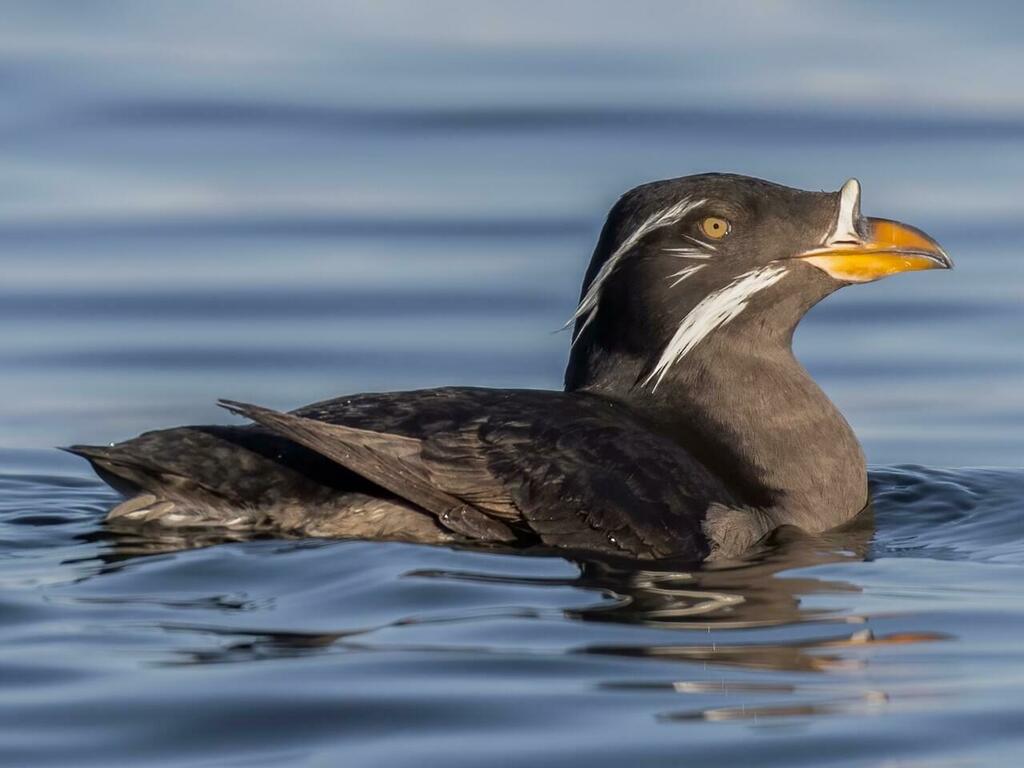
no rights reserved · CC0
Family: Alcidae · Class: Aves · Order: Charadriiformes
Conservation status: WL · G5 S3
Cerorhinca monocerata (Rhinoceros Auklet) is a California animal in the Alcidae family.
The Rhinoceros Auklet is a medium-sized seabird measuring 35-38 cm (14-15 inches) in length with a wingspan of 57-66 cm (22-26 inches). Adults weigh between 460-620 grams (16-22 ounces). During breeding season, the species displays distinctive plumage with dark brownish-black upperparts and grayish-white underparts. The most notable feature is the prominent yellowish horn-like projection that extends from the base of the upper mandible, giving the species its common name. Two white facial plumes extend from above and behind the eye. In winter plumage, adults lose the horn and facial plumes, appearing more subdued with darker underparts. The bill becomes smaller and less colorful outside the breeding season. Rhinoceros Auklets breed along the North Pacific coast from Alaska to California. In California, breeding colonies are concentrated on offshore islands including the Farallon Islands, Castle Rock, and islands off the central and northern coast. The species ranges from Point Reyes north to the Oregon border during breeding season, with some individuals dispersing south to Point Conception in winter. Non-breeding birds may occur in nearshore waters throughout the California coast. Breeding habitat consists of offshore islands with suitable soil for burrow excavation, typically on grassy slopes, cliff tops, and forested areas. Nesting burrows are excavated 0.9-1.5 meters (3-5 feet) deep in soft soil or among tree roots. During non-breeding periods, the species inhabits continental shelf waters, generally within 50 kilometers (31 miles) of shore, preferring areas with upwelling currents that concentrate prey species. Rhinoceros Auklets are primarily piscivorous, feeding on small schooling fish including anchovies, sardines, juvenile rockfish, and herring. They are pursuit divers, using their wings to propel underwater to depths of 15-57 meters (49-187 feet). Breeding occurs from April through August, with peak activity in May and June. Pairs excavate or reuse burrows where a single white egg is laid. Both parents incubate the egg for 39-52 days and feed the chick for 48-56 days until fledging. Adults are largely nocturnal at colonies, returning to feed chicks under cover of darkness to avoid predation by gulls and other seabirds. The Rhinoceros Auklet is classified as a Watch List species in California with a state rank of S3, indicating the species is vulnerable within the state due to restricted range or other factors. The global population is considered stable (G5), but California represents the southern extent of the breeding range. Primary threats include oil spills, plastic pollution, entanglement in fishing gear, and climate change effects on prey availability. El Niño events can significantly impact breeding success through reduced prey abundance. Human disturbance at breeding colonies and introduced predators on nesting islands pose additional conservation concerns.
Classification
Class: Aves · Order: Charadriiformes · Family: Alcidae
Conservation status
WL · G5 S3
Frequently asked questions
How is Cerorhinca monocerata classified?
Cerorhinca monocerata belongs to class Aves, order Charadriiformes, family Alcidae.
What family does Cerorhinca monocerata belong to?
Cerorhinca monocerata is in the Alcidae family.
Is Cerorhinca monocerata protected or of conservation concern?
Cerorhinca monocerata carries the following status: WL · G5 S3.
What is Cerorhinca monocerata?
The Rhinoceros Auklet is a medium-sized seabird measuring 35-38 cm (14-15 inches) in length with a wingspan of 57-66 cm (22-26 inches).
Is Cerorhinca monocerata found in California?
Yes. Cerorhinca monocerata is recorded in California in The California Species Project's catalogue.
Related species
Other California species in the same genus, family, or bioregion.
Data from The California Species Project — 14,000+ California species with verified data from CNPS, CDFW, USFWS, and more.