Certhia americana
Brown Creeper
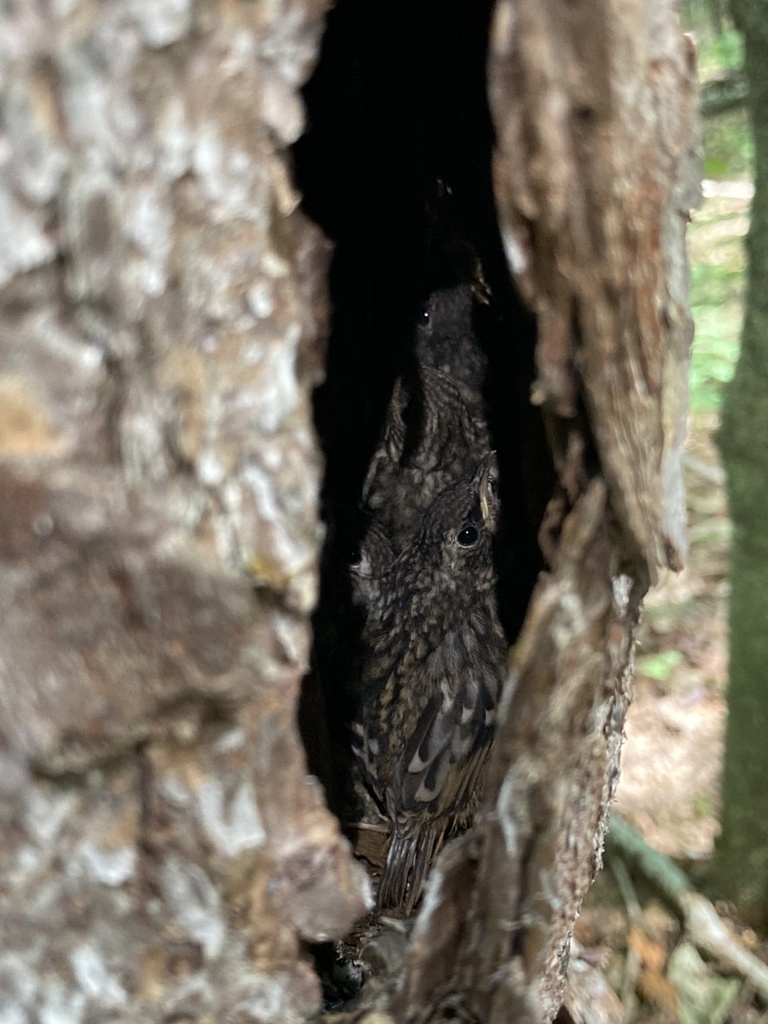
(c) Richard Littauer, some rights reserved (CC BY) · licence
Family: Certhiidae · Class: Aves · Order: Passeriformes
Certhia americana (Brown Creeper) is a California animal in the Certhiidae family.
The Brown Creeper is a small, cryptically colored songbird measuring 11.7 to 13.5 cm (4.6 to 5.3 inches) in length with a wingspan of 16.5 to 20 cm (6.5 to 7.9 inches). Adults weigh 7 to 10 grams. The species exhibits distinctive brown and buff streaked upperparts that provide camouflage against tree bark, while the underparts are pale buff to whitish. The bill is thin, slightly curved, and adapted for probing bark crevices. The tail is stiff and pointed, serving as a prop during vertical climbing. Both sexes appear similar, though males may show slightly more prominent streaking. Brown Creepers breed across the boreal forests of Canada and Alaska, extending south through montane regions of the western United States including the Sierra Nevada, Cascade Range, and Rocky Mountains. In California, the species occurs primarily in coniferous forests of the Sierra Nevada from approximately 1,200 to 3,350 meters (4,000 to 11,000 feet) elevation, with populations also found in the Cascade Range and scattered locations in coastal ranges. Northern populations migrate south for winter, with birds from breeding areas joining year-round residents in suitable habitat. The species inhabits mature and old-growth coniferous forests, particularly those dominated by Douglas fir, ponderosa pine, sugar pine, and mixed conifer stands. Brown Creepers require large-diameter trees with deeply furrowed bark that harbors arthropod prey and provides nesting sites. They show strong preference for forests with snags and downed logs, which support higher arthropod diversity. Brown Creepers exhibit unique foraging behavior, systematically spiraling up tree trunks from base to crown before flying to the base of an adjacent tree to repeat the process. Their diet consists almost entirely of small arthropods, including beetles, moths, caterpillars, aphids, and spiders extracted from bark crevices using their specialized bill. Breeding occurs from April through July, with pairs constructing distinctive hammock-shaped nests behind loose bark flakes. Females lay 5 to 6 white eggs with brown spots, incubating for 14 to 15 days. Young fledge after 13 to 16 days but remain dependent on parents for several additional weeks. Brown Creepers are not federally or state listed in California, reflecting relatively stable populations in appropriate habitat. However, the species faces ongoing challenges from forest management practices that reduce old-growth characteristics. Timber harvesting that removes large-diameter trees and snags eliminates critical foraging and nesting habitat. Climate change poses additional threats through altered precipitation patterns affecting montane forest composition and increased wildfire frequency. Conservation efforts focus on maintaining mature forest stands with structural diversity, including retention of snags and recruitment of large trees during forest management activities.
Classification
Class: Aves · Order: Passeriformes · Family: Certhiidae
Frequently asked questions
How is Certhia americana classified?
Certhia americana belongs to class Aves, order Passeriformes, family Certhiidae.
What family does Certhia americana belong to?
Certhia americana is in the Certhiidae family.
What is Certhia americana?
The Brown Creeper is a small, cryptically colored songbird measuring 11.7 to 13.5 cm (4.6 to 5.3 inches) in length with a wingspan of 16.5 to 20 cm (6.5 to 7.9 inches).
Is Certhia americana found in California?
Yes. Certhia americana is recorded in California in The California Species Project's catalogue.
More California species
This species has no close relatives in our California data — here are other species to explore.
Data from The California Species Project — 14,000+ California species with verified data from CNPS, CDFW, USFWS, and more.