Ceruchus striatus
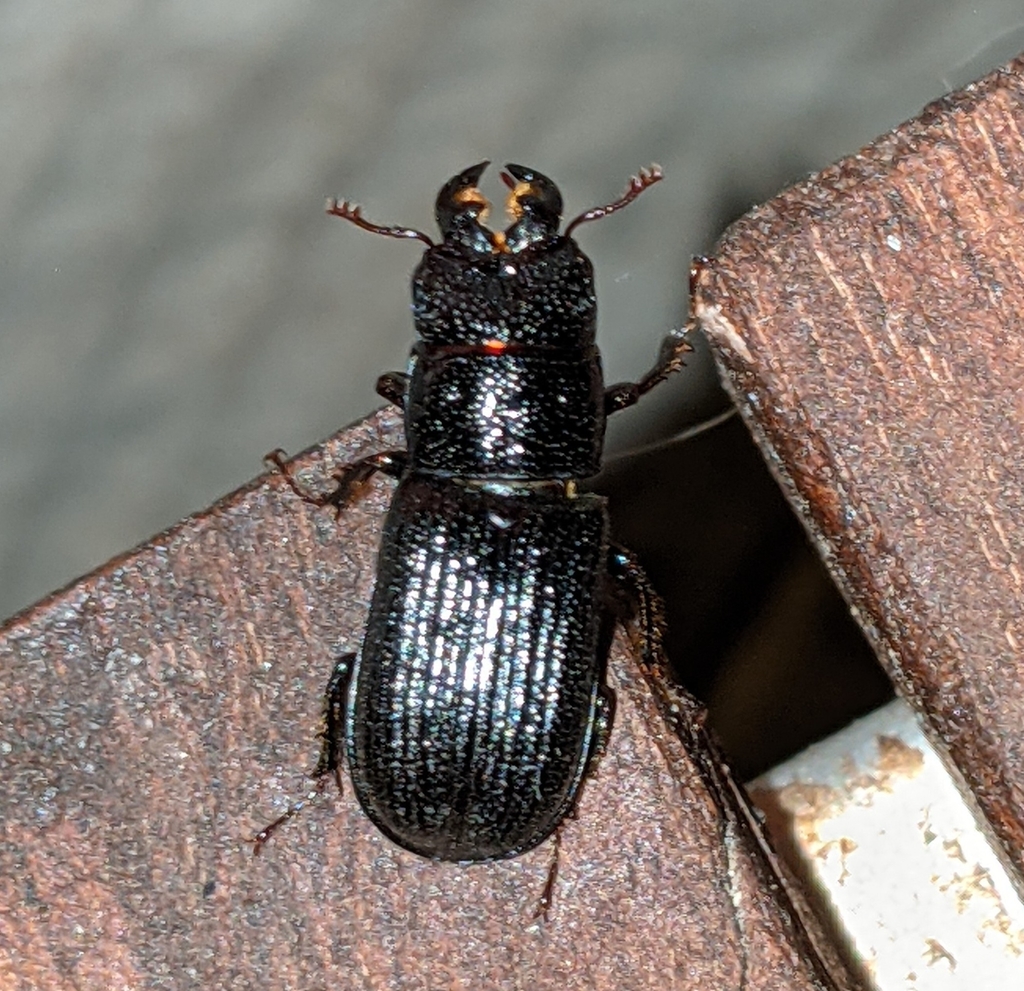
no rights reserved · CC0
Family: Lucanidae · Class: Insecta · Order: Coleoptera
Ceruchus striatus is a California animal in the Lucanidae family.
Ceruchus striatus is a species of stag beetle in the family Lucanidae found in North America. This beetle belongs to a genus characterized by robust bodies and prominent mandibles, though specific morphological details for this species have not been extensively documented in the scientific literature. Like other members of the Lucanidae family, adults likely possess the characteristic enlarged mandibles that give stag beetles their common name, though sexual dimorphism in mandible size is typical within this family. The range and distribution of Ceruchus striatus remains poorly documented in available scientific literature. The species is recognized by the U.S. Fish and Wildlife Service taxonomic database, indicating its occurrence within the United States, though specific geographic boundaries have not been well established. Many stag beetle species in North America have localized distributions, often associated with specific forest types or elevation ranges, but detailed range maps for this species are not currently available. Habitat requirements for Ceruchus striatus have not been thoroughly studied or documented. Most stag beetles in the genus Ceruchus are associated with decaying wood and forest environments, where larvae develop in rotting logs and stumps. Adults are typically found in forested areas during their brief reproductive period, often attracted to lights during evening hours. The species likely requires mature forest habitats that provide suitable breeding substrates in the form of decaying hardwood or coniferous material. The life cycle and behavioral ecology of Ceruchus striatus follows the general pattern of other lucanid beetles, though specific details remain undocumented. Larvae presumably develop within decaying wood over multiple years, feeding on decomposing organic matter and fungal material. Adults likely emerge during summer months for mating and reproduction. Males may use their enlarged mandibles for territorial disputes and competition for mates, a common behavior among stag beetles. The species is likely primarily nocturnal, with adults becoming active during warm evening hours. The conservation status of Ceruchus striatus is not well established. The species does not appear on federal or state endangered species lists, and population trends have not been systematically monitored. Like many forest-dwelling insects, potential threats may include habitat loss through deforestation, forest fragmentation, and removal of dead wood from forest ecosystems. Climate change may also affect this species through alterations to forest composition and the availability of suitable breeding substrates. The lack of basic biological and ecological information represents a significant knowledge gap that limits effective conservation planning. Scientific documentation for this species remains extremely limited despite thorough review of available sources. The information presented here synthesizes what little is known from taxonomic databases and general knowledge of related species. Detailed studies of this beetle's distribution, habitat preferences, life history, and conservation needs are lacking. We welcome contributions of verified scientific data, field observations, or photographic records to help improve understanding of this species.
Classification
Class: Insecta · Order: Coleoptera · Family: Lucanidae
Frequently asked questions
How is Ceruchus striatus classified?
Ceruchus striatus belongs to class Insecta, order Coleoptera, family Lucanidae.
What family does Ceruchus striatus belong to?
Ceruchus striatus is in the Lucanidae family.
What is Ceruchus striatus?
Ceruchus striatus is a species of stag beetle in the family Lucanidae found in North America.
Is Ceruchus striatus found in California?
Yes. Ceruchus striatus is recorded in California in The California Species Project's catalogue.
Related species
Other California species in the same genus, family, or bioregion.
Data from The California Species Project — 14,000+ California species with verified data from CNPS, CDFW, USFWS, and more.