Cervus canadensis
Wapiti
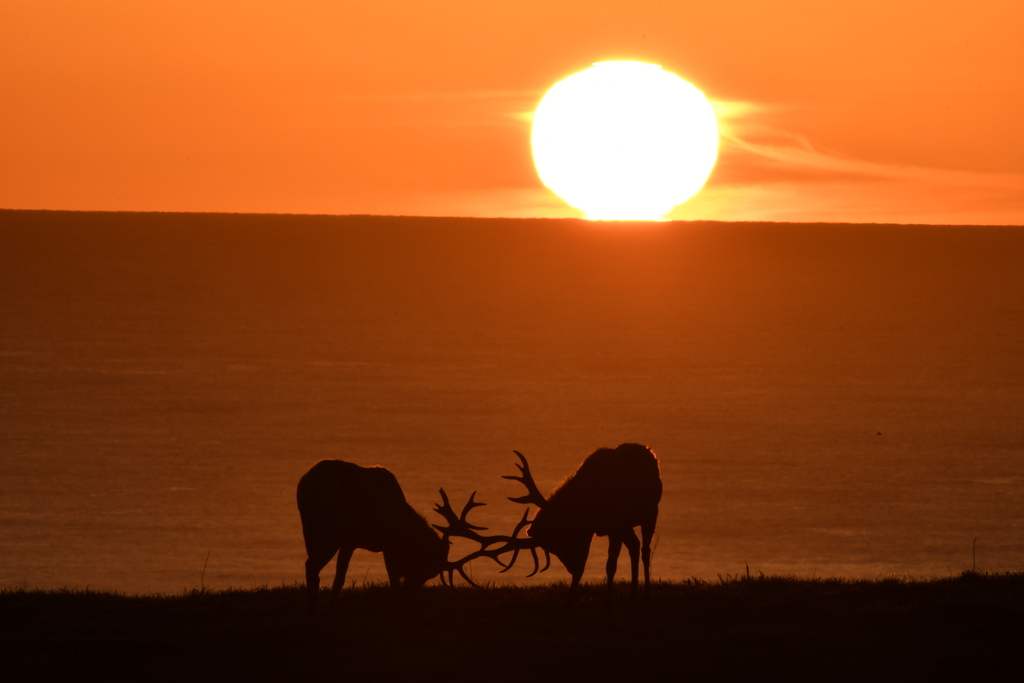
(c) Tom Kennedy, some rights reserved (CC BY) · licence
Family: Cervidae · Class: Mammalia · Order: Artiodactyla
Cervus canadensis (Wapiti) is a California animal in the Cervidae family.
The wapiti, also known as elk, is North America's second-largest member of the deer family. Adult bulls weigh 320 to 490 kilograms (700 to 1,080 pounds) and stand 1.2 to 1.5 meters (4 to 5 feet) at the shoulder, while cows are smaller at 270 to 400 kilograms (600 to 880 pounds). Bulls develop massive antlers that can span 1.2 meters (4 feet) and weigh up to 18 kilograms (40 pounds). The summer coat is reddish-brown with a distinctive pale rump patch and dark brown neck mane on bulls. Winter pelage becomes grayish-brown with longer guard hairs for insulation. Historically, wapiti ranged across much of North America from Canada to Mexico. The species was extirpated from California by the 1870s due to overhunting and habitat loss, though small populations of the endemic subspecies tule elk (Cervus canadensis nannodes) survived and have since been restored. Today, wapiti populations exist primarily in western North America, with major populations in the Rocky Mountains, Pacific Northwest, and parts of the Great Plains. Reintroduced populations occur in some eastern states. Wapiti inhabit diverse ecosystems including grasslands, shrublands, coniferous and deciduous forests, and alpine meadows. They prefer edge habitats where forests meet open areas, providing both forage and cover. Elevation ranges from sea level to over 3,000 meters (10,000 feet) in mountainous regions. Seasonal migrations between summer and winter ranges can span hundreds of kilometers, with animals moving to lower elevations during harsh winter conditions. Wapiti are primarily grazers and browsers, consuming grasses, forbs, shrubs, and tree bark. Diet varies seasonally, with fresh grasses and herbs preferred in spring and summer, while woody browse becomes important during winter months. Bulls are solitary or form bachelor groups outside breeding season, while cows and calves form herds year-round. The breeding season or rut occurs in September and October, characterized by bull bugling, sparring, and harem formation. Gestation lasts approximately 240 to 250 days, with single calves born in late May to early June. Calves remain with mothers through their first winter. Currently, most North American wapiti populations are stable or increasing, though the species faces ongoing challenges from habitat fragmentation, vehicle strikes, and disease transmission from domestic livestock. Climate change may alter migration patterns and habitat suitability. Several subspecies have conservation concerns, with tule elk listed as near threatened by some assessments due to their limited California range. Hunting is regulated through state wildlife agencies and provides both population management and economic benefits to rural communities. Conservation efforts focus on habitat connectivity, migration corridor protection, and managing human-wildlife conflicts in areas where expanding elk populations encounter agricultural and residential development.
Classification
Class: Mammalia · Order: Artiodactyla · Family: Cervidae
Frequently asked questions
How is Cervus canadensis classified?
Cervus canadensis belongs to class Mammalia, order Artiodactyla, family Cervidae.
What family does Cervus canadensis belong to?
Cervus canadensis is in the Cervidae family.
What is Cervus canadensis?
The wapiti, also known as elk, is North America's second-largest member of the deer family.
Is Cervus canadensis found in California?
Yes. Cervus canadensis is recorded in California in The California Species Project's catalogue.
Related species
Other California species in the same genus, family, or bioregion.
Data from The California Species Project — 14,000+ California species with verified data from CNPS, CDFW, USFWS, and more.