Cervus elaphus
Red Deer
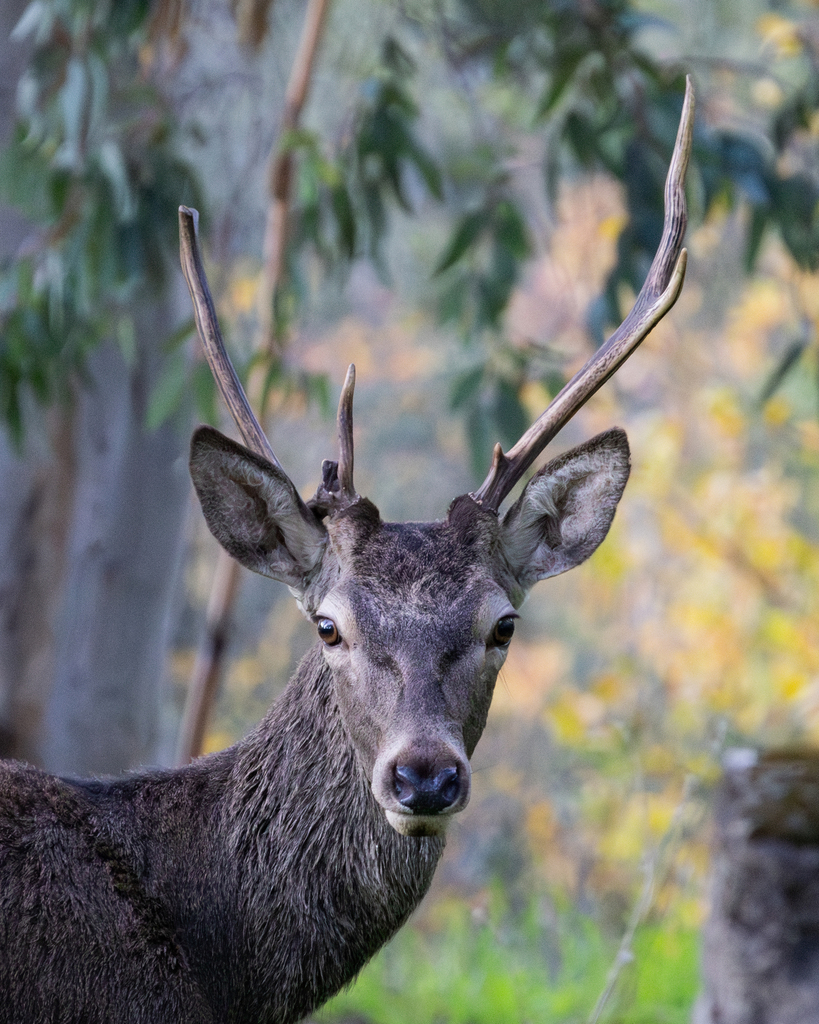
(c) Diego González Dopico, some rights reserved (CC BY) · licence
Family: Cervidae · Class: Mammalia · Order: Artiodactyla
Cervus elaphus (Red Deer) is a California animal in the Cervidae family.
North American elk (Cervus canadensis), historically called wapiti by Native Americans, are large cervids native to western North America. Adult males (bulls) typically weigh 180-320 kg (400-700 pounds) and stand 1.2-1.5 meters (4-5 feet) at the shoulder, while females (cows) are considerably smaller at 120-180 kg (260-400 pounds). Bulls develop branched antlers that typically measure 1.0-1.2 meters (3-4 feet) in length and weigh up to 18 kg (40 pounds), which are shed and regrown annually. Summer coat is typically light brown to reddish-brown, transitioning to darker brown or gray in winter, with a distinctive cream-colored rump patch. Elk were historically native to much of western North America, including California, but were extirpated from the state by the early 1900s due to overhunting and habitat loss. Current populations in California consist of three subspecies: Roosevelt elk (C. c. roosevelti) along the north coast, tule elk (C. c. nannodes) in the Central Valley and coastal areas, and Rocky Mountain elk (C. c. nelsoni) in limited locations. According to the California Department of Fish and Wildlife, elk populations have been restored to select locations including coastal prairies, Central Valley grasslands, and some mountainous regions through reintroduction programs beginning in the 1970s. Elk occupy diverse habitats including grasslands, oak woodlands, forest edges, and alpine meadows. They prefer areas with a mosaic of open grazing areas and forest cover for shelter. Elevation tolerance ranges from sea level to over 2,000 meters (6,500 feet) depending on the subspecies and geographic location. Access to fresh water is essential, and populations often concentrate near rivers, lakes, or seasonal water sources. Roosevelt elk favor coastal forest openings, while tule elk prefer valley grasslands and oak savannas. Elk are primarily grazers and browsers, feeding on grasses, forbs, shrubs, and tree bark. Diet varies seasonally with availability, shifting from fresh grasses in spring to woody browse in winter. They are highly social, forming herds that vary in composition throughout the year. The breeding season (rut) occurs in autumn, typically September through October, when mature males compete for access to females through vocalizations (bugling), displays, and physical combat. Gestation lasts approximately 8.5 months, with females typically giving birth to a single calf in late spring or early summer. In California, elk populations are managed by CDFW through hunting regulations, habitat restoration, and population monitoring. While not federally listed, the tule elk subspecies, endemic to California, was reduced to a single herd of 2-10 individuals in 1874 but has recovered through conservation efforts to approximately 5,700 individuals across 22 herds as of 2023 (CDFW). Primary current threats include habitat fragmentation, agricultural conversion, vehicle collisions, and disease transmission from domestic livestock. Climate change poses additional challenges through altered precipitation patterns and habitat shifts affecting forage availability.
Classification
Class: Mammalia · Order: Artiodactyla · Family: Cervidae
Frequently asked questions
How is Cervus elaphus classified?
Cervus elaphus belongs to class Mammalia, order Artiodactyla, family Cervidae.
What family does Cervus elaphus belong to?
Cervus elaphus is in the Cervidae family.
What is Cervus elaphus?
North American elk (Cervus canadensis), historically called wapiti by Native Americans, are large cervids native to western North America.
Is Cervus elaphus found in California?
Yes. Cervus elaphus is recorded in California in The California Species Project's catalogue.
Related species
Other California species in the same genus, family, or bioregion.
Data from The California Species Project — 14,000+ California species with verified data from CNPS, CDFW, USFWS, and more.