Ceuthophilus hesperus
San Diego Camel Cricket
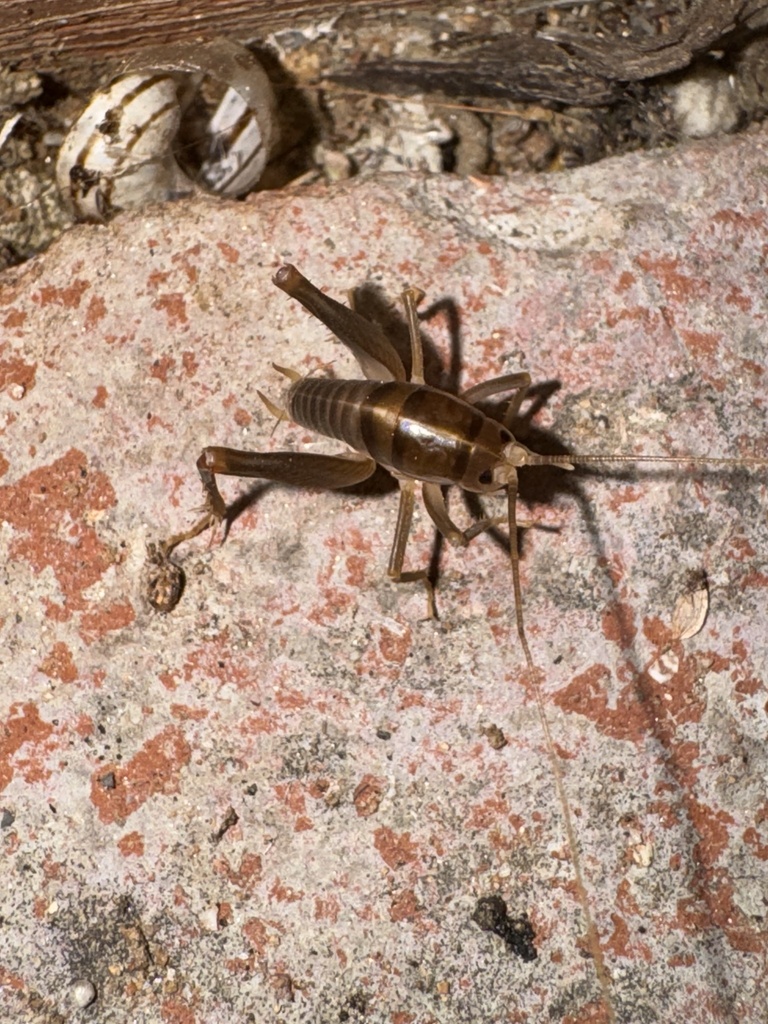
(c) Tyler, some rights reserved (CC BY) · licence
Family: Rhaphidophoridae · Class: Insecta · Order: Orthoptera
Ceuthophilus hesperus (San Diego Camel Cricket) is a California animal in the Rhaphidophoridae family.
The San Diego camel cricket (Ceuthophilus hesperus) is a flightless orthopteran insect in the family Rhaphidophoridae. Like other camel crickets, this species is characterized by a distinctive humpbacked appearance, long antennae that exceed body length, and powerful hind legs adapted for jumping. Adults are typically brown to tan in coloration with a somewhat translucent appearance. The species lacks wings and produces no sound, distinguishing it from true crickets. Ceuthophilus hesperus is native to southern California, with its range centered in the San Diego region. The species occurs throughout coastal and inland areas of San Diego County and extends into adjacent portions of southern California. Several subspecies have been described, including C. h. hesperus, C. h. clunicornis, C. h. transitans, and C. h. eino, which may represent geographically distinct populations with varying morphological characteristics. This species inhabits a variety of terrestrial environments typical of southern California's Mediterranean climate zone. San Diego camel crickets are commonly found in coastal sage scrub, chaparral, and oak woodland habitats. They prefer areas with adequate moisture and cover, often occurring under rocks, logs, leaf litter, and other debris. The species has also adapted to urban and suburban environments, frequently found in gardens, basements, and other human-modified habitats where moisture and shelter are available. As omnivorous scavengers, San Diego camel crickets feed on decaying plant material, fungi, dead insects, and occasionally living plant matter. Their diet contributes to nutrient cycling in their ecosystems. The species is primarily nocturnal, becoming active after dark to forage. During daylight hours, individuals shelter in dark, moist locations. Reproduction occurs through direct development, with females depositing eggs in soil or organic matter. Juveniles resemble adults but are smaller and undergo several molts before reaching sexual maturity. Ceuthophilus hesperus appears to maintain stable populations throughout its range and currently has no federal or state conservation listing status. However, like many native California insects, the species may face pressure from habitat loss due to urbanization, particularly in coastal areas where development is intensive. The conversion of native vegetation to urban landscapes can reduce available habitat and microenvironments essential for the species' survival. Climate change may also pose long-term challenges, as altered precipitation patterns could affect the moisture conditions that camel crickets require. The taxonomic complexity of the Ceuthophilus hesperus complex, with multiple described subspecies, suggests ongoing evolutionary processes and potential cryptic diversity within what is currently recognized as a single species. Further research may reveal additional taxonomic distinctions or consolidation of currently recognized forms. As urbanization continues to expand in southern California, monitoring of native arthropod populations, including camel crickets, remains important for understanding ecosystem health and biodiversity conservation in the region.
Classification
Class: Insecta · Order: Orthoptera · Family: Rhaphidophoridae
Frequently asked questions
How is Ceuthophilus hesperus classified?
Ceuthophilus hesperus belongs to class Insecta, order Orthoptera, family Rhaphidophoridae.
What family does Ceuthophilus hesperus belong to?
Ceuthophilus hesperus is in the Rhaphidophoridae family.
What is Ceuthophilus hesperus?
The San Diego camel cricket (Ceuthophilus hesperus) is a flightless orthopteran insect in the family Rhaphidophoridae.
Is Ceuthophilus hesperus found in California?
Yes. Ceuthophilus hesperus is recorded in California in The California Species Project's catalogue.
Related species
Other California species in the same genus, family, or bioregion.
Data from The California Species Project — 14,000+ California species with verified data from CNPS, CDFW, USFWS, and more.