Ceutorhynchus obstrictus
Cabbage seed Weevil
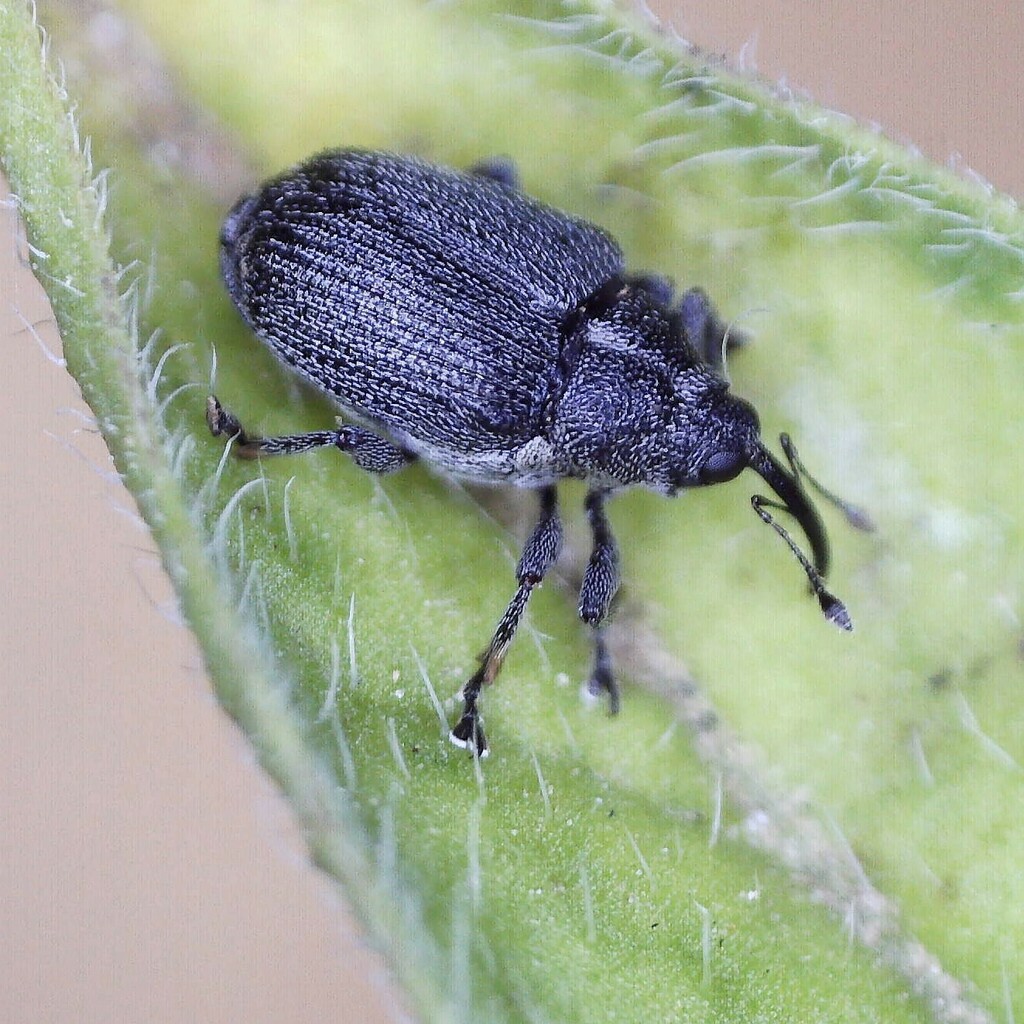
(c) Barry Walter, some rights reserved (CC BY) · licence
Family: Curculionidae · Class: Insecta · Order: Coleoptera
Ceutorhynchus obstrictus (Cabbage seed Weevil) is a California animal in the Curculionidae family.
The cabbage seed weevil (Ceutorhynchus obstrictus) is a small invasive beetle in the family Curculionidae. Adults measure 2.5 to 3.5 mm in length and display a characteristic dark gray to black coloration with a distinctive curved snout (rostrum) typical of weevils. The body is covered with grayish scales that give it a somewhat mottled appearance. The species exhibits the characteristic weevil body plan with a pronounced head that extends into an elongated snout used for feeding and egg-laying. This European native was introduced to North America and has established populations across much of the continent (BugGuide). In California, the species has been documented in agricultural regions where cruciferous crops are cultivated, though specific county-level distribution data remains limited. The weevil's range continues to expand as it follows the distribution of its host plants. Cabbage seed weevil inhabits areas where members of the Brassicaceae family are present, including both cultivated agricultural fields and areas with wild crucifers. The species shows particular association with canola, mustard, and other brassica crops. Adults are active during spring months when host plants are flowering and developing seed pods. The weevil requires specific microhabitat conditions during its larval development within developing seed pods. Adult cabbage seed weevils feed on pollen and developing seeds of cruciferous plants. Mating occurs in spring, with females using their elongated rostrum to drill holes in developing seed pods where they deposit single eggs. Larvae develop within the seed pods, feeding on developing seeds before pupating within the pod. This feeding behavior can significantly reduce seed production in affected plants. The species typically completes one generation per year, with adults overwintering in soil debris or other protected locations. Adults emerge in early spring when host plants begin flowering. Cabbage seed weevil is considered an agricultural pest rather than a conservation concern. The species was first recorded in North America in 1922 and has since become established across much of the continent (BugGuide). As an introduced species, it faces no conservation threats and may actually impact native plant communities through its feeding on wild crucifers. The weevil's presence can reduce seed production in both cultivated and wild brassicas, potentially affecting plant reproduction. Management efforts focus on agricultural pest control rather than species conservation. Current populations appear stable and expanding, with the species continuing to colonize new areas where suitable host plants are available. No federal or state conservation status has been assigned to this introduced agricultural pest species.
Classification
Class: Insecta · Order: Coleoptera · Family: Curculionidae
Frequently asked questions
How is Ceutorhynchus obstrictus classified?
Ceutorhynchus obstrictus belongs to class Insecta, order Coleoptera, family Curculionidae.
What family does Ceutorhynchus obstrictus belong to?
Ceutorhynchus obstrictus is in the Curculionidae family.
What is Ceutorhynchus obstrictus?
The cabbage seed weevil (Ceutorhynchus obstrictus) is a small invasive beetle in the family Curculionidae.
Is Ceutorhynchus obstrictus found in California?
Yes. Ceutorhynchus obstrictus is recorded in California in The California Species Project's catalogue.
Related species
Other California species in the same genus, family, or bioregion.
Data from The California Species Project — 14,000+ California species with verified data from CNPS, CDFW, USFWS, and more.