Chaetodipus californicus femoralis
Dulzura Pocket Mouse
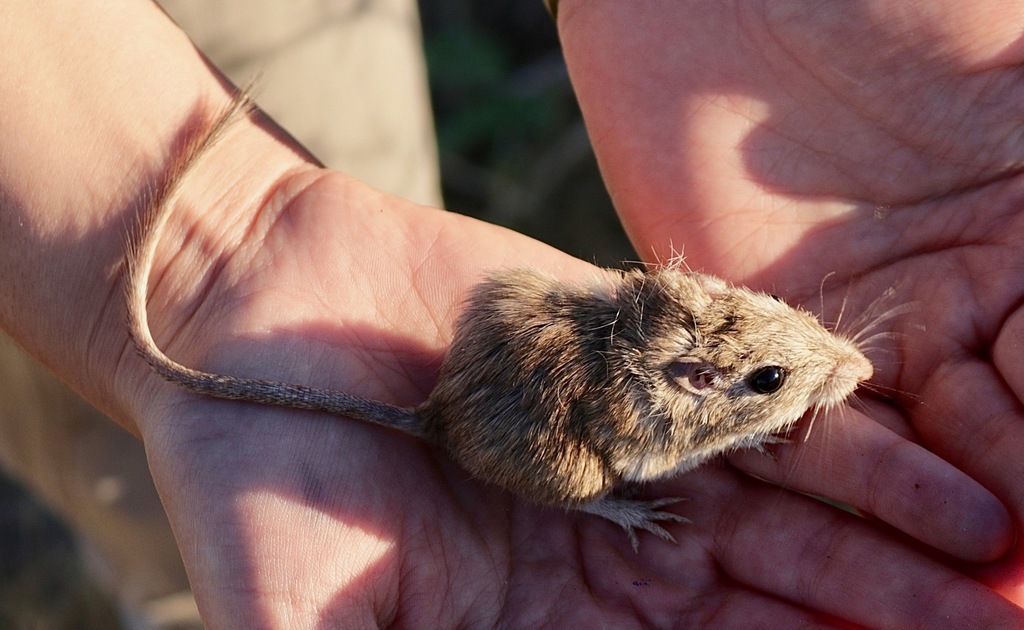
(c) Bill Levine, some rights reserved (CC BY) · licence
Family: Heteromyidae · Class: Mammalia · Order: Rodentia
Conservation status: G5T3 S3
Chaetodipus californicus femoralis (Dulzura Pocket Mouse) is a California animal in the Heteromyidae family.
The Dulzura pocket mouse is a subspecies of the California pocket mouse (Chaetodipus californicus femoralis), a small heteromyid rodent endemic to southern California. This subspecies represents one of the most geographically restricted pocket mouse populations in the region. Adults typically measure 160-190 mm in total length, with the tail accounting for approximately half this length. The pelage is generally grayish-brown dorsally with lighter buffy underparts, and the species exhibits the characteristic large hind feet and long tail typical of kangaroo rats and pocket mice. Historically, the Dulzura pocket mouse occurred in the hills and mesas of eastern San Diego County, particularly in the Dulzura area from which it derives its name. The subspecies' current range is extremely limited, with populations documented in scattered locations within its historical range in eastern San Diego County. According to USFWS records, the subspecies is found "wherever found" within its restricted distribution, indicating the precarious nature of remaining populations (USFWS ECOS Database). The Dulzura pocket mouse inhabits chaparral and coastal sage scrub communities dominated by California sagebrush (Artemisia californica) and other drought-adapted shrubs. These habitats typically occur on slopes and mesa tops with well-drained soils and sparse to moderate shrub cover. The species appears to favor areas with a mix of shrub cover for protection and open spaces for foraging, generally at elevations ranging from 400 to 1,200 meters. Like other pocket mice, this subspecies requires loose soils suitable for burrow construction and seed caching. Dulzura pocket mice are primarily granivorous, feeding on small seeds from shrubs and forbs within their habitat. They are nocturnal and solitary, emerging from their burrows after dark to forage. The species exhibits the water-conservation adaptations typical of desert-adapted heteromyids, including highly efficient kidneys and the ability to metabolize water from dry seeds. Breeding likely occurs from spring through early fall, with females producing 1-2 litters annually of 2-4 young each. Like other pocket mice, they construct elaborate burrow systems with multiple entrances, food storage chambers, and nesting areas. The Dulzura pocket mouse holds a Global/State Rank of G5T3 S3, indicating the subspecies is vulnerable to extirpation. While not currently federally listed, the subspecies faces significant conservation challenges due to habitat loss from urban development, agricultural conversion, and fragmentation of remaining habitat patches. Fire management practices that alter natural fire cycles may also impact habitat quality. The small population size and restricted range make this subspecies particularly vulnerable to stochastic events and genetic bottlenecks. Conservation efforts focus on habitat protection and restoration within the species' limited range, though comprehensive population surveys and ecological studies are needed to better understand current status and habitat requirements.
Classification
Class: Mammalia · Order: Rodentia · Family: Heteromyidae
Conservation status
G5T3 S3
Frequently asked questions
How is Chaetodipus californicus femoralis classified?
Chaetodipus californicus femoralis belongs to class Mammalia, order Rodentia, family Heteromyidae.
What family does Chaetodipus californicus femoralis belong to?
Chaetodipus californicus femoralis is in the Heteromyidae family.
Is Chaetodipus californicus femoralis protected or of conservation concern?
Chaetodipus californicus femoralis carries the following status: G5T3 S3.
What is Chaetodipus californicus femoralis?
The Dulzura pocket mouse is a subspecies of the California pocket mouse (Chaetodipus californicus femoralis), a small heteromyid rodent endemic to southern California.
Is Chaetodipus californicus femoralis found in California?
Yes. Chaetodipus californicus femoralis is recorded in California in The California Species Project's catalogue.
Related species
Other California species in the same genus, family, or bioregion.
Data from The California Species Project — 14,000+ California species with verified data from CNPS, CDFW, USFWS, and more.