Chaetodipus formosus
Long-tailed Pocket Mouse
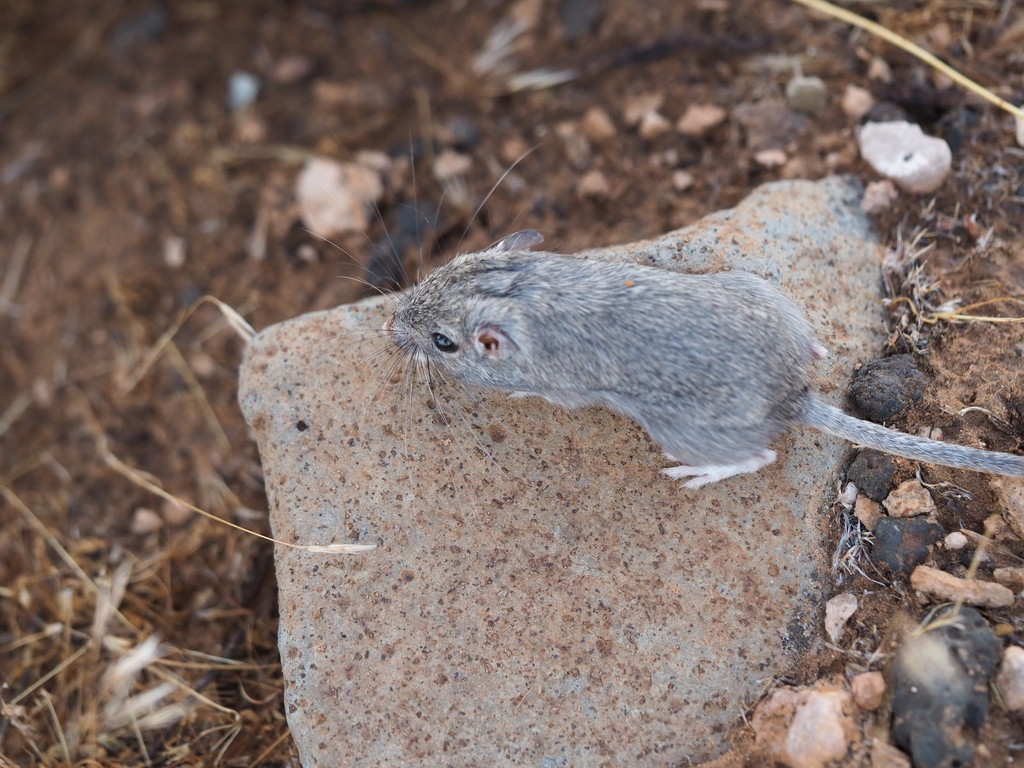
(c) Clay Gibbons, some rights reserved (CC BY) · licence
Family: Heteromyidae · Class: Mammalia · Order: Rodentia
Chaetodipus formosus (Long-tailed Pocket Mouse) is a California animal in the Heteromyidae family.
The long-tailed pocket mouse is a small heteromyid rodent belonging to the genus Chaetodipus. This species exhibits the characteristic features of pocket mice, including specialized cheek pouches for seed transport and powerful hind legs adapted for saltatorial locomotion. Adults typically measure 60-80 mm in head-body length with a tail that equals or exceeds body length, giving the species its common name. Chaetodipus formosus occurs in the western United States, including southern Nevada, western Utah, southeastern California, and extends into the Baja Peninsula of Mexico (Animal Diversity Web). Within California, the species is found primarily in desert regions of the southeastern portion of the state. The distribution represents a relatively broad range across the Mojave and Sonoran desert ecosystems. This species inhabits arid and semi-arid environments characterized by sparse vegetation and sandy or gravelly soils. Long-tailed pocket mice prefer areas with scattered shrub cover, particularly creosote bush scrub and desert chaparral communities. They construct elaborate burrow systems in well-drained soils, often on slopes or elevated areas that provide good drainage and escape routes from predators. The burrows include multiple chambers, storage areas, and escape tunnels. Long-tailed pocket mice are primarily granivorous, feeding mainly on small seeds from desert shrubs and annual plants. According to NatureServe, they may also consume some green vegetation and insects when available (NatureServe Explorer). Food is cached in underground storage chambers within their burrow systems, allowing them to survive periods of resource scarcity. These nocturnal rodents are highly adapted to desert conditions, obtaining most of their water from metabolic processes and rarely needing to drink free water. They exhibit typical heteromyid behaviors including bipedal hopping locomotion and the use of specialized cheek pouches to transport seeds back to their burrows. The species demonstrates seasonal activity patterns, with reduced activity during the hottest summer months and peak activity during cooler periods when seed resources are most abundant. Reproduction typically occurs in spring following adequate winter precipitation, which ensures sufficient food resources for raising young. Females produce small litters in underground nest chambers lined with soft plant materials. While not currently listed under federal or state endangered species legislation, long-tailed pocket mouse populations face ongoing pressures from habitat loss and fragmentation throughout their range. Desert development, off-road vehicle use, and invasive plant species represent primary threats to suitable habitat. Climate change may also impact the species through altered precipitation patterns and increased temperature extremes. The species' specialized habitat requirements and limited dispersal ability make local populations particularly vulnerable to disturbance. Continued monitoring and habitat protection efforts are important for maintaining stable populations across the species' range.
Classification
Class: Mammalia · Order: Rodentia · Family: Heteromyidae
Frequently asked questions
How is Chaetodipus formosus classified?
Chaetodipus formosus belongs to class Mammalia, order Rodentia, family Heteromyidae.
What family does Chaetodipus formosus belong to?
Chaetodipus formosus is in the Heteromyidae family.
What is Chaetodipus formosus?
The long-tailed pocket mouse is a small heteromyid rodent belonging to the genus Chaetodipus.
Is Chaetodipus formosus found in California?
Yes. Chaetodipus formosus is recorded in California in The California Species Project's catalogue.
Related species
Other California species in the same genus, family, or bioregion.
Data from The California Species Project — 14,000+ California species with verified data from CNPS, CDFW, USFWS, and more.