Chaetodipus penicillatus
Desert Pocket Mouse
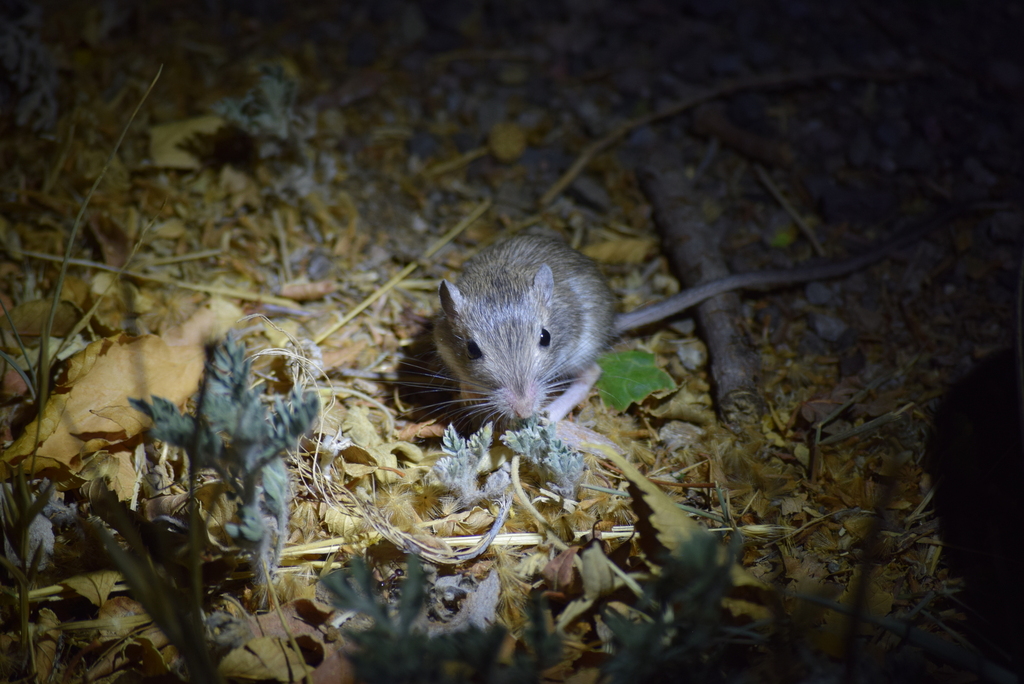
(c) William Harmon, some rights reserved (CC BY) · licence
Family: Heteromyidae · Class: Mammalia · Order: Rodentia
Chaetodipus penicillatus (Desert Pocket Mouse) is a California animal in the Heteromyidae family.
The desert pocket mouse (Chaetodipus penicillatus) is a small heteromyid rodent found in the southwestern United States and northwestern Mexico. Adults typically measure approximately 24 centimeters (9.4 inches) in total length, with the distinctive long tail comprising roughly half of this measurement. The species exhibits the characteristic features of pocket mice, including large hind legs adapted for saltatorial locomotion, specialized cheek pouches for seed transport, and dense fur coloration that ranges from pale buff to grayish-brown dorsally with lighter underparts. Historically, the desert pocket mouse ranged throughout the southwestern United States, including southern California, Arizona, Nevada, and extending into Baja California and Sonora, Mexico. However, the species has experienced significant range contraction, particularly in California where it was believed extirpated until recent rediscoveries. The subspecies Chaetodipus penicillatus sobrinus is recognized in some taxonomic treatments and appears in federal conservation planning documents. Desert pocket mice inhabit arid shrublands dominated by creosote bush scrub and desert chaparral communities. They show strong preference for areas with well-developed shrub cover and sandy soils that facilitate burrow construction. The species occurs primarily in low desert elevations, typically below 1,000 meters (3,280 feet). Suitable habitat requires adequate seed-producing vegetation and loose substrate for extensive burrow systems that provide protection from predators and extreme temperatures. This species is primarily granivorous, feeding on seeds of forbs, grasses, and shrubs including mesquite and creosote bush (Animal Diversity Web). Green vegetation and insects may supplement the diet, particularly during periods when preferred seeds are scarce. Desert pocket mice are highly adapted to arid conditions, obtaining most water requirements from metabolic processes rather than free water. They construct complex burrow systems with multiple entrances and chambers for food storage and nesting. The species exhibits nocturnal activity patterns to avoid daytime heat and predators. Reproduction occurs primarily during spring and summer months when food resources are most abundant. Females produce litters of 2-5 young, and breeding can begin while individuals are still in juvenile pelage (NatureServe Explorer). Home range sizes vary based on habitat quality and resource availability. The conservation status of desert pocket mice varies by subspecies and location. The species faces significant threats from habitat loss due to urban development, agricultural conversion, and invasive plant species that alter native plant communities. In California, the dramatic range reduction has resulted in the species being considered among the state's most imperiled small mammals. Climate change poses additional challenges through altered precipitation patterns and increased temperature extremes. The subspecies appears in federal multi-species conservation planning efforts, indicating recognition of conservation need. Recovery efforts focus on habitat protection and restoration of native shrubland communities essential for the species' survival.
Classification
Class: Mammalia · Order: Rodentia · Family: Heteromyidae
Frequently asked questions
How is Chaetodipus penicillatus classified?
Chaetodipus penicillatus belongs to class Mammalia, order Rodentia, family Heteromyidae.
What family does Chaetodipus penicillatus belong to?
Chaetodipus penicillatus is in the Heteromyidae family.
What is Chaetodipus penicillatus?
The desert pocket mouse (Chaetodipus penicillatus) is a small heteromyid rodent found in the southwestern United States and northwestern Mexico.
Is Chaetodipus penicillatus found in California?
Yes. Chaetodipus penicillatus is recorded in California in The California Species Project's catalogue.
Related species
Other California species in the same genus, family, or bioregion.
Data from The California Species Project — 14,000+ California species with verified data from CNPS, CDFW, USFWS, and more.