Chaetodipus spinatus
Spiny Pocket Mouse
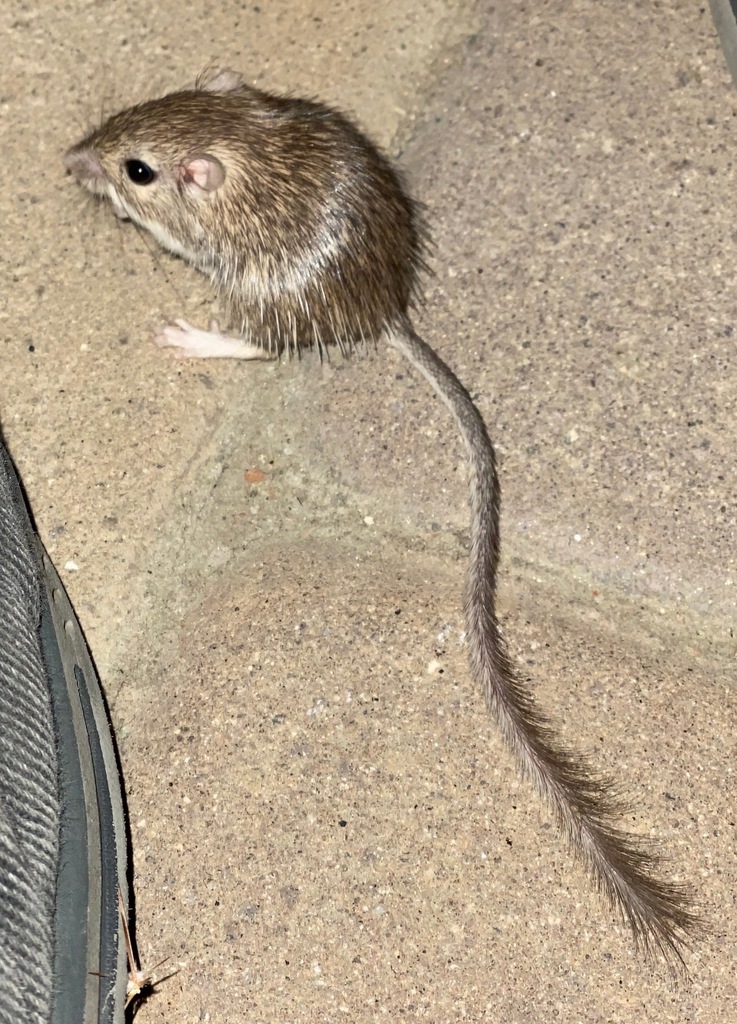
(c) desertnaturalist, some rights reserved (CC BY) · licence
Family: Heteromyidae · Class: Mammalia · Order: Rodentia
Chaetodipus spinatus (Spiny Pocket Mouse) is a California animal in the Heteromyidae family.
The spiny pocket mouse (Chaetodipus spinatus) is a small heteromyid rodent distinguished by its spiny dorsal pelage and specialized adaptations for arid environments. Adults typically measure 80-100 mm (3.1-3.9 inches) in head-body length with a tail of similar or slightly greater length. The species exhibits the characteristic features of pocket mice, including specialized cheek pouches for seed transport, enlarged hind legs adapted for saltatorial locomotion, and distinctive spiny guard hairs that give the species its common name. The dorsal coloration ranges from grayish-brown to buff, with darker spiny hairs creating a grizzled appearance, while the ventral surface is typically white or pale gray. Historically, the spiny pocket mouse occurred throughout much of southern California's coastal and inland regions, extending into Baja California, Mexico. The species' range included areas from San Diego County north through portions of Riverside, Orange, and Los Angeles counties. According to NatureServe, the current distribution is severely fragmented and reduced from historical levels, with populations restricted to isolated habitat patches within this former range. Spiny pocket mice inhabit arid and semi-arid shrublands, chaparral, and coastal sage scrub communities. The species shows preference for areas with well-developed shrub cover and sandy or gravelly soils that facilitate burrow construction. Elevational range extends from near sea level to approximately 1,200 meters (3,900 feet) in foothill regions. Microhabitat selection appears closely tied to the availability of suitable burrowing sites and proximity to preferred food plants. As with other heteromyids, spiny pocket mice are primarily granivorous, feeding on seeds of desert shrubs and grasses (NatureServe Explorer). The species exhibits typical pocket mouse foraging behavior, collecting seeds in specialized cheek pouches and caching them in underground granaries. Spiny pocket mice are nocturnal and show strong fossorial tendencies, constructing complex burrow systems that provide protection from predators and extreme temperatures. Reproductive behavior follows the heteromyid pattern, with breeding typically occurring during favorable seasonal conditions when food resources are most abundant. Litter sizes are generally small, ranging from 1-4 young per litter. The conservation status of the spiny pocket mouse reflects the broader pattern of decline affecting many southern California endemic rodents. Habitat loss and fragmentation from urban development, agriculture, and infrastructure projects represent the primary threats to remaining populations. Fire regime alterations, invasive plant species, and climate change effects on precipitation patterns pose additional challenges. The species' restricted range and specialized habitat requirements make it particularly vulnerable to these anthropogenic impacts. Current population estimates suggest significant declines from historical levels, though comprehensive surveys across the species' range remain limited. Conservation efforts focus on habitat protection and restoration within remaining occupied areas, along with research to better understand population dynamics and ecological requirements.
Classification
Class: Mammalia · Order: Rodentia · Family: Heteromyidae
Frequently asked questions
How is Chaetodipus spinatus classified?
Chaetodipus spinatus belongs to class Mammalia, order Rodentia, family Heteromyidae.
What family does Chaetodipus spinatus belong to?
Chaetodipus spinatus is in the Heteromyidae family.
What is Chaetodipus spinatus?
The spiny pocket mouse (Chaetodipus spinatus) is a small heteromyid rodent distinguished by its spiny dorsal pelage and specialized adaptations for arid environments.
Is Chaetodipus spinatus found in California?
Yes. Chaetodipus spinatus is recorded in California in The California Species Project's catalogue.
Related species
Other California species in the same genus, family, or bioregion.
Data from The California Species Project — 14,000+ California species with verified data from CNPS, CDFW, USFWS, and more.