Chalcoela iphitalis
Sooty Winged Chalcoela Moth
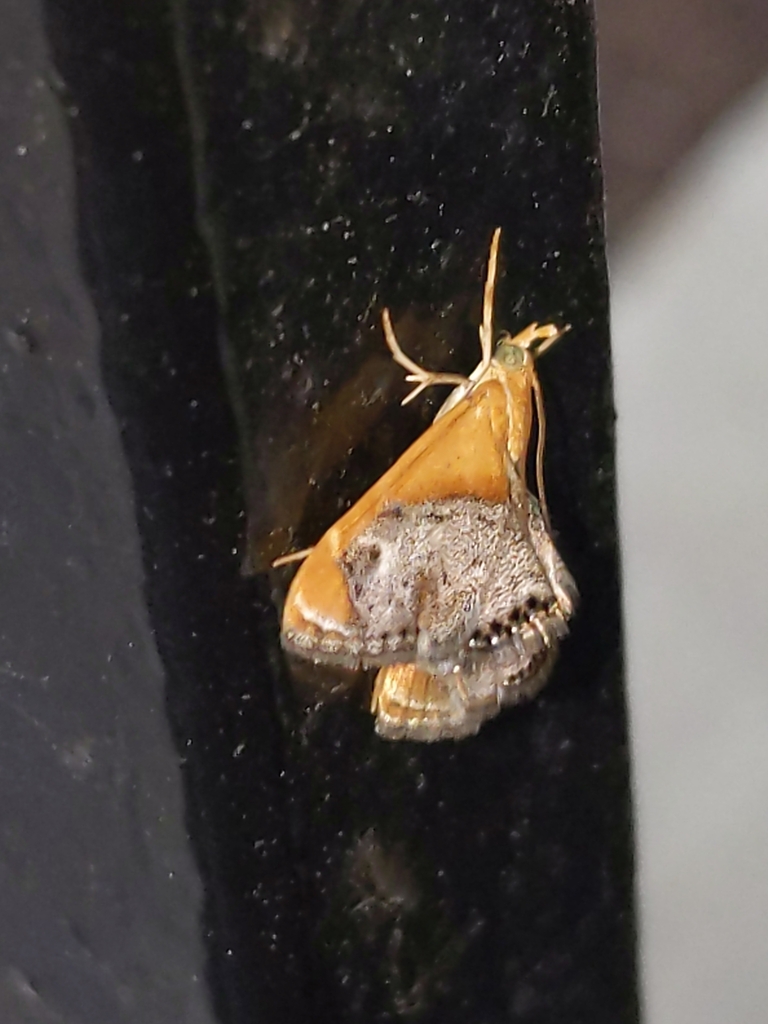
(c) Cecil Smith, some rights reserved (CC BY) · licence
Family: Crambidae · Class: Insecta · Order: Lepidoptera
Chalcoela iphitalis (Sooty Winged Chalcoela Moth) is a California animal in the Crambidae family.
The Sooty Winged Chalcoela Moth (Chalcoela iphitalis) is a member of the grass moth family Crambidae, characterized by its distinctive dark wing coloration that gives the species its common name. Adult moths typically measure 12-16 mm in wingspan, with forewings displaying sooty gray to dark brown scaling that often exhibits subtle metallic reflections under proper lighting conditions. The hindwings are generally paler, ranging from light gray to whitish with darker marginal borders. Males can be distinguished from females by their more pronounced bipectinate antennae and slightly smaller overall size. The species occurs in California, though specific distributional records are limited in the scientific literature. Historical collection records suggest the moth's range may be restricted to particular regions within the state, though comprehensive surveys documenting current distribution patterns are lacking. The limited documentation reflects the challenges associated with studying small, nocturnal lepidopteran species that may have narrow habitat requirements or brief flight periods. Habitat associations for Chalcoela iphitalis remain poorly documented in published literature. Like many Crambidae species, this moth likely occupies areas supporting specific host plant communities, though the exact plant associations have not been definitively established through controlled studies. Many members of this family are associated with grasses, sedges, or other monocotyledonous plants during their larval development, but species-specific host plant relationships for C. iphitalis require further investigation. The species' life history and behavioral ecology are not well-documented in available scientific literature. Adult flight periods, mating behaviors, larval feeding habits, and overwintering strategies remain largely unknown. This knowledge gap is common among many smaller moth species that have received limited systematic study. The nocturnal habits typical of most Crambidae moths suggest that C. iphitalis adults are likely active during evening and nighttime hours, potentially attracted to artificial light sources. No formal conservation status has been assigned to Chalcoela iphitalis at federal, state, or global levels as of December 2025. The absence of status designations may reflect insufficient data regarding population trends, distribution extent, and ecological requirements rather than indicating species security. Many invertebrate species, particularly smaller moths, lack comprehensive population monitoring or threat assessments. Potential conservation concerns could include habitat modification, light pollution effects on nocturnal behavior, pesticide applications in occupied areas, and climate-related shifts in suitable habitat conditions. However, without baseline population data or documented threats, the species' actual conservation needs remain uncertain. Further research is needed to establish fundamental biological information, including accurate range mapping, host plant associations, population estimates, and threat identification to support any future conservation planning efforts.
Classification
Class: Insecta · Order: Lepidoptera · Family: Crambidae
Frequently asked questions
How is Chalcoela iphitalis classified?
Chalcoela iphitalis belongs to class Insecta, order Lepidoptera, family Crambidae.
What family does Chalcoela iphitalis belong to?
Chalcoela iphitalis is in the Crambidae family.
What is Chalcoela iphitalis?
The Sooty Winged Chalcoela Moth (Chalcoela iphitalis) is a member of the grass moth family Crambidae, characterized by its distinctive dark wing coloration that gives the species its common name.
Is Chalcoela iphitalis found in California?
Yes. Chalcoela iphitalis is recorded in California in The California Species Project's catalogue.
Related species
Other California species in the same genus, family, or bioregion.
Data from The California Species Project — 14,000+ California species with verified data from CNPS, CDFW, USFWS, and more.