Charadrius mongolus
Lesser Sand-Plover
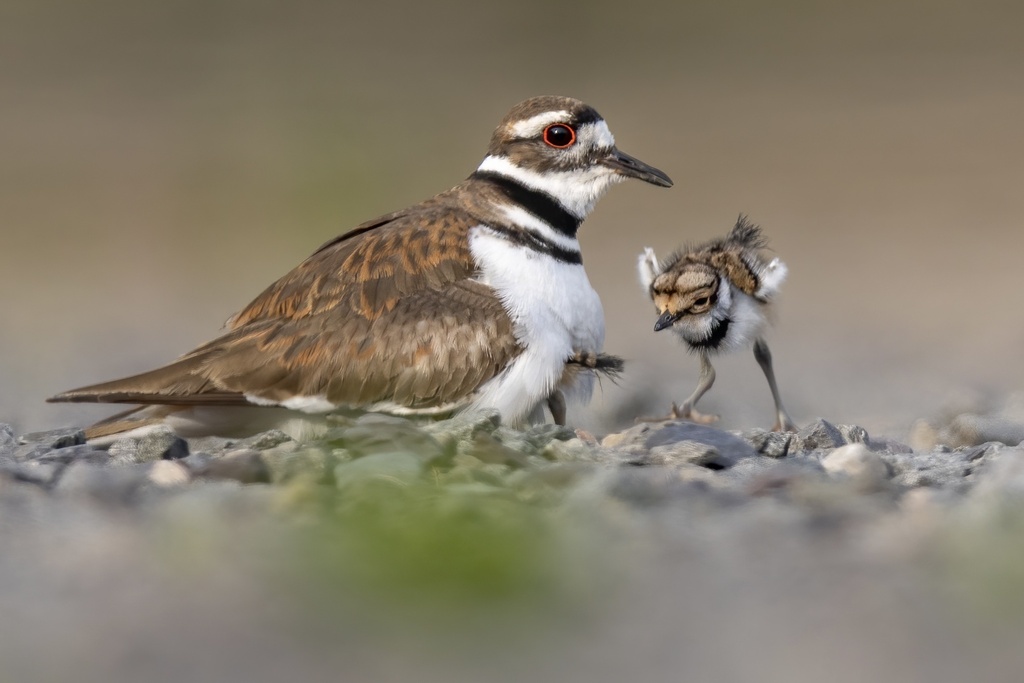
(c) Matt Felperin, some rights reserved (CC BY) · licence
Family: Charadriidae · Class: Aves · Order: Charadriiformes
Charadrius mongolus (Lesser Sand-Plover) is a California animal in the Charadriidae family.
The Lesser Sand-Plover is a medium-sized shorebird measuring 19-21 cm (7.5-8.3 inches) in length with a wingspan of 46-53 cm (18-21 inches). During breeding season, males display rufous upperparts with a distinctive black mask extending from the forehead through the eye to the ear coverts, bordered below by a white stripe. The throat and upper breast are bright rufous, contrasting with white underparts. Non-breeding adults show gray-brown upperparts and white underparts with a dusky breast band. The bill is black and relatively short compared to other plovers, while the legs are dark gray to black. Juveniles resemble non-breeding adults but show buff-edged feathers on the upperparts. The Lesser Sand-Plover breeds across central and eastern Asia, from the Ural Mountains through Mongolia, northern China, and eastern Siberia. The species is a long-distance migrant, wintering primarily along coastlines of the Indian Ocean, from eastern Africa through Southeast Asia to northern Australia. In North America, the Lesser Sand-Plover is considered a rare vagrant, with most records occurring along the Pacific Coast. California sightings are extremely uncommon, with fewer than 20 documented records as of December 2025, primarily along sandy beaches and mudflats from Marin County south to San Diego County. This species inhabits sandy and muddy shorelines, including ocean beaches, estuaries, lagoons, and tidal mudflats. During migration and winter, Lesser Sand-Plovers prefer areas with extensive intertidal zones that support abundant invertebrate prey. On breeding grounds, they utilize short-grass steppes, semi-desert areas, and gravelly river valleys, typically at elevations between 500-3,000 meters. Lesser Sand-Plovers are visual foragers, running rapidly across substrate before stopping abruptly to pick prey from the surface. Their diet consists primarily of small invertebrates including polychaete worms, crustaceans, mollusks, and insects. Breeding occurs from May through July, with pairs constructing simple scrapes lined with pebbles or vegetation on open ground. Females typically lay 2-4 eggs, with both sexes sharing incubation duties for 23-25 days. Chicks are precocial and capable of flight after approximately 30 days. Globally, the Lesser Sand-Plover is not considered threatened, though population trends vary across its range. The species faces threats from coastal development, habitat loss at stopover sites, and disturbance at roosting areas. Climate change may affect breeding habitat suitability and alter migration timing. In California, the species remains an extremely rare visitor, with no evidence of breeding. Conservation efforts focus on protecting critical stopover sites along the East Asian-Australasian Flyway, which supports the vast majority of the global population estimated at 150,000-200,000 individuals.
Classification
Class: Aves · Order: Charadriiformes · Family: Charadriidae
Frequently asked questions
How is Charadrius mongolus classified?
Charadrius mongolus belongs to class Aves, order Charadriiformes, family Charadriidae.
What family does Charadrius mongolus belong to?
Charadrius mongolus is in the Charadriidae family.
What is Charadrius mongolus?
The Lesser Sand-Plover is a medium-sized shorebird measuring 19-21 cm (7.5-8.3 inches) in length with a wingspan of 46-53 cm (18-21 inches).
Is Charadrius mongolus found in California?
Yes. Charadrius mongolus is recorded in California in The California Species Project's catalogue.
Related species
Other California species in the same genus, family, or bioregion.
Data from The California Species Project — 14,000+ California species with verified data from CNPS, CDFW, USFWS, and more.