Charadrius morinellus
Eurasian Dotterel
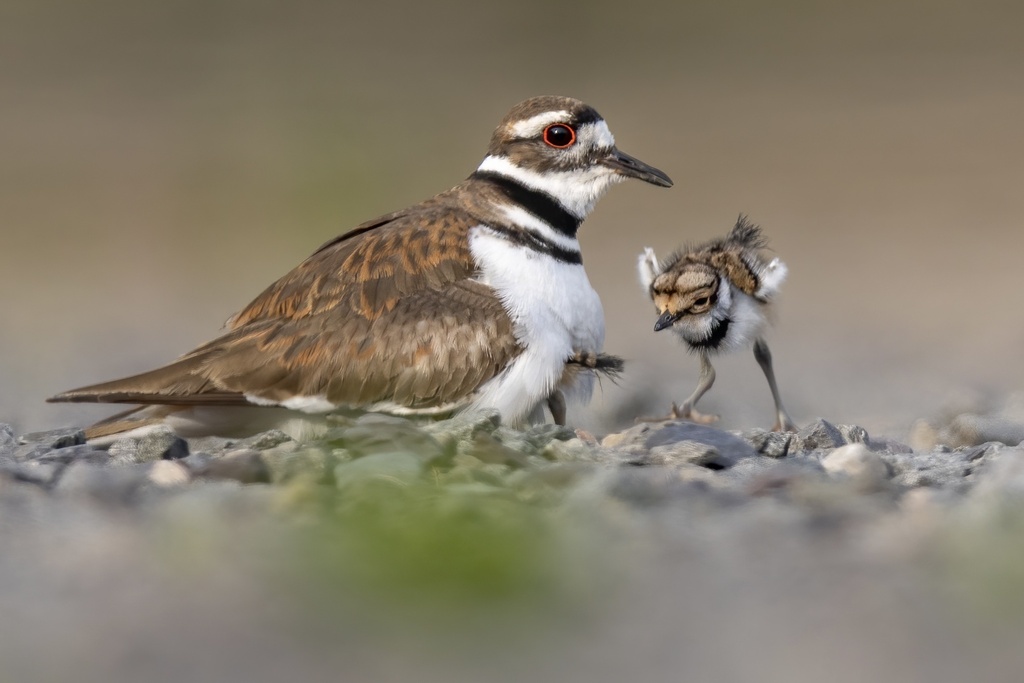
(c) Matt Felperin, some rights reserved (CC BY) · licence
Family: Charadriidae · Class: Aves · Order: Charadriiformes
Charadrius morinellus (Eurasian Dotterel) is a California animal in the Charadriidae family.
The Eurasian Dotterel is a medium-sized shorebird measuring 20 to 22 cm (7.9 to 8.7 inches) in length with a wingspan of 57 to 64 cm (22.4 to 25.2 inches). Adults weigh approximately 90 to 145 grams (3.2 to 5.1 ounces). During breeding season, adults display distinctive plumage with a broad white eyestripe extending around the nape, rusty-orange underparts, and a white breast band. The upperparts are grayish-brown with darker feather centers. Females are typically more brightly colored than males, reflecting the species' reversed sexual roles. Non-breeding adults and juveniles are considerably duller, with pale buff underparts and indistinct markings. The Eurasian Dotterel breeds across northern Eurasia, from Scotland and Scandinavia east through Russia to eastern Siberia and Alaska. In North America, breeding populations are restricted to western and northern Alaska. The species winters primarily in North Africa, the Middle East, and parts of central Asia. California records are extremely rare, with only a handful of documented occurrences along the coast, primarily during fall migration. These vagrant individuals represent birds that have strayed far from their normal Pacific flyway routes. Breeding habitat consists of high-elevation tundra, alpine plateaus, and mountain tops, typically above 1,000 meters (3,280 feet) elevation. The species favors areas with sparse vegetation, including lichen-covered rocks, short grasses, and cushion plants. During migration and winter, Eurasian Dotterels utilize short grasslands, agricultural fields, semi-desert areas, and occasionally coastal mudflats and beaches. In California, vagrant individuals have been observed on beaches, coastal grasslands, and agricultural fields in the Central Valley. Eurasian Dotterels exhibit unusual breeding behavior with reversed sex roles, where females are the more aggressive sex and males assume primary parental duties. Females may mate with multiple males and lay separate clutches for each. Males incubate the typically three-egg clutch for 24 to 28 days and care for the precocial young until they fledge at approximately 25 to 30 days. The species feeds primarily on insects, including beetles, flies, and moths, as well as spiders and occasionally small mollusks and crustaceans. They employ both visual hunting and probing behaviors to locate prey. The Eurasian Dotterel is not federally listed in the United States, as it is not a regular breeding resident. The species is classified as Near Threatened globally by the International Union for Conservation of Nature due to population declines across much of its range. European populations have experienced significant decreases, attributed to climate change affecting high-altitude breeding habitats, disturbance from recreational activities, and habitat degradation from overgrazing. The small Alaskan breeding population appears stable but remains vulnerable due to its limited range and small population size.
Classification
Class: Aves · Order: Charadriiformes · Family: Charadriidae
Frequently asked questions
How is Charadrius morinellus classified?
Charadrius morinellus belongs to class Aves, order Charadriiformes, family Charadriidae.
What family does Charadrius morinellus belong to?
Charadrius morinellus is in the Charadriidae family.
What is Charadrius morinellus?
The Eurasian Dotterel is a medium-sized shorebird measuring 20 to 22 cm (7.9 to 8.7 inches) in length with a wingspan of 57 to 64 cm (22.4 to 25.2 inches).
Is Charadrius morinellus found in California?
Yes. Charadrius morinellus is recorded in California in The California Species Project's catalogue.
Related species
Other California species in the same genus, family, or bioregion.
Data from The California Species Project — 14,000+ California species with verified data from CNPS, CDFW, USFWS, and more.