Charadrius semipalmatus
Semipalmated Plover
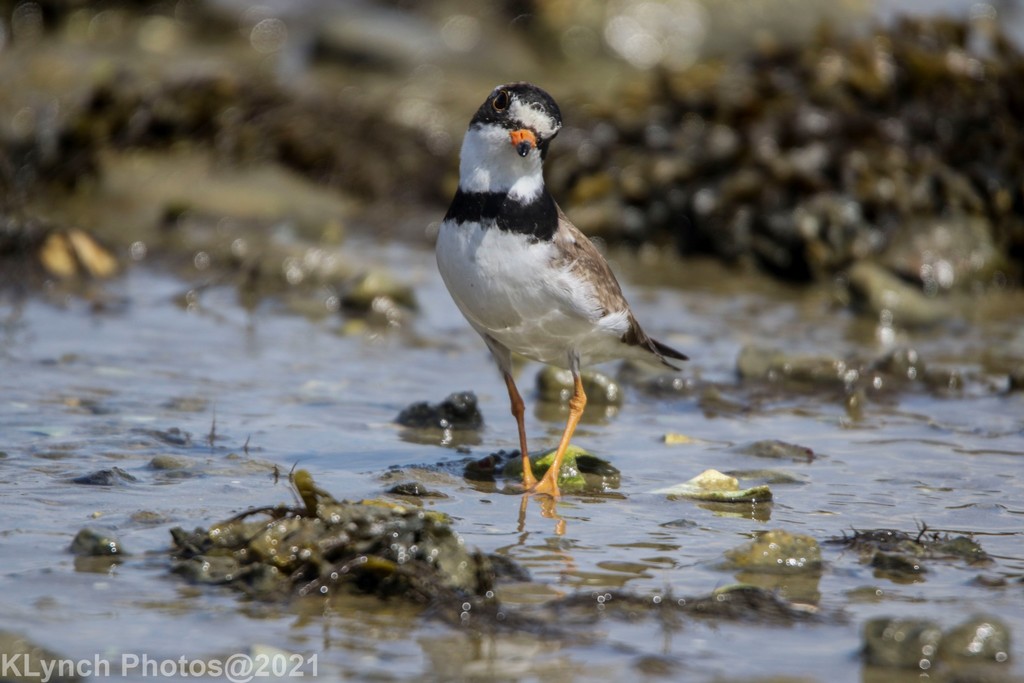
(c) Kevin Lynch, some rights reserved (CC BY) · licence
Family: Charadriidae · Class: Aves · Order: Charadriiformes
Charadrius semipalmatus (Semipalmated Plover) is a California animal in the Charadriidae family.
The Semipalmated Plover is a small, stocky shorebird measuring 17 to 19 cm (6.7 to 7.5 inches) in length with a wingspan of 35 to 41 cm (14 to 16 inches). Adults weigh 22 to 63 grams. During breeding season, adults display a distinctive black band across the forehead and around the neck, with a white collar separating the neck band from brown upperparts. The bill is orange with a black tip, and legs are bright orange or yellow. Non-breeding adults show duller plumage with brownish head markings and darker bill coloration. The species' name derives from partial webbing between the front toes, distinguishing it from other small plovers. Semipalmated Plovers breed across northern Canada and Alaska, from the Atlantic to Pacific coasts. In California, the species occurs primarily as a migrant and winter resident along the coast and in interior valleys. During migration, they utilize beaches, mudflats, salt ponds, and shallow wetlands throughout the state. Peak migration occurs from April through May and August through October. Some individuals overwinter along the California coast, particularly in San Francisco Bay, Monterey Bay, and coastal Southern California. The species inhabits sandy beaches, mudflats, salt marshes, and shallow wetland margins. During breeding, they prefer gravelly or sandy substrates near water bodies in tundra and boreal regions. In California, they frequent intertidal zones, coastal lagoons, salt evaporation ponds, and flooded agricultural fields. They typically forage in areas with soft substrates where invertebrate prey is accessible through probing and surface gleaning. Semipalmated Plovers are opportunistic foragers, feeding primarily on marine worms, small crustaceans, mollusks, and insects. They employ a distinctive stop-and-go foraging behavior, running short distances before pausing to probe or pick prey from the surface. Breeding occurs from May through August in arctic and subarctic regions, with females laying 3 to 4 eggs in simple scrapes lined with shells, pebbles, or vegetation. Incubation lasts 23 to 25 days, with both parents sharing duties. Young are precocial and capable of foraging within hours of hatching. The Semipalmated Plover is not federally listed and maintains stable global populations, though some regional declines have been documented. According to the North American Bird Conservation Initiative, the species has experienced moderate population declines since 1970, primarily attributed to habitat loss along migration routes and wintering grounds. Climate change poses additional threats through altered precipitation patterns affecting breeding habitat and sea level rise impacting coastal foraging areas. In California, habitat loss from coastal development and wetland conversion represents the primary conservation concern. The species benefits from protected areas along the Pacific Flyway and wetland restoration projects that maintain suitable stopover and wintering habitat.
Classification
Class: Aves · Order: Charadriiformes · Family: Charadriidae
Frequently asked questions
How is Charadrius semipalmatus classified?
Charadrius semipalmatus belongs to class Aves, order Charadriiformes, family Charadriidae.
What family does Charadrius semipalmatus belong to?
Charadrius semipalmatus is in the Charadriidae family.
What is Charadrius semipalmatus?
The Semipalmated Plover is a small, stocky shorebird measuring 17 to 19 cm (6.7 to 7.5 inches) in length with a wingspan of 35 to 41 cm (14 to 16 inches).
Is Charadrius semipalmatus found in California?
Yes. Charadrius semipalmatus is recorded in California in The California Species Project's catalogue.
Related species
Other California species in the same genus, family, or bioregion.
Data from The California Species Project — 14,000+ California species with verified data from CNPS, CDFW, USFWS, and more.