Charadrius wilsonia
Wilson's Plover
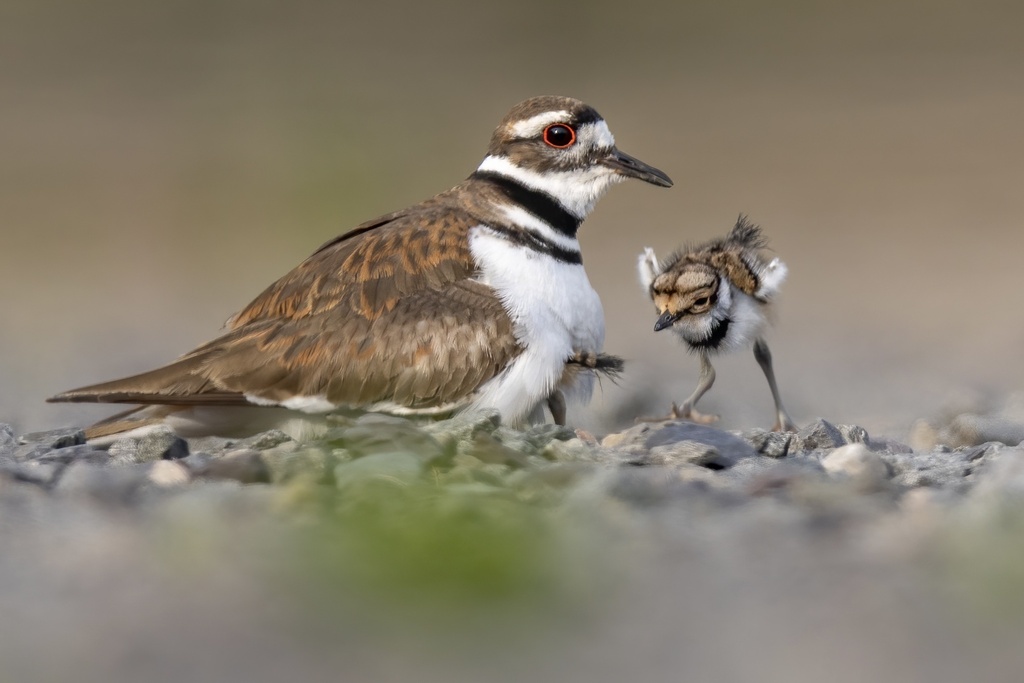
(c) Matt Felperin, some rights reserved (CC BY) · licence
Family: Charadriidae · Class: Aves · Order: Charadriiformes
Charadrius wilsonia (Wilson's Plover) is a California animal in the Charadriidae family.
Wilson's Plover is a medium-sized shorebird measuring 19-21 cm (7.5-8.3 inches) in length with a wingspan of 46-50 cm (18-20 inches). Adults weigh 55-75 grams. The species exhibits distinct sexual dimorphism in breeding plumage. Males display a prominent black forehead band and collar that contrasts with white underparts and pale brown upperparts. Females and non-breeding males show similar patterns but with brown rather than black markings. The bill is notably thick and black, distinguishing it from other small plovers. Legs are pale pink to gray. Juveniles resemble non-breeding adults but with more muted coloration and incomplete breast bands. Historically, Wilson's Plover bred along the California coast from San Francisco Bay south to the Mexican border. The species experienced significant range contraction during the 20th century. Currently, breeding populations in California are extremely limited or extirpated, with only occasional vagrant individuals reported along the southern coast. The species maintains stable populations along the Atlantic and Gulf coasts from Virginia to Texas, the Caribbean, and parts of South America's northern coast. Pacific coast populations have declined dramatically since the 1940s. Wilson's Plover inhabits sandy beaches, mudflats, salt ponds, and lagoons in coastal environments. The species shows preference for areas with sparse vegetation and shell deposits. Nesting occurs on sandy substrates above the high tide line, often near driftwood or debris that provides minimal shelter. Unlike many shorebirds, Wilson's Plover rarely uses rocky shores, preferring flat, open terrain with good visibility for predator detection. The species feeds primarily on marine invertebrates including crabs, marine worms, mollusks, and insects. Wilson's Plover employs a run-stop-peck foraging strategy, using visual cues to locate prey. The thick bill is adapted for cracking small crabs and extracting prey from sandy substrates. Breeding occurs from April through August. Females typically lay 2-3 eggs in shallow scrapes lined with shell fragments and debris. Both parents incubate eggs for 24-25 days and tend precocial chicks until fledging at approximately 21 days. Wilson's Plover is not federally listed under the Endangered Species Act as of December 2025. However, Pacific coast populations face significant conservation concerns. The species was designated as a Bird of Conservation Concern by the U.S. Fish and Wildlife Service due to population declines and habitat loss. Primary threats include coastal development, human disturbance during nesting season, habitat modification, and predation by introduced mammals. Sea level rise poses additional long-term threats to nesting habitat. Conservation efforts focus on protecting remaining suitable habitat and managing human disturbance in areas where the species still occurs. Restoration of coastal habitats and predator control programs may be necessary to support any potential population recovery along the Pacific coast.
Classification
Class: Aves · Order: Charadriiformes · Family: Charadriidae
Frequently asked questions
How is Charadrius wilsonia classified?
Charadrius wilsonia belongs to class Aves, order Charadriiformes, family Charadriidae.
What family does Charadrius wilsonia belong to?
Charadrius wilsonia is in the Charadriidae family.
What is Charadrius wilsonia?
Wilson's Plover is a medium-sized shorebird measuring 19-21 cm (7.5-8.3 inches) in length with a wingspan of 46-50 cm (18-20 inches).
Is Charadrius wilsonia found in California?
Yes. Charadrius wilsonia is recorded in California in The California Species Project's catalogue.
Related species
Other California species in the same genus, family, or bioregion.
Data from The California Species Project — 14,000+ California species with verified data from CNPS, CDFW, USFWS, and more.