Charina bottae
Northern Rubber Boa
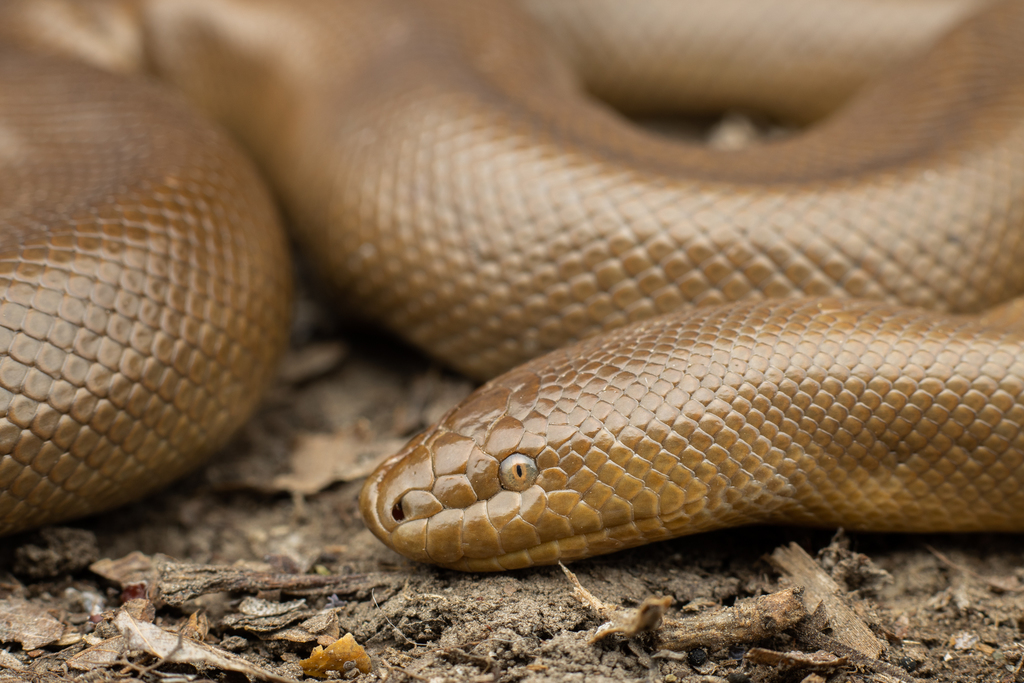
(c) andrewnydam, some rights reserved (CC BY) · licence
Family: Boidae · Class: Reptilia · Order: Squamata
Charina bottae (Northern Rubber Boa) is a California animal in the Boidae family.
The Northern Rubber Boa is a medium-sized, non-venomous snake native to western North America, including portions of California. Adults typically measure 35 to 84 centimeters (14 to 33 inches) in total length, with females generally larger than males. The species exhibits a distinctive cylindrical body with a blunt tail that resembles the head, earning it the colloquial name "two-headed snake." The dorsal coloration ranges from olive-green to brown or tan, while the ventral surface is cream to yellow. Scales are small and smooth, giving the snake a rubber-like texture and appearance that inspired its common name. In California, the Northern Rubber Boa occurs primarily in the northern and central mountainous regions, including the Cascade Range, Sierra Nevada, and portions of the Coast Ranges. The species reaches its southern limit in California in the southern Sierra Nevada around Tulare County. Distribution extends northward through Oregon, Washington, Idaho, western Montana, and into southern British Columbia. California populations represent the southern edge of the species' range. Northern Rubber Boas inhabit coniferous forests, woodlands, and adjacent meadows at elevations ranging from sea level to approximately 3,000 meters (10,000 feet). The species shows strong association with Douglas fir, ponderosa pine, and mixed conifer forests. Critical microhabitat includes fallen logs, rock piles, and loose soil where boas can burrow. The species demonstrates fossorial tendencies, spending considerable time underground or beneath surface cover objects. This species is primarily crepuscular and nocturnal, though individuals may be active during daylight hours in cooler conditions. Northern Rubber Boas are specialized constrictors that feed almost exclusively on small mammals, particularly rodents, and occasionally bird nestlings. Young boas may consume lizards and small snakes. Reproduction is ovoviviparous, with females giving birth to live young after a gestation period of approximately four to seven months. Litter sizes typically range from two to eight offspring, born in late summer or early fall. Neonates measure 19 to 23 centimeters (7.5 to 9 inches) at birth. The Northern Rubber Boa exhibits exceptional cold tolerance compared to other snake species, remaining active at temperatures as low as 7 degrees Celsius (45 degrees Fahrenheit). During winter months, individuals enter brumation in underground retreats, often communally with other snakes. The species demonstrates defensive behavior by forming a tight ball when threatened, protecting the head while using the blunt tail as a decoy. The Northern Rubber Boa currently lacks federal or state listing status in California, suggesting stable populations within its range. However, habitat modification through logging, development, and fire suppression may impact local populations. The species' secretive nature and fossorial habits make population monitoring challenging. Climate change and associated shifts in forest composition represent potential long-term threats to montane populations.
Classification
Class: Reptilia · Order: Squamata · Family: Boidae
Frequently asked questions
How is Charina bottae classified?
Charina bottae belongs to class Reptilia, order Squamata, family Boidae.
What family does Charina bottae belong to?
Charina bottae is in the Boidae family.
What is Charina bottae?
The Northern Rubber Boa is a medium-sized, non-venomous snake native to western North America, including portions of California.
Is Charina bottae found in California?
Yes. Charina bottae is recorded in California in The California Species Project's catalogue.
Related species
Other California species in the same genus, family, or bioregion.
Data from The California Species Project — 14,000+ California species with verified data from CNPS, CDFW, USFWS, and more.