Charissa obscurata
Annulet
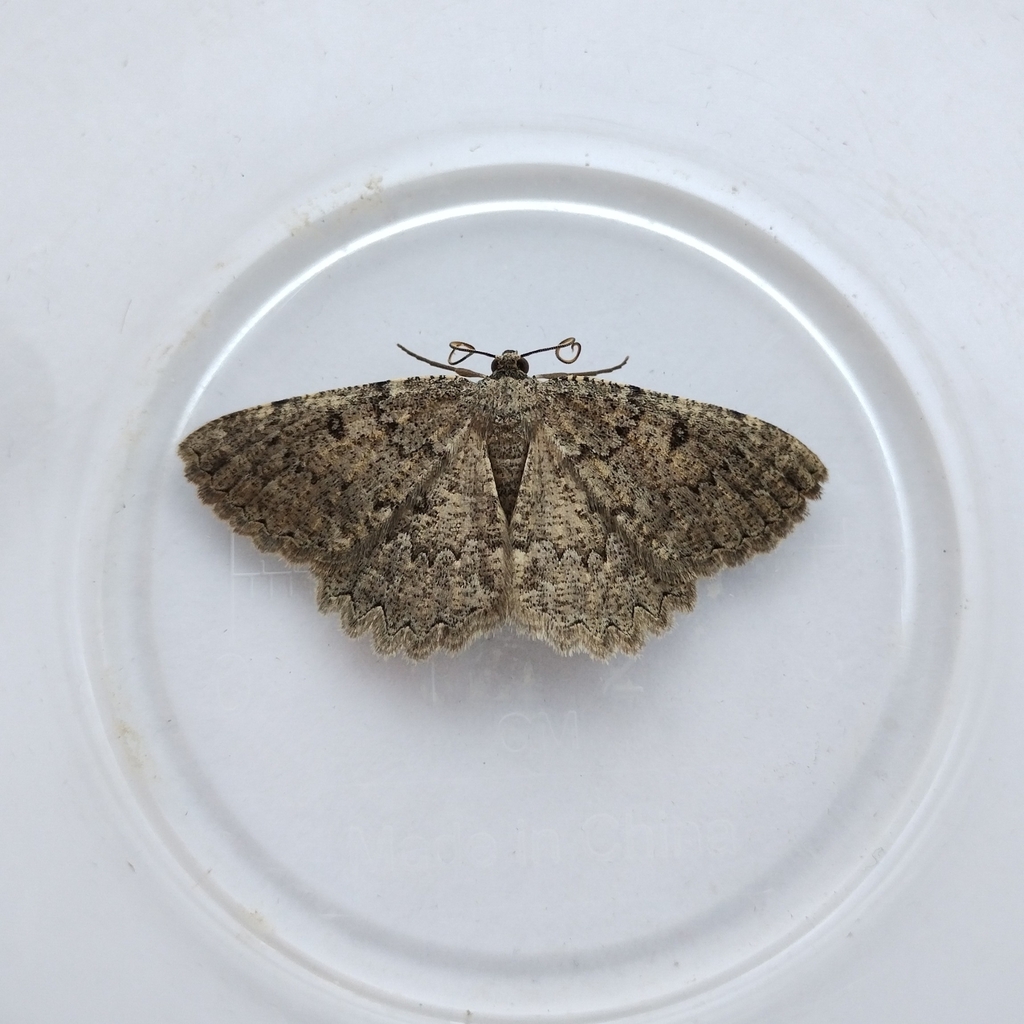
no rights reserved · CC0
Family: Geometridae · Class: Insecta · Order: Lepidoptera
Charissa obscurata (Annulet) is a California animal in the Geometridae family.
Charissa obscurata, commonly known as the Annulet, is a moth in the family Geometridae. This species belongs to the large and diverse group of moths commonly called geometrids or inchworm moths, characterized by their distinctive wing patterns and the looping locomotion of their caterpillars (Powell & Opler 2009). The genus Charissa includes several North American species that are typically small to medium-sized moths with earth-toned coloration patterns that provide camouflage against tree bark and other natural surfaces. Adult geometrid moths generally have broad wings with intricate patterns of lines, bands, or geometric shapes that give the family its name (Scoble 1999). The specific epithet 'obscurata' suggests darker or more subdued coloration patterns, though detailed morphological descriptions for this particular species are not well documented in readily accessible scientific literature. Geometridae moths are typically nocturnal and are attracted to artificial lights (Powell & Opler 2009). Their larvae, known as inchworms or loopers, move by extending their front segments forward and drawing their rear segments up to meet them, creating the characteristic arching motion due to their reduced prolegs (Scoble 1999). Most geometrid species are herbivorous in their larval stage, feeding on a variety of plant species depending on their host plant specialization. The adult moths generally have a relatively short flight period and may be univoltine or multivoltine depending on climate and geographic location. Like many moth species, geometric moths play important ecological roles as pollinators of night-blooming plants and as food sources for bats, birds, and other predators (Wagner 2005). Scientific documentation for Charissa obscurata remains extremely limited in publicly accessible databases and taxonomic literature. Detailed information about this species' distribution, habitat preferences, host plants, life cycle, and conservation status requires further research and documentation. The lack of comprehensive data reflects the broader challenge of documenting North America's diverse moth fauna, where many species remain poorly studied despite their ecological importance and potential conservation needs.
Classification
Class: Insecta · Order: Lepidoptera · Family: Geometridae
Frequently asked questions
How is Charissa obscurata classified?
Charissa obscurata belongs to class Insecta, order Lepidoptera, family Geometridae.
What family does Charissa obscurata belong to?
Charissa obscurata is in the Geometridae family.
What is Charissa obscurata?
Charissa obscurata, commonly known as the Annulet, is a moth in the family Geometridae.
Is Charissa obscurata found in California?
Yes. Charissa obscurata is recorded in California in The California Species Project's catalogue.
Related species
Other California species in the same genus, family, or bioregion.
Data from The California Species Project — 14,000+ California species with verified data from CNPS, CDFW, USFWS, and more.