Chasmistes cujus
Cui-ui
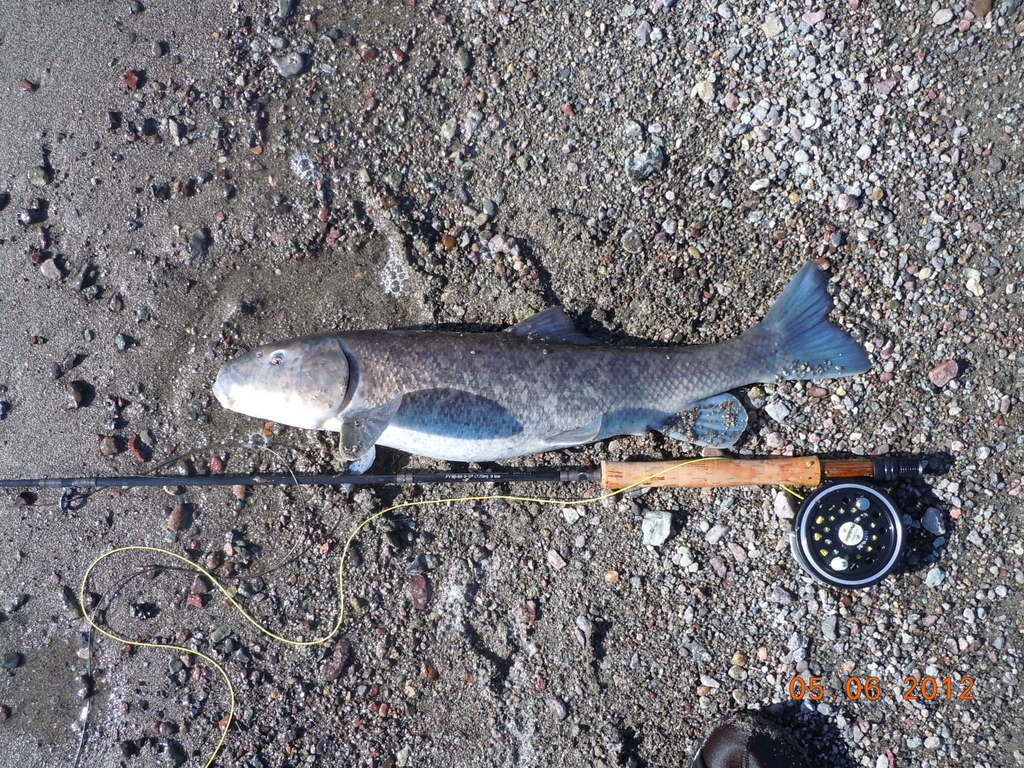
(c) Jim Dreier, some rights reserved (CC BY) · licence
Family: Catostomidae · Class: Actinopterygii · Order: Cypriniformes
Conservation status: Endangered
Chasmistes cujus (Cui-ui) is a California animal in the Catostomidae family.
The cui-ui is a large freshwater sucker endemic to Pyramid Lake, Nevada. Adults can reach lengths of up to 60 cm (24 inches) and weights of 2.3 kg (5 pounds). As a member of the lakesucker genus Chasmistes, cui-ui are distinguished from other catostomids by their thin lips with separated lobes that may lack papillae, and a large terminal, oblique mouth. The body is typically dark olive to brown dorsally with lighter sides and a whitish belly. Cui-ui historically occupied ancient Lake Lahontan, which covered much of northwest and west-central Nevada during the Pleistocene until 5,000-10,000 years ago (USFWS 1992). As the climate changed and lake levels declined, only fragmented remnant waters remained, including Pyramid, Winnemucca, Walker, and Honey lakes. Today, cui-ui are found exclusively in Pyramid Lake and the lower Truckee River system in western Nevada, representing the last genetically pure member of the lake sucker genus Chasmistes. The species inhabits the deep, alkaline waters of Pyramid Lake for most of its life cycle, but requires access to the lower Truckee River for spawning. Cui-ui are obligate freshwater stream spawners that depend on suitable hydrologic conditions to access their spawning habitat. Studies indicate they prefer water temperatures between 9 and 17 degrees Celsius (48.2 to 62.6 degrees Fahrenheit) during migration, with adults demonstrating a preference for gravel and cobble substrate for spawning (USFWS 2023). Cui-ui are remarkably long-lived fish, known to survive up to 45 years. They exhibit an anadromous-like life cycle, spending most of their lives in Pyramid Lake but migrating up the Truckee River to spawn when conditions permit. Spawning migrations are triggered by adequate water flows and appropriate temperatures, typically occurring in spring. The species has evolved to take advantage of periodic high-water years for successful reproduction, with spawning events sometimes separated by multiple years during drought conditions. The cui-ui was federally listed as endangered on March 11, 1967, making it one of the first fish species to receive federal protection (32 FR 4001). The species faces ongoing threats from water diversions that reduce Truckee River flows, dam construction that blocks access to spawning habitat, and water quality degradation. The recent Numana Dam fish passage project represents a significant conservation milestone, opening 65 miles of additional habitat along the Truckee River that is essential for species recovery (USFWS 2023). Recovery efforts are conducted in close partnership with the Pyramid Lake Paiute Tribe, who have cultural and subsistence connections to the species. Federal expenditures for cui-ui conservation have varied significantly over time, reaching over $3 million in 1998 during intensive recovery efforts. The species' long lifespan and periodic spawning strategy make population monitoring and recovery assessment challenging, requiring sustained conservation commitment over decades.
Classification
Class: Actinopterygii · Order: Cypriniformes · Family: Catostomidae
Conservation status
Endangered
Frequently asked questions
How is Chasmistes cujus classified?
Chasmistes cujus belongs to class Actinopterygii, order Cypriniformes, family Catostomidae.
What family does Chasmistes cujus belong to?
Chasmistes cujus is in the Catostomidae family.
Is Chasmistes cujus protected or of conservation concern?
Chasmistes cujus carries the following status: Endangered.
What is Chasmistes cujus?
The cui-ui is a large freshwater sucker endemic to Pyramid Lake, Nevada.
Is Chasmistes cujus found in California?
Yes. Chasmistes cujus is recorded in California in The California Species Project's catalogue.
Related species
Other California species in the same genus, family, or bioregion.
Data from The California Species Project — 14,000+ California species with verified data from CNPS, CDFW, USFWS, and more.