Cheiracanthium mildei
Northern Yellow Sac Spider
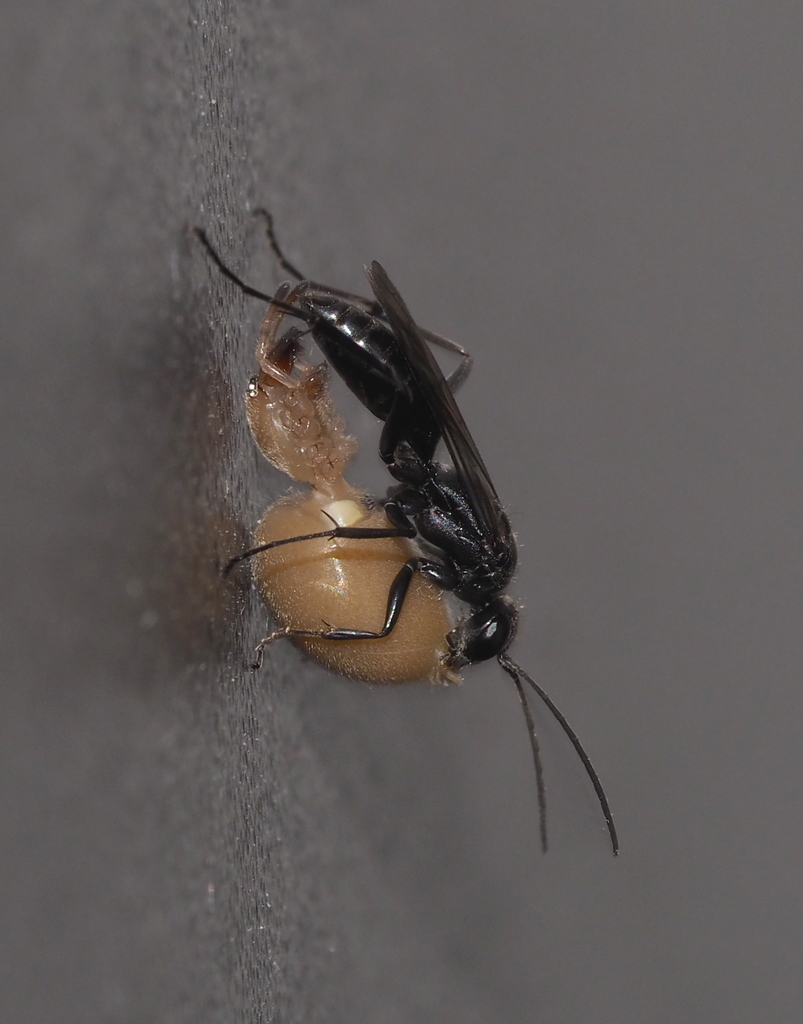
(c) carnifex, some rights reserved (CC BY) · licence
Family: Cheiracanthiidae · Class: Arachnida · Order: Araneae
Cheiracanthium mildei (Northern Yellow Sac Spider) is a California animal in the Cheiracanthiidae family.
The Northern Yellow Sac Spider (Cheiracanthium mildei) is a small to medium-sized spider in the family Cheiracanthiidae. Adults typically measure 4-10 millimeters (0.16-0.39 inches) in body length, with a pale yellow to light green coloration that gives the species its common name. The cephalothorax is yellowish-brown, and the abdomen is typically pale yellow or greenish-yellow. The legs are relatively long and slender, with the first pair being the longest. Males are generally smaller than females and have more pronounced palpal bulbs used in mating. This species has a Holarctic distribution, occurring across North America, Europe, Asia, and parts of southern South America including Argentina (BugGuide). In North America, C. mildei is widely distributed and has been documented throughout California. The species has established populations in both natural and human-modified environments across the state, from coastal areas to inland valleys. Northern Yellow Sac Spiders occupy diverse habitats but show a strong preference for human-modified environments. According to BugGuide, they are more commonly found inside man-made structures compared to the closely related C. inclusum, which tends to occur more frequently outdoors. When found in natural settings, they construct silken retreats in rolled leaves, under bark, or beneath stones. The species creates characteristic tubular silk retreats that serve as daytime resting sites and molting chambers. These retreats are typically found in protected locations such as wall corners, behind furniture, or in vegetation. C. mildei is a nocturnal hunter that does not build webs to capture prey. Instead, it actively hunts small invertebrates including insects, other spiders, and various arthropods. The species is known to be an effective predator of household pests such as flies, moths, and other small insects. Indoor populations are non-seasonal and can reproduce year-round, while outdoor populations may show seasonal activity patterns (BugGuide). After mating, females lay 30-48 eggs in a thin, white silken sac and guard them until hatching. The female may produce multiple egg sacs during her lifetime, and juveniles undergo several molts before reaching sexual maturity. Cheiracanthium mildei has no special conservation status and is considered secure throughout its range. NatureServe ranks the species as G5 (Secure) globally, indicating stable populations with no immediate conservation concerns. The species has adapted well to urban environments and may have benefited from human development, which provides abundant shelter sites and prey opportunities. In some regions, C. mildei is considered mildly venomous to humans, though bites are rare and typically result in only minor local reactions. The species plays a beneficial role as a predator of pest insects in both natural and human-dominated environments.
Classification
Class: Arachnida · Order: Araneae · Family: Cheiracanthiidae
Frequently asked questions
How is Cheiracanthium mildei classified?
Cheiracanthium mildei belongs to class Arachnida, order Araneae, family Cheiracanthiidae.
What family does Cheiracanthium mildei belong to?
Cheiracanthium mildei is in the Cheiracanthiidae family.
What is Cheiracanthium mildei?
The Northern Yellow Sac Spider (Cheiracanthium mildei) is a small to medium-sized spider in the family Cheiracanthiidae.
Is Cheiracanthium mildei found in California?
Yes. Cheiracanthium mildei is recorded in California in The California Species Project's catalogue.
More California species
This species has no close relatives in our California data — here are other species to explore.
Data from The California Species Project — 14,000+ California species with verified data from CNPS, CDFW, USFWS, and more.